Ordering crane hooks for equipment built to a different national standard is where many cross-border purchases go wrong. This guide compares the four crane hook standards buyers ask for most — DIN, EN, GOST and GB/T — so you can order the right hook the first time.
Featured Snippet: Crane hook standards define hook shapes, sizes and testing by region. DIN 15401/15402 covers European single and double hooks, GOST 6627-74 and 6628-73 cover Russian single and double hook blanks, GB/T 10051 covers Chinese hooks, and ASME B30.10 sets hook safety requirements.
Why Hook Standards Differ Across Regions
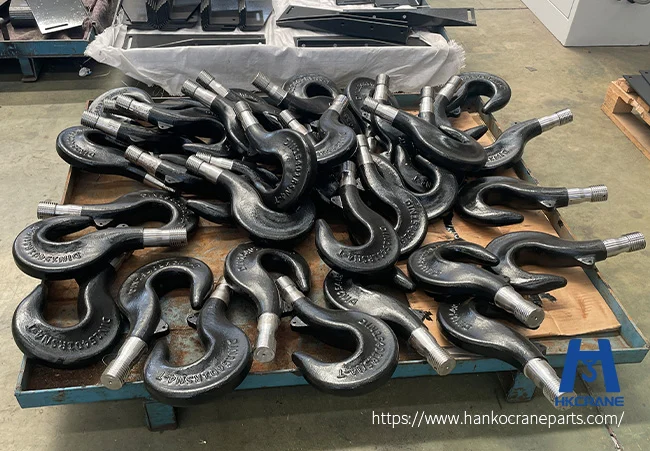
Crane hooks look alike, but a hook that fits a European-built crane will not necessarily fit a Russian-designed one. Each standard system grew around its own crane designs, steelmaking practice and safety rules, so blank shapes, shank threads and size series all differ.
That matters the moment you import a crane or replace a hook across borders. A mismatched hook can mean re-machining the nut seat, re-cutting the shank thread or rejecting the part at installation. You avoid those delays simply by naming the right standard in your enquiry — the same logic behind choosing the right hook for your application.
The Four Standard Systems Buyers Ask For Most
When buyers contact us about hooks, the enquiry almost always refers to one of these four systems. If you first need a refresher on hook types by shape and construction, start there — this section is about the standards behind them.
DIN 15401 and DIN 15402 — Europe
DIN 15401 covers single hooks and DIN 15402 covers double (ramshorn) hooks. Both define blank types, construction and dimensions through a numbered size series, and many European crane designs still reference them. If your drawing says “DIN hook No. 30”, the blank number itself tells the supplier the exact geometry to produce.
EN 1677 Series — Forged Sling Components
The EN 1677 series covers forged components for slings, not the crane’s own hook assembly. Part 1 sets safety requirements for grade 8 forged steel components, Part 2 covers grade 8 eye hooks with latches, and Part 5 covers grade 4 forged hooks with latches. Buyers working with chain or wire rope slings meet these hooks most often.
GOST 6627-74 and GOST 6628-73 — Russia and CIS
GOST 6627-74 defines single hook blanks in types А (short shank) and Б (long shank), numbered 1 to 26, produced by hot die stamping or free forging. GOST 6628-73 does the same for double hook blanks, numbered 1 to 14, with rated capacities from 8 t to 100 t depending on the duty group. Technical requirements for both follow GOST 2105-75.
GB/T 10051 Series — China
GB/T 10051 is the Chinese hook standard series. It covers hook materials and mechanical properties, forged hook technical conditions, use and inspection, straight-shank double hooks, hook nuts and laminated hooks. The series was revised on the basis of the DIN standards, which is why GB/T and DIN hooks look similar while remaining distinct series.
ASME B30.10 — North America
ASME B30.10 is the hooks volume of the ASME B30 safety standard series. Unlike the dimension-based standards above, it focuses on safety in service: inspection intervals, operating practices and the criteria for removing a hook from service.
Crane Hook Standards Comparison at a Glance
The table below condenses the four systems into one view you can keep beside your drawing.
| Standard | Region | Covers | What it defines |
|---|---|---|---|
| DIN 15401 / DIN 15402 | Europe | Single hooks / double hooks | Blank types, construction and dimensions by numbered size series |
| EN 1677 series | Europe | Forged sling components, incl. eye hooks | Safety requirements and grades for sling hooks (grade 4 and 8) |
| GOST 6627-74 / GOST 6628-73 | Russia and CIS | Single hook blanks / double hook blanks | Types А and Б, serial blank numbers, stamping or free forging |
| GB/T 10051 series | China | Forged and laminated hooks | Materials, technical conditions, inspection and dimensions |
| ASME B30.10 | North America | Hooks in service | Safety requirements: inspection, use, removal criteria |
How to Match a Hook to Your Local Standard
Four checks keep a cross-border hook order on track:
- Read the marking. A compliant hook carries its blank number or size and the manufacturer’s identification. Compare it against your drawing before you order a replacement.
- Confirm the duty group. Under the GOST system, the capacity of a given blank changes with the mechanism’s work mode group, so capacity alone does not identify the hook.
- Send the drawing or the old blank number. For GOST hooks, the blank number (1 to 26 for single hooks, 1 to 14 for double hooks) plus the duty group identifies the part unambiguously.
- State your document needs early. Material certificates and proof test records are available on request — tell us at the enquiry stage so the paperwork is ready when the hook ships.
You can browse the Hanko crane hook range to see the single, double, forged and swivel hooks supplied against these systems.
Common Mistakes When Ordering Hooks Across Standards
- Treating blank numbers as interchangeable. A size designation under DIN and a serial blank number under GOST describe different things. Cross-reference them through drawings, never through the number alone.
- Ordering by capacity only. Two hooks with the same capacity can have different shank threads and seat dimensions under different standards. Check the crane hook dimensions and load ratings before you commit.
- Skipping the thread check. Shank threads differ between systems, and a wrong thread means rework at installation.
- Leaving documents to the end. Traceability requirements that surface after delivery cost weeks. Name them in the first enquiry.
FAQ
Are DIN and GOST crane hooks interchangeable?
What information should I give a supplier when ordering a crane hook?
Can hooks be made to GOST dimensions for Russian-built cranes?
Do crane hooks come with material certificates?
Which standard should I choose for a new crane project?
Tell us the standard, the blank number and the duty group — or simply send the drawing. Our team will confirm the matching hook, quote the lead time, and prepare the documents your project requires. Contact Hanko to start your crane hook enquiry.