A 320-ton laminated crane hook does not ship itself. Before this plate hook left for Russia, it went through laminate checks, rivet and weld inspection, machining verification, and careful loading. Here is how the order moved from workshop floor to the freight forwarder’s warehouse.
Featured Snippet: This dispatch note covers a 320-ton laminated crane hook built to a customer’s GOST specification: laminated plate packs riveted and edge-welded, hook seats machined, each piece checked against the drawings, then padded and loaded for the freight forwarder’s warehouse on its way to Russia.
The Order Behind This Dispatch
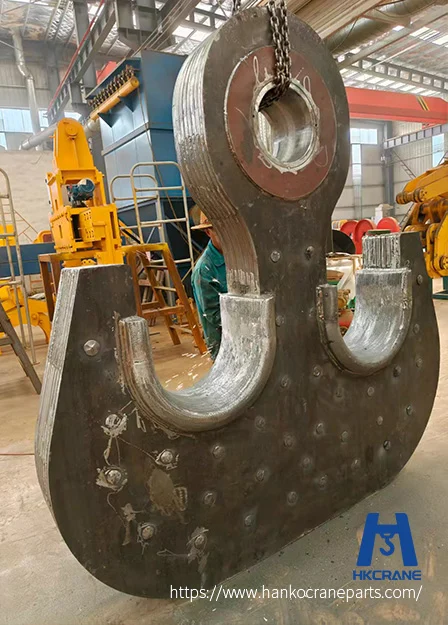
A Russian customer ordered a 320-ton laminated crane hook for heavy lifting duty. The specification follows the customer’s GOST requirement, so the dimensions, the plate pack construction and the acceptance checks were all locked against the approved drawings before production started.
If you are comparing hook options for large capacities, the structure matters as much as the rating. A laminated hook is built from stacked steel plates, riveted into one solid pack — a different construction path from the forged crane hooks for standard duty that cover most everyday lifts.
Laminate, Rivet and Weld Checks
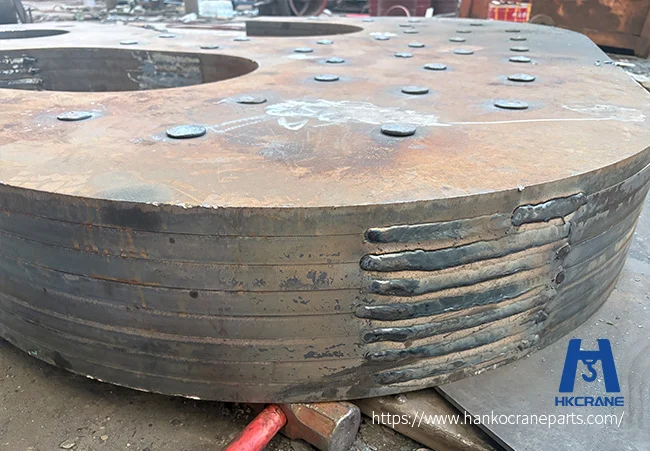
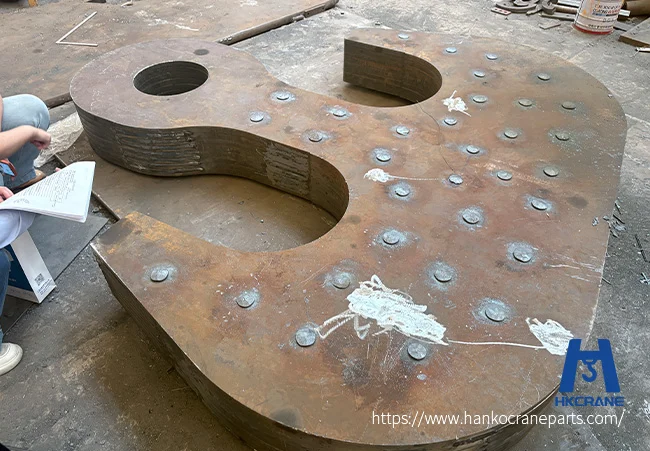
The laminated body is where a plate hook earns its rating, so the checks started there. Each plate pack was verified plate by plate: alignment, stacking, and the rivet pattern that clamps the pack into one unit.
- Plates stacked and aligned to the drawing before riveting
- Rivet heads inspected across the full pack surface
- Edge welds checked along the pack sides, where the plates are joined
These checks happen piece by piece, not on a sampled basis — you cannot re-weld a riveted 320-ton hook after it leaves the workshop. The crane hook range covers the same construction logic applied across the smaller hook families.
Machining and Size Verification Against the Drawing
With the packs assembled, attention moved to the machined surfaces: the hook seats that carry the load and the lifting eyes that connect the hook to the crane. Each bearing surface was machined clean, then the dimensions were verified against the approved GOST drawing — the same discipline behind our size and load rating chart for standard hooks.
Every check was recorded with the piece it belongs to. If your project needs documentation, tell us at the enquiry stage: material certificates and proof test records are available on request, so the paperwork is ready when the hook ships instead of holding it back.
| Check | What it covered |
|---|---|
| Laminate packs | Plates stacked, aligned and riveted to the drawing |
| Rivets and edge welds | Condition checked across the pack surfaces and sides |
| Hook seats | Bearing surfaces machined and finished clean |
| Size verification | Dimensions verified against the approved GOST drawing |
| Marking | Identification confirmed on the finished pack |
Loading for the Road to the Freight Forwarder
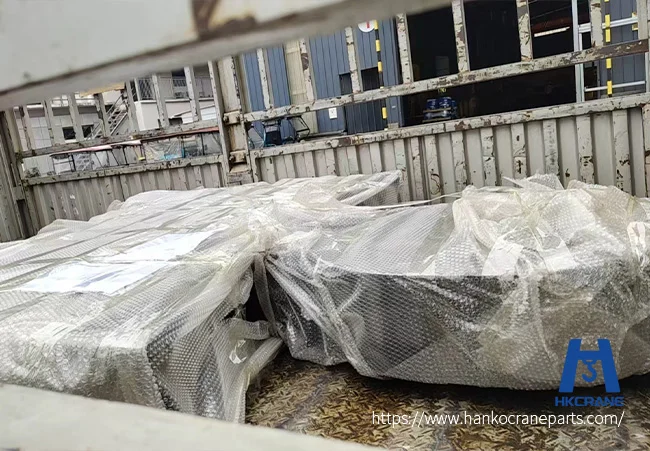
The finished hooks were padded, wrapped in cushioning film and strapped for the road leg. Then the units were loaded onto the truck for the freight forwarder’s warehouse — the handover point before the ocean leg to Russia. Hook types by lifting duty explains where laminated hooks sit among single, double and swivel designs, if you are mapping a specification of your own.
Every loading step is photographed, so the customer can verify the condition and quantity before the container leaves — the same dispatch discipline we apply to every Russia-bound order.
FAQ
What is a laminated (plate) crane hook?
Why choose a laminated hook for a 320-ton capacity?
Can hooks be built to GOST dimensions?
What documents can I get with a laminated hook order?
How is a large laminated hook packed for shipping?
Need a laminated hook built to your GOST specification? Send the drawing, the capacity and the duty cycle — our team will confirm the design, quote the lead time, and prepare the documents your project requires. Contact Hanko to start your crane hook enquiry.