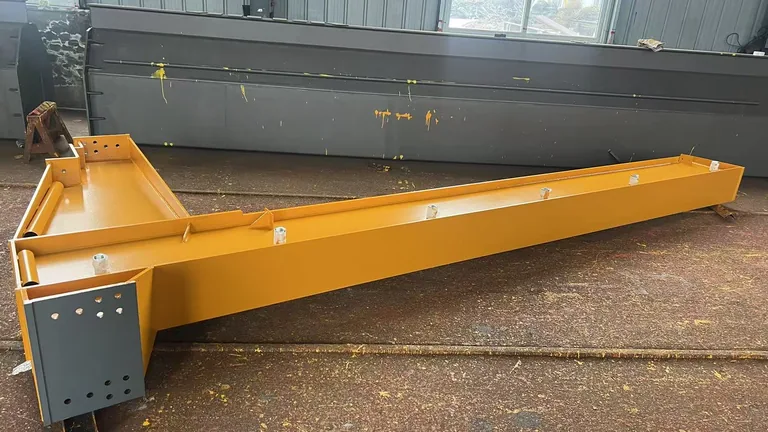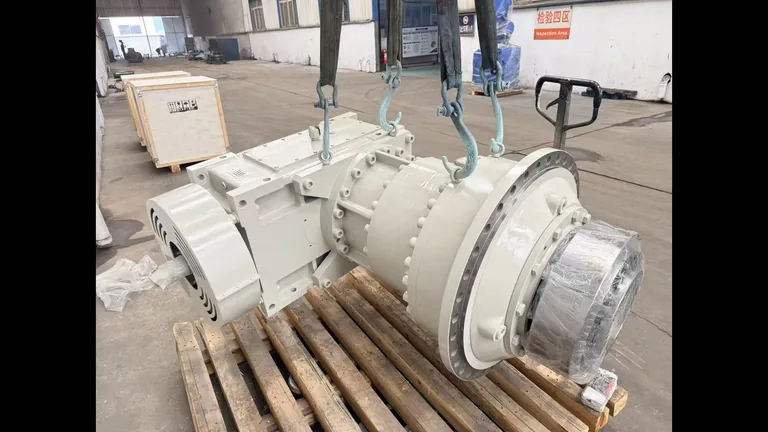
Crane breakdowns rarely start with a dramatic failure. They start with small, repeatable signals: a new scraping noise on travel, a hook latch that doesn’t close cleanly, a wire rope that looks dry and “hairy,” or wheels that keep eating one rail.
If you maintain overhead cranes or gantry cranes, catching these signals early matters for two reasons:
- Safety. Many defects are in the load path (rope, hook, sheaves, brake). Those aren’t “run it until next shutdown” items.
- Uptime and cost. Replacing the wrong part, or replacing a part without fixing the root cause (alignment, lubrication, electrical issues), is how you end up buying the same crane replacement parts twice.
⚠️ Warning: If you suspect a crack, deformation, brake slip, or uncommanded motion, stop and isolate the crane and involve a qualified inspector/technician. General pre-operation inspection guidance is available from the Canadian Centre for Occupational Health and Safety in its Crane Pre-operation Inspection checklist.
Quick triage: what you see/hear usually points to one of four systems
Most replacement needs fall into these buckets:
- Load path (hook block, hook, sheaves, wire rope, rope drum): anything that carries the load.
- Hoist and braking (brake, couplings, bearings, gearbox): anything that controls lift and stop.
- Travel/runway (wheels, rails, end truck components): anything that moves the bridge/trolley.
- Electrical and controls (pendant/radio, contactors, cabling, collectors): anything that commands motion.
Use the sections below as a symptom-to-action checklist.
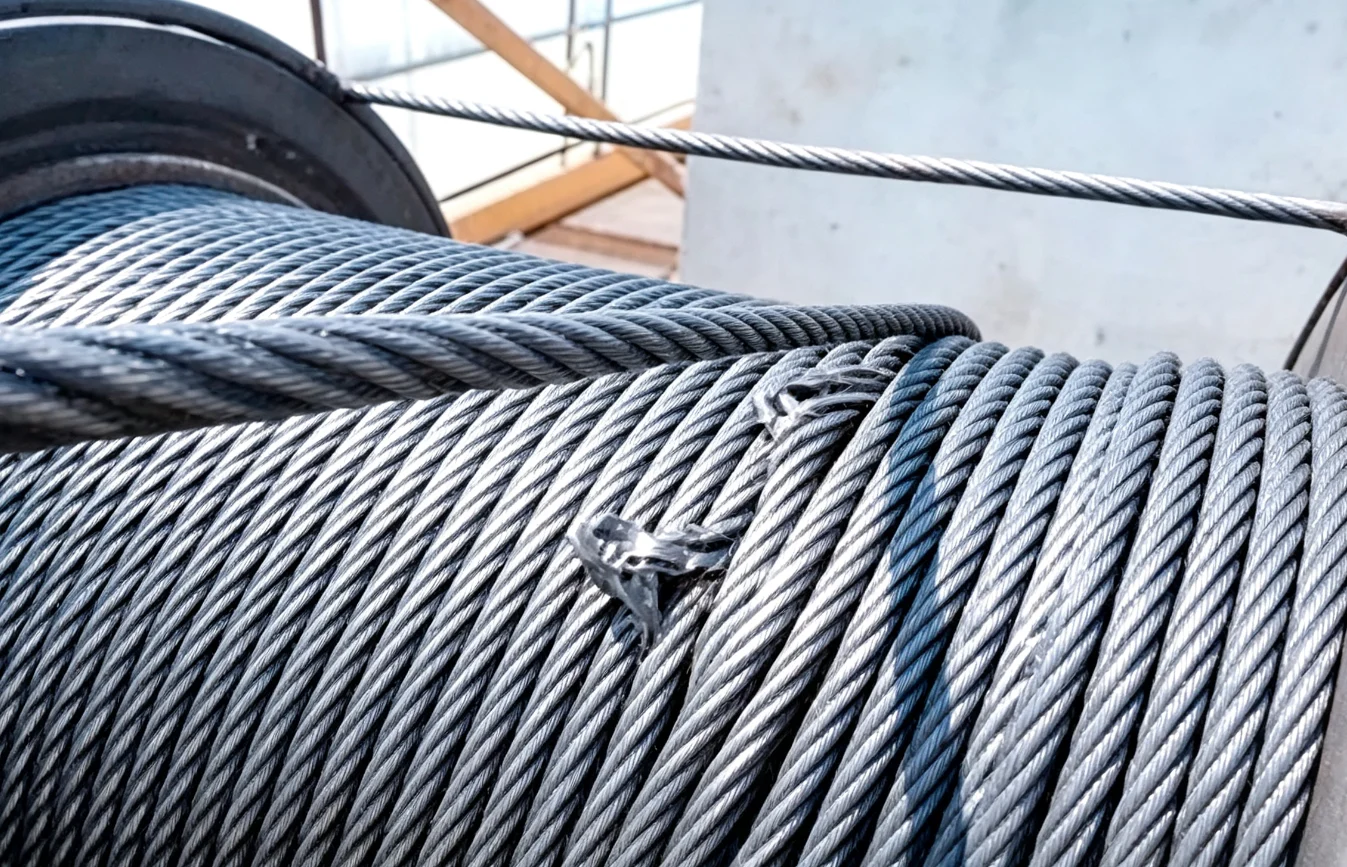
1) Wire rope: visible damage, distortion, or corrosion is a replacement signal
Wire rope defects are one of the most common findings in crane inspections. A practical starting point is to look for broken wires, kinks, birdcaging, crushing, corrosion, and diameter reduction, especially where the rope runs over sheaves and onto the drum.
Safety inspection guidance consistently calls out these items as key checkpoints.
Signs you’ll notice on the floor
- “Hairy” sections or clusters of broken wires
- Lồng chim (the rope bulges and strands open up)
- Kinks or crushed spots (often from shock load or improper spooling)
- Rust, pitting, or stiff sections that don’t flex evenly
- Dry rope (little lubrication, faster wear)
What to do next
- Document where the damage is (distance from end connection, which reeving line).
- Inspect the rope path: sheave groove condition, drum groove wear, fleet angle issues, and spooling.
- Use the crane manufacturer’s criteria (or the standard used at your site) for discard thresholds. For a plain-language overview of what an inspection should cover, see Basic Guidelines of Wire Rope Inspection.
If you’re ordering a replacement rope, knowing the exact construction, diameter, lay type, end terminations, and reeving configuration avoids delays.
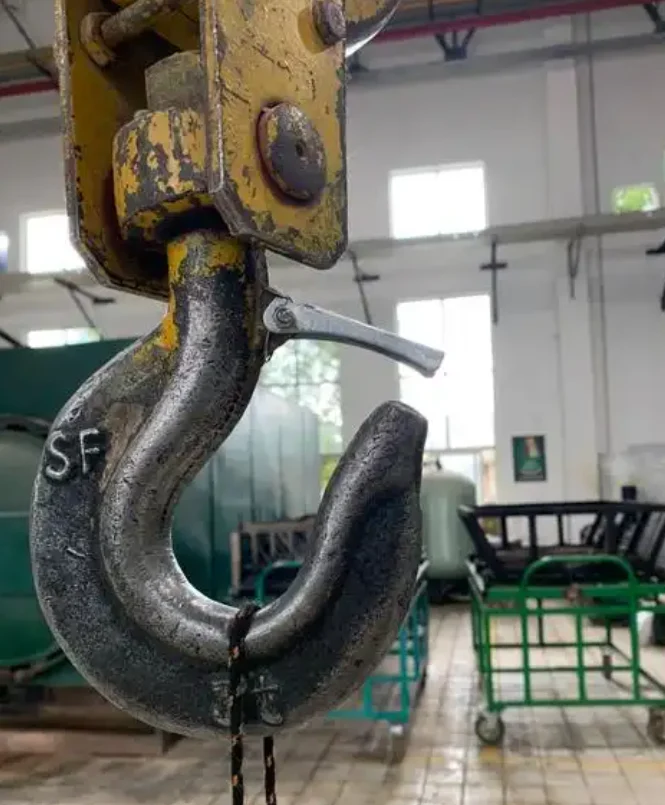
2) Hook and hook block: deformation, cracks, and latch issues aren’t minor
Hooks carry load and see shock, side loading, and wear over time. A good inspection baseline is summarized in educational references on ASME hook inspection criteria (for example, Mazzella’s overview of ASME B30 hook inspection criteria and Crane 1’s notes on ASME B30.10 hook inspections).
Signs that point to hook or hook-block replacement/repair
- Any visible crack on the hook body or throat area
- A hook that looks twisted or “opened up” compared with its original profile
- Deep wear at the saddle (load-bearing surface)
- Latch problems: missing, bent, doesn’t close, or doesn’t spring back
- Pins/bushings that feel loose or show scoring (hook block wear often hides here)
What to do next
- Remove from service if there’s any crack or serious deformation.
- Check whether the crane is being side-loaded (common cause of hook twist).
- If you need a replacement, confirm the hook type, capacity, throat dimensions, and the hook block configuration. For a quick overview of hook styles and where they’re used, see types of crane hooks.
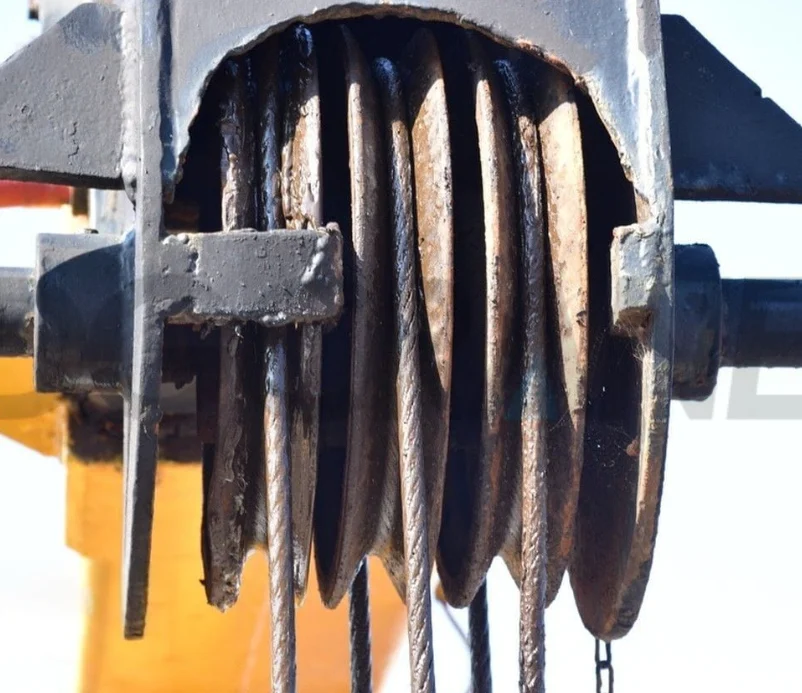
3) Sheaves: groove wear and rough rotation will shorten rope life
Sheaves don’t always fail loudly. They fail by slowly damaging the rope.
Signs your sheaves need attention
- Grooves look sharp, flattened, or uneven
- Rope imprinting in the groove
- Wobble, binding, or rough rotation (bearing issues)
- Chipped flanges or visible cracks
What to do next
- Inspect the groove profile relative to rope diameter.
- Don’t replace rope without checking sheaves, or the new rope will wear fast.
4) Rope drum problems: mis-spooling, groove wear, and tracking issues
A rope that “walks,” piles, or rides out of grooves is often telling you something about the drum, spooling system, or alignment.
Signs you’ll see
- Rope piling up instead of layering evenly
- Rope jumping grooves or rubbing flanges
- Mòn rãnh không đều or burrs
- Anchor/termination area looks worn or damaged
What to do next
- Stop treating it as a rope-only issue.
- Check fleet angle, level wind (if present), sheave alignment, and drum groove condition.
5) Brakes: drift, slip, or delayed stopping usually means parts are worn or out of adjustment
If the crane doesn’t stop cleanly, that’s a safety issue.
Warning signs
- Load drift when holding position
- Longer stopping distance or inconsistent stopping
- Jerky stopping or chatter
- Burnt smell or unusual heat near the brake area
What to do next
- Take the crane out of service for inspection if braking is unreliable.
- Confirm brake type/model and lining/shoe configuration before ordering parts.
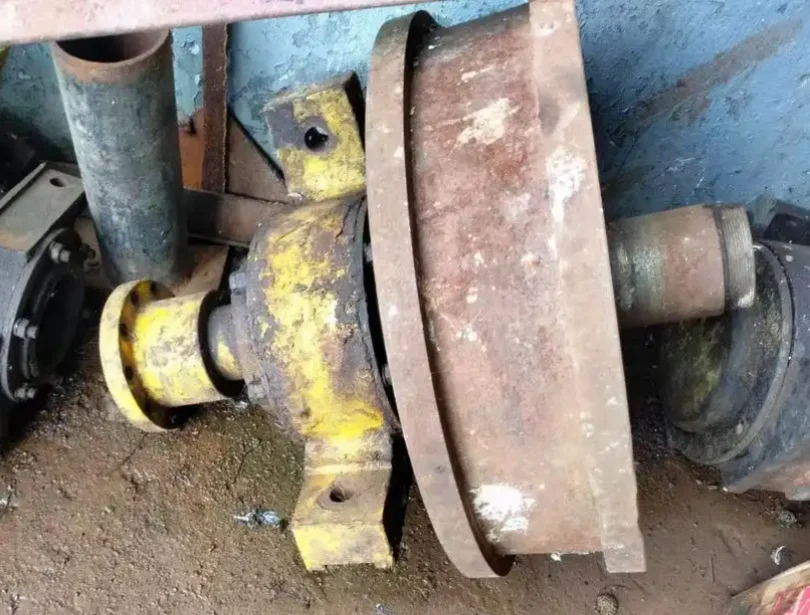
6) Wheels and rails: one-sided flange wear, metal dust, and scraping are root-cause clues
Wheel issues don’t just break wheels. They chew rails, drive motors, and structure.
Signs you can spot quickly
- Loud scraping during travel
- Shiny wear marks on rail sides
- Metal filings/dust near the rail or end trucks
- One-sided flange wear (the classic sign of misalignment or skew)
- Spalling/pitting on wheel tread or rail head
- Cracked or broken flanges
A practical overview of visible rail-side wear patterns and what they often mean is covered in Tương tác giữa bánh xe cần cẩu và đường ray: Nguyên nhân, vấn đề và giải pháp.
For broader diagnosis of wheel wear patterns and causes, neutral references like Assembly Specialty’s wire rope inspection overview can help maintenance teams connect what they see in the field to likely root causes.
Replace parts vs fix alignment
- If wear is repeatable and one-sided, expect a runway/alignment issue.
- If wear is uniform and slow, it may be normal life-cycle wear.
Replacing wheels without addressing rail gauge, runway straightness, or crane geometry can lead to the same failure pattern showing up again.
If you’re sourcing wheels, having the wheel type, tread/flange dimensions, material requirement, and assembly configuration ready will shorten the quoting cycle. For a component overview, see bánh xe cần cẩu.
7) Bearings and gearboxes: heat, vibration, and new noise are early warnings
Bearings and gearboxes usually give notice before failure.
Signs that suggest replacement parts may be needed
- Grinding, knocking, or clicking noises
- Rung động bất thường Điều đó trước đây không hề có.
- Quá nóng (Vỏ máy nóng, mùi nóng)
- Thông tin rò rỉ xung quanh các gioăng hộp số
- Chuyển động di chuyển/nâng hạ chậm chạp hoặc giật cục
What to do next
- Trước tiên hãy kiểm tra quy trình bôi trơn. Nhiều sự cố bắt nguồn từ việc bôi trơn không đúng cách.
- Nếu hộp số hoặc ổ bi bị hư hỏng, hãy xác nhận kiểu máy/tỷ số truyền, kích thước lắp đặt và kích thước trục trước khi đặt hàng.
8) Hệ thống điện và điều khiển: các lỗi không thường xuyên thường do hao mòn và nhiệt độ gây ra.
Các kỹ thuật viên vận hành sẽ mô tả những hiện tượng này là "lỗi nhỏ". Bộ phận bảo trì thường nhận thấy một quy luật nhất định.
Các dấu hiệu cần xem xét như tín hiệu thay thế/sửa chữa
- Các thao tác điều khiển bị chậm hoặc không phản hồi một cách nhất quán.
- Những chuyến đi thường xuyên, cầu chì bị cháy hoặc các lỗi nhỏ gây phiền toái
- Tấm nóng, Dây điện bị đổi màu hoặc lớp cách điện bị nứt.
- Các điểm tiếp xúc bị rỗ/lỏng trong các công tắc tơ/rơle
- Dây cáp mặt dây chuyền bị hư hỏng hoặc bộ phận giảm căng bị hỏng
What to do next
- Kiểm tra các mối nối, tình trạng tiếp xúc và đường đi của cáp.
- Nếu thay thế linh kiện, hãy ghi lại điện áp, loại điều khiển và mã nhận dạng linh kiện của nhà sản xuất gốc (OEM).
Những thứ cần chuẩn bị trước khi đặt mua phụ tùng thay thế cần cẩu
Để đẩy nhanh quá trình yêu cầu báo giá (RFQ) và giảm thiểu khả năng không phù hợp, hãy thu thập:
- Loại cần cẩu (cầu trục trên cao, cần trục giàn, cần trục cần cẩu), tải trọng và cấp độ làm việc (nếu biết)
- Thông tin nhà sản xuất và số sê-ri/tên sản phẩm
- Ảnh chụp khu vực bị mòn/hư hỏng (toàn cảnh + cận cảnh)
- Các kích thước quan trọng (đường kính/độ rộng mặt lốp/vành bánh xe, kích thước ray, đường kính dây thừng, chiều dài móc)
- Môi trường hoạt động (ngoài trời, không khí mặn, nhiệt độ cao, bụi bẩn)
- Mô hình hỏng hóc (chỉ xảy ra ở một phía, tại một vị trí đường băng cụ thể, sau khi chịu tải trọng nhất định)
Câu hỏi thường gặp
1. Làm sao để biết dây cáp cẩu của tôi cần được thay thế?
Hãy tìm kiếm các dấu hiệu hư hỏng có thể nhìn thấy như dây bị đứt, bị xoắn, bị bó chặt, bị bẹp, bị ăn mòn nghiêm trọng hoặc đường kính giảm đáng kể. Đặc biệt chú ý đến các đoạn dây thường xuyên chạy qua ròng rọc hoặc cuộn vào tang trống.
2. Tôi nên làm gì nếu móc cẩu xuất hiện vết nứt hoặc biến dạng?
Nếu phát hiện bất kỳ vết nứt, biến dạng hoặc khe hở miệng móc nào bị giãn rộng, hãy ngừng vận hành cần cẩu ngay lập tức. Hãy nhờ kỹ thuật viên có chuyên môn kiểm tra hoặc thay thế móc trước khi tiếp tục hoạt động.
3. Tôi có nên thay thế ngay các bánh xe cần cẩu bị mòn hay còn nguyên nhân nào khác?
Nếu hiện tượng mòn bánh xe kèm theo tiếng cọ xát lớn, vết xước bóng trên đường ray, mạt kim loại hoặc mòn không đều ở mép vành, vấn đề có thể do đường ray bị lệch hoặc cần cẩu bị nghiêng. Bạn nên xác định và khắc phục vấn đề lệch trục trước khi lắp bánh xe mới; nếu không, bánh xe mới cũng sẽ bị mòn sớm.
4. Những dấu hiệu cảnh báo thường gặp về sự cố phanh cần cẩu là gì?
Các dấu hiệu cảnh báo chính bao gồm hiện tượng trôi tải khi giữ vị trí, quãng đường dừng tăng lên, dừng giật cục hoặc rung lắc, và mùi khét hoặc nhiệt độ quá cao phát ra gần cụm phanh. Nếu bất kỳ dấu hiệu nào trong số này xảy ra, hãy dừng sử dụng cần cẩu ngay lập tức để kiểm tra.
5. Tôi cần thu thập những thông tin gì trước khi đặt mua phụ tùng thay thế cho cần cẩu?
Để đảm bảo báo giá chính xác và tránh nhầm lẫn linh kiện, vui lòng thu thập các thông tin sau trước khi đặt hàng:
-
Thông số kỹ thuật cần cẩu: Loại cần cẩu (cần cẩu trên cao, cần cẩu giàn, cần cẩu cần trục), thông tin trên bảng tên nhà sản xuất và số sê-ri.
-
Hình ảnh & Số đo: Ảnh chụp rõ nét khu vực bị mòn cùng với các kích thước quan trọng (ví dụ: đường kính/mặt lốp/vành bánh xe, kích thước ray, đường kính dây cáp, hoặc kích thước họng móc).
-
Điều kiện vận hành: Thông tin chi tiết về môi trường hoạt động (ví dụ: ngoài trời, nhiệt độ cao, các yếu tố ăn mòn) và các kiểu hỏng hóc cụ thể đã quan sát được.
Các bước tiếp theo
Nếu bạn thấy bất kỳ dấu hiệu cảnh báo nào ở trên, con đường nhanh nhất thường là:
- Xác định xem đó là do hao mòn bộ phận hay do vấn đề hệ thống (căn chỉnh, bôi trơn, lỗi điện).
- Xác nhận cấu hình chính xác (kích thước, kiểu máy, loại máy).
- Tìm nguồn cung cấp linh kiện phù hợp với thông tin truy xuất nguồn gốc và tài liệu kiểm tra.
Nếu bạn cần người khác kiểm tra lại các triệu chứng, Hanko có thể giúp xác định các bộ phận thay thế cần cẩu phù hợp dựa trên thông tin trên bảng tên, kích thước và hình ảnh. Bắt đầu từ đây: Phụ tùng cần cẩu Hanko.