
Crane breakdowns rarely start with a dramatic failure. They start with small, repeatable signals: a new scraping noise on travel, a hook latch that doesn’t close cleanly, a wire rope that looks dry and “hairy,” or wheels that keep eating one rail.
If you maintain overhead cranes or gantry cranes, catching these signals early matters for two reasons:
- Safety. Many defects are in the load path (rope, hook, sheaves, brake). Those aren’t “run it until next shutdown” items.
- Uptime and cost. Replacing the wrong part, or replacing a part without fixing the root cause (alignment, lubrication, electrical issues), is how you end up buying the same crane replacement parts twice.
⚠️ Warning: If you suspect a crack, deformation, brake slip, or uncommanded motion, stop and isolate the crane and involve a qualified inspector/technician. General pre-operation inspection guidance is available from the Canadian Centre for Occupational Health and Safety in its Crane Pre-operation Inspection checklist.
Quick triage: what you see/hear usually points to one of four systems
Most replacement needs fall into these buckets:
- Load path (hook block, hook, sheaves, wire rope, rope drum): anything that carries the load.
- Hoist and braking (brake, couplings, bearings, gearbox): anything that controls lift and stop.
- Travel/runway (wheels, rails, end truck components): anything that moves the bridge/trolley.
- Electrical and controls (pendant/radio, contactors, cabling, collectors): anything that commands motion.
Use the sections below as a symptom-to-action checklist.
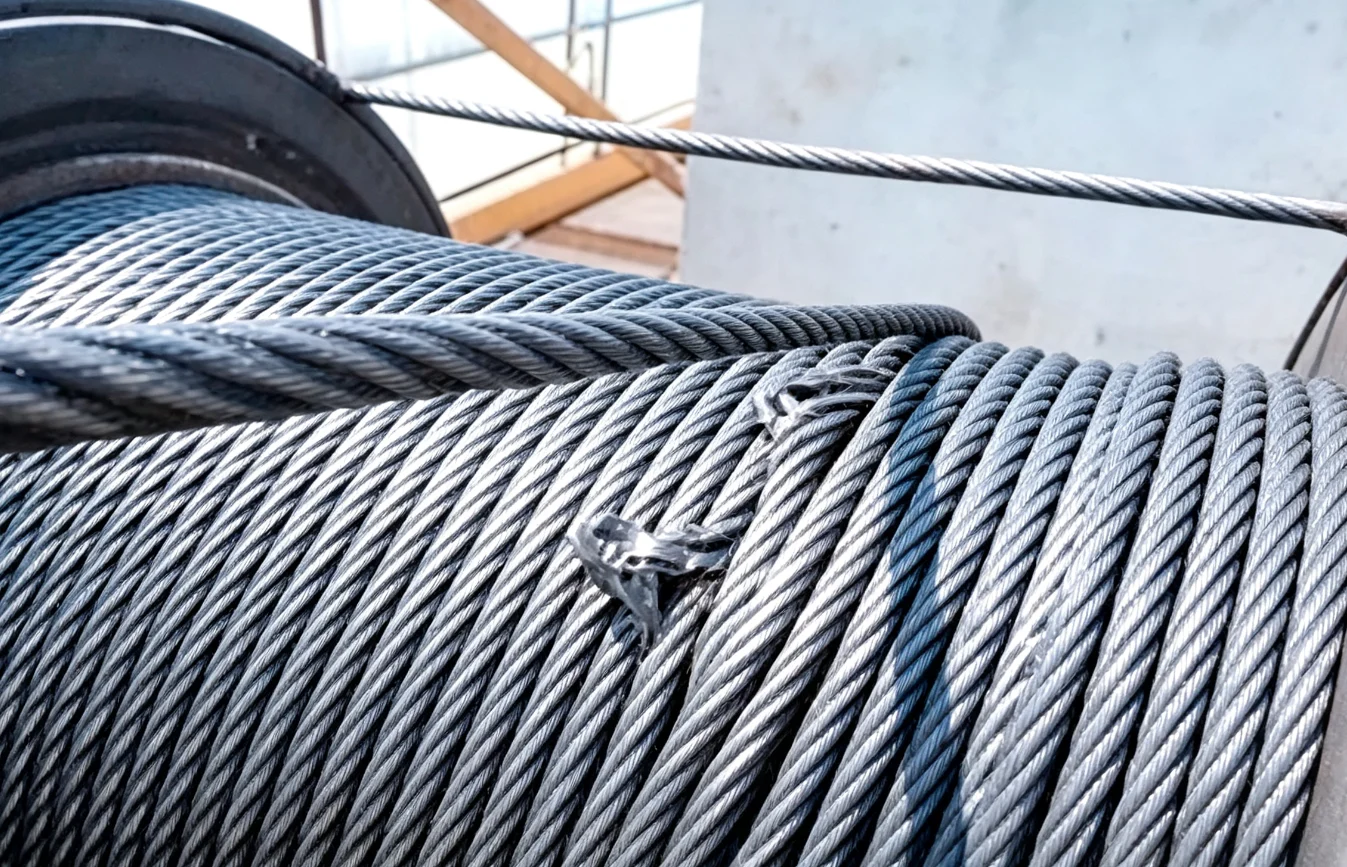
1) Wire rope: visible damage, distortion, or corrosion is a replacement signal
Wire rope defects are one of the most common findings in crane inspections. A practical starting point is to look for broken wires, kinks, birdcaging, crushing, corrosion, and diameter reduction, especially where the rope runs over sheaves and onto the drum.
Safety inspection guidance consistently calls out these items as key checkpoints.
Signs you’ll notice on the floor
- “Hairy” sections or clusters of broken wires
- Birdcaging (the rope bulges and strands open up)
- Kinks or crushed spots (often from shock load or improper spooling)
- Rust, pitting, or stiff sections that don’t flex evenly
- Dry rope (little lubrication, faster wear)
What to do next
- Document where the damage is (distance from end connection, which reeving line).
- Inspect the rope path: sheave groove condition, drum groove wear, fleet angle issues, and spooling.
- Use the crane manufacturer’s criteria (or the standard used at your site) for discard thresholds. For a plain-language overview of what an inspection should cover, see Basic Guidelines of Wire Rope Inspection.
If you’re ordering a replacement rope, knowing the exact construction, diameter, lay type, end terminations, and reeving configuration avoids delays.
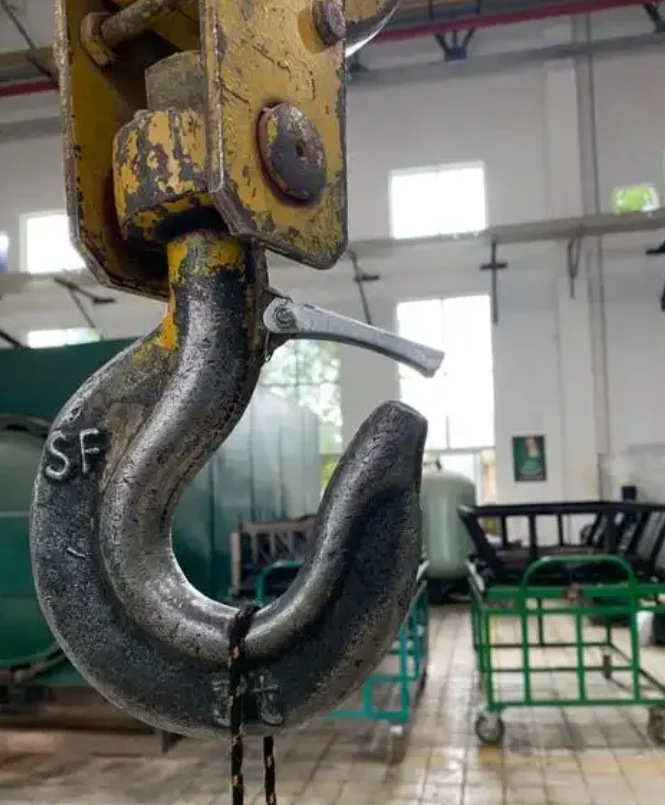
2) Hook and hook block: deformation, cracks, and latch issues aren’t minor
Hooks carry load and see shock, side loading, and wear over time. A good inspection baseline is summarized in educational references on ASME hook inspection criteria (for example, Mazzella’s overview of ASME B30 hook inspection criteria and Crane 1’s notes on ASME B30.10 hook inspections).
Signs that point to hook or hook-block replacement/repair
- Any visible crack on the hook body or throat area
- A hook that looks twisted or “opened up” compared with its original profile
- Deep wear at the saddle (load-bearing surface)
- Latch problems: missing, bent, doesn’t close, or doesn’t spring back
- Pins/bushings that feel loose or show scoring (hook block wear often hides here)
What to do next
- Remove from service if there’s any crack or serious deformation.
- Check whether the crane is being side-loaded (common cause of hook twist).
- If you need a replacement, confirm the hook type, capacity, throat dimensions, and the hook block configuration. For a quick overview of hook styles and where they’re used, see types of crane hooks.
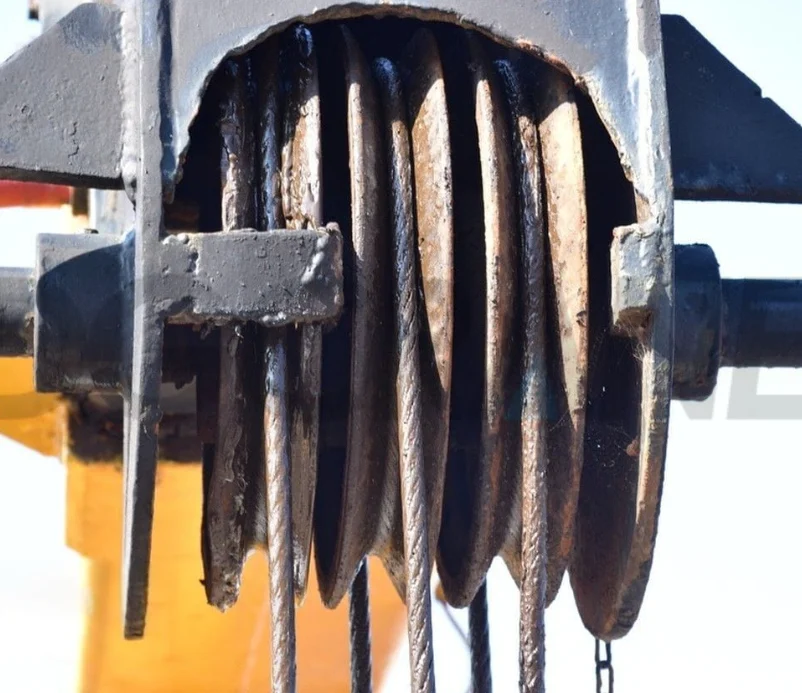
3) Sheaves: groove wear and rough rotation will shorten rope life
Sheaves don’t always fail loudly. They fail by slowly damaging the rope.
Signs your sheaves need attention
- Grooves look sharp, flattened, or uneven
- Rope imprinting in the groove
- Wobble, binding, or rough rotation (bearing issues)
- Chipped flanges or visible cracks
What to do next
- Inspect the groove profile relative to rope diameter.
- Don’t replace rope without checking sheaves, or the new rope will wear fast.
4) Rope drum problems: mis-spooling, groove wear, and tracking issues
A rope that “walks,” piles, or rides out of grooves is often telling you something about the drum, spooling system, or alignment.
Signs you’ll see
- Rope piling up instead of layering evenly
- Rope jumping grooves or rubbing flanges
- Uneven groove wear or burrs
- Anchor/termination area looks worn or damaged
What to do next
- Stop treating it as a rope-only issue.
- Check fleet angle, level wind (if present), sheave alignment, and drum groove condition.
5) Brakes: drift, slip, or delayed stopping usually means parts are worn or out of adjustment
If the crane doesn’t stop cleanly, that’s a safety issue.
Warning signs
- Load drift when holding position
- Longer stopping distance or inconsistent stopping
- Jerky stopping or chatter
- Burnt smell or unusual heat near the brake area
What to do next
- Take the crane out of service for inspection if braking is unreliable.
- Confirm brake type/model and lining/shoe configuration before ordering parts.
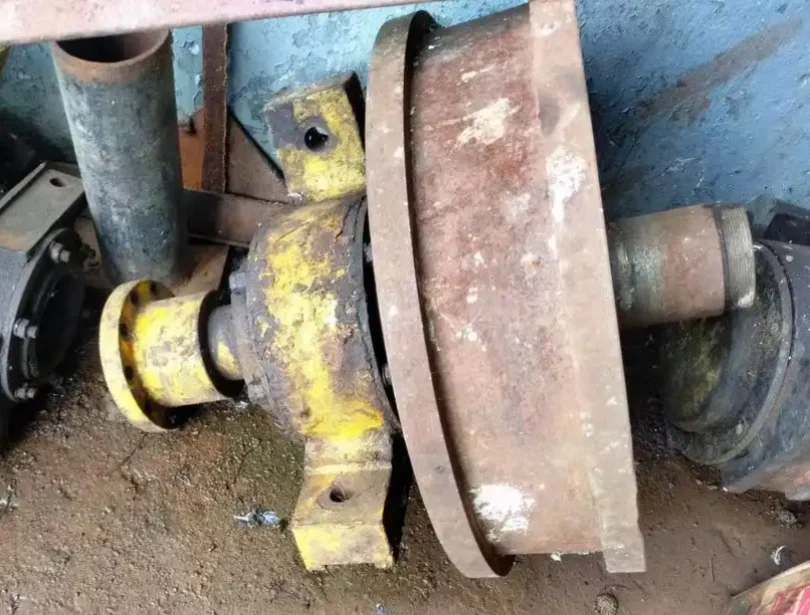
6) Wheels and rails: one-sided flange wear, metal dust, and scraping are root-cause clues
Wheel issues don’t just break wheels. They chew rails, drive motors, and structure.
Signs you can spot quickly
- Loud scraping during travel
- Shiny wear marks on rail sides
- Metal filings/dust near the rail or end trucks
- One-sided flange wear (the classic sign of misalignment or skew)
- Spalling/pitting on wheel tread or rail head
- Cracked or broken flanges
A practical overview of visible rail-side wear patterns and what they often mean is covered in Crane Wheel vs Rail Interaction: Causes, Problems, and Solutions.
For broader diagnosis of wheel wear patterns and causes, neutral references like Assembly Specialty’s wire rope inspection overview can help maintenance teams connect what they see in the field to likely root causes.
Replace parts vs fix alignment
- If wear is repeatable and one-sided, expect a runway/alignment issue.
- If wear is uniform and slow, it may be normal life-cycle wear.
Replacing wheels without addressing rail gauge, runway straightness, or crane geometry can lead to the same failure pattern showing up again.
If you’re sourcing wheels, having the wheel type, tread/flange dimensions, material requirement, and assembly configuration ready will shorten the quoting cycle. For a component overview, see crane wheels.
7) Bearings and gearboxes: heat, vibration, and new noise are early warnings
Bearings and gearboxes usually give notice before failure.
Signs that suggest replacement parts may be needed
- Grinding, knocking, or clicking noises
- Unusual vibration that wasn’t there before
- Overheating (hot housings, hot smell)
- Leaks around gearbox seals
- Sluggish or jerky travel/hoist movement
What to do next
- Verify lubrication practices first. Many failures start as lubrication failures.
- If a gearbox or bearing is deteriorating, confirm model/ratio, mounting, and shaft dimensions before ordering.
8) Electrical and controls: intermittent faults often come from wear and heat
Operators will describe these as “glitches.” Maintenance usually sees a pattern.
Signs to treat as replacement/repair signals
- Controls lag or don’t respond consistently
- Frequent trips, blown fuses, or nuisance faults
- Hot panels, discolored wiring, or insulation cracking
- Pitted/loose contacts in contactors/relays
- Pendant cable damage or broken strain reliefs
What to do next
- Inspect connections, contact condition, and cable routing.
- If replacing parts, document voltage, control type, and OEM part identifiers.
What to gather before you order crane replacement parts
To speed up RFQs and reduce the chance of a mismatch, collect:
- Crane type (overhead bridge, gantry, jib), capacity, and duty class (if known)
- Manufacturer and serial/nameplate details
- Photos of the worn/damaged area (wide + close-up)
- Dimensions that matter (wheel diameter/tread/flange, rail size, rope diameter, hook throat)
- Operating environment (outdoor, salt air, high heat, dust)
- Failure pattern (one side only, one runway location, after specific loads)
FAQ
1. How do I know if my crane wire rope needs to be replaced?
Look for visible signs of damage such as broken wires, kinks, birdcaging, crushing, severe corrosion, or noticeable diameter reduction. Pay close attention to sections of the rope that frequently run over sheaves or spool onto the drum.
2. What should I do if the crane hook shows cracks or deformation?
If you discover any visible cracks, twisting, or an widened throat opening on the hook, remove the crane from service immediately. Have a qualified technician inspect or replace the hook before resuming operations.
3. Should I replace worn crane wheels immediately, or is there another underlying cause?
If wheel wear is accompanied by loud scraping noises, shiny rail marks, metal filings, or one-sided flange wear, the issue is likely caused by runway misalignment or crane skewing. You should identify and correct the alignment problem before installing new wheels; otherwise, the new wheels will wear out prematurely as well.
4. What are the common warning signs of crane brake failure?
Key warning signs include load drift when holding a position, increased stopping distances, jerky or chattering stops, and a burning smell or excessive heat originating near the brake assembly. If any of these occur, stop using the crane immediately for inspection.
5. What information should I gather before ordering crane replacement parts?
To ensure accurate quotes and avoid part mismatches, gather the following details prior to ordering:
-
Crane Specifications: Crane type (overhead, gantry, jib), manufacturer nameplate details, and serial number.
-
Visuals & Measurements: Clear photos of the worn area along with critical dimensions (e.g., wheel diameter/tread/flange, rail size, wire rope diameter, or hook throat size).
-
Operating Conditions: Operating environment details (e.g., outdoor, high heat, corrosive elements) and specific failure patterns observed.
Next steps
If you’re seeing any of the warning signs above, the fastest path is usually:
- Identify whether it’s part wear or a system issue (alignment, lubrication, electrical fault).
- Confirm the exact configuration (dimensions, model, duty class).
- Source the right parts with traceability and inspection documentation.
If you want a second set of eyes on the symptoms, Hanko can help identify the correct crane replacement parts based on your nameplate info, dimensions, and photos. Start here: Hanko crane parts.

 English
  Korean
  Russian
  Spanish
  Malay
Malay  Afrikaans
  Bulgarian
  French
  Bengali
  Italian
  Hungarian
  Vietnamese
  Thai
Thai  Indonesian
  German
  Arabic
  Japanese