Steel plants are among the toughest environments for overhead cranes. Equipment must move heavy loads every day while operating near furnaces, rolling mills, casting lines, and scrap yards.
Heat, dust, shock loads, and continuous duty speed up wear on crane components. As a result, choosing the right steel mill crane parts is essential for safety, uptime, and maintenance costs.
This guide explains the challenges of steel mill cranes, the parts that wear most often, and practical ways to improve reliability.
Makluman Utama
What crane parts are most important in a steel mill?
The most critical steel mill crane parts include:
- Heat-resistant crane wheels
- Heavy-duty hook blocks
- Wire rope drums
- Crane brakes
- Gearboxes
- Couplings
- Sheaves
These parts operate under high loads, elevated temperatures, and frequent duty cycles. Using properly engineered components reduces unexpected downtime and extends service life.
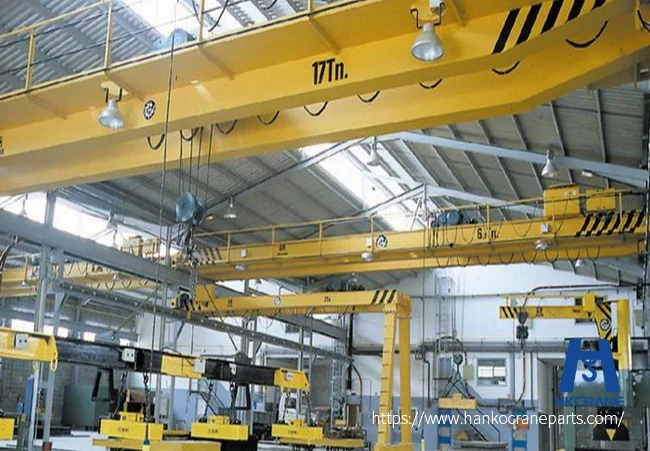
Why Steel Plants Are Hard on Cranes
Unlike general manufacturing, steel production places cranes under constant stress.
Common operating conditions include:
- Temperatures well above standard industrial environments
- Heavy lifting throughout the day
- Continuous A7–A8 duty cycles
- Dust and abrasive particles
- Frequent starts and stops
- High shock loading
Because of these conditions, standard crane components often wear out sooner than expected.
Common Crane Problems in Steel Mills
The same failure patterns appear in many steel plants.
Wheel Wear
High wheel pressure and hot rails increase surface wear.
Signs include:
- Flange wear
- Uneven rolling
- Rail damage
- Abnormal vibration
Proper material selection and heat treatment can significantly improve wheel life.
Learn more about crane wheel design:
→ Roda Krannya
Hook Block Fatigue
Hook blocks experience repeated heavy loading.
Inspect them regularly for:
- Wear at load-bearing surfaces
- Cracks
- Excessive throat opening
- Bearing damage
Replacing worn hook assemblies before failure reduces both downtime and safety risks.
Wire Rope Drum Damage
Drums work under constant rope tension.
Common problems include:
- Rope groove wear
- Surface cracking
- Rope misalignment
- Uneven winding
Well-machined rope grooves help extend rope life.
Brake Performance Loss
Steel mill cranes perform frequent stopping cycles.
Brake systems should be checked for:
- Lining wear
- Spring force
- Hydraulic leakage
- Heat damage
Reliable braking protects both equipment and personnel.
Gearbox Overheating
Heavy-duty lifting generates high gearbox loads.
Monitor:
- Oil condition
- Bearing temperature
- Gear wear
- Noise levels
Early maintenance prevents expensive failures.
Recommended Steel Mill Crane Parts
Different production areas place different demands on crane equipment.
| Permohonan | Recommended Parts |
|---|---|
| Scrap Yard | Crane Wheels, Hook Blocks |
| Continuous Casting | Rope Drums, Gearboxes |
| Rolling Mill | Couplings, Brakes |
| Billet Handling | Sheaves, Hook Assemblies |
| Slab Storage | Wheels, Gearboxes |
Choosing Parts That Last Longer
Material quality alone is not enough.
Also consider:
- Heat treatment records
- CNC machining accuracy
- Material traceability
- NDT inspection
- Dimensional consistency
For example, Hanko manufactures critical crane components with CNC machining, alloy steels, material traceability, and production systems aligned with ISO, CE, and FEM requirements. These manufacturing controls help improve consistency without changing the equipment design.
Maintenance Tips
Good maintenance extends component life.
Follow these practices:
- Lubricate moving parts on schedule.
- Inspect wheels and rails together.
- Replace worn wire ropes before failure.
- Monitor brake performance.
- Record vibration and temperature trends.
Preventive maintenance usually costs less than emergency repairs.
Soalan Lazim
What crane parts wear out fastest in steel plants?
Crane wheels, hook blocks, wire rope drums, brakes, and gearboxes usually experience the highest wear because of heavy loads and high temperatures.
What duty class is common in steel mills?
Many steel plants operate cranes in A7 or A8 duty classes with frequent lifting cycles.
How can steel plants reduce crane downtime?
Use preventive maintenance, monitor critical components, and replace worn parts before failure.
Are heat-resistant crane wheels necessary?
Yes. Heat-resistant materials improve wear resistance and reduce deformation in hot environments.
Can crane parts be customized?
Yes. Components such as wheels, rope drums, hook blocks, and couplings can be engineered to match crane dimensions and operating conditions.
Steel mills need crane parts that can perform under heavy loads and demanding conditions.
If you are upgrading an existing crane or sourcing replacement components, Hanko can supply engineered crane wheels, hook blocks, rope drums, brakes, gearboxes, and other critical parts designed for industrial lifting applications.
Contact our engineering team today to discuss your project requirements or request a quotation.

 English
  Korean
  Russian
  Spanish
  Malay
Malay  Afrikaans
  Bulgarian
  French
  Bengali
  Italian
  Hungarian
  Vietnamese
  Thai
Thai  Indonesian
  German
  Arabic
  Japanese