
What Are the Different Types of Crane Sheaves?
Featured Snippet
What are the main types of crane sheaves?
The main types of crane sheaves include:
- Fixed sheaves
- Moving sheaves
- Guide sheaves
- Single sheaves
- Double sheaves
- Multi-sheave blocks
- Forged crane sheaves
- Cast crane sheaves
- Rolled crane sheaves
- Welded crane sheaves
The correct choice depends on lifting capacity, wire rope diameter, duty class, operating environment, and maintenance requirements.
Introduction
A crane sheave is a key component in the lifting mechanism of overhead cranes, gantry cranes, port cranes, and heavy industrial lifting equipment.
Although a crane sheave looks simple, it plays an important role in guiding the wire rope, changing the direction of force, and improving lifting efficiency. The condition and design of the sheave directly affect wire rope life, lifting safety, and crane reliability.
Different applications require different types of crane sheaves. A light-duty workshop crane may use a simple single sheave, while a steel plant or port crane may require a heavy-duty multi-sheave block with advanced bearings and high-strength materials.
As a professional crane parts manufacturer, Hanko provides crane components designed for different industrial applications. In this guide, we explain common crane sheave types, material options, bearing designs, selection methods, and maintenance practices.
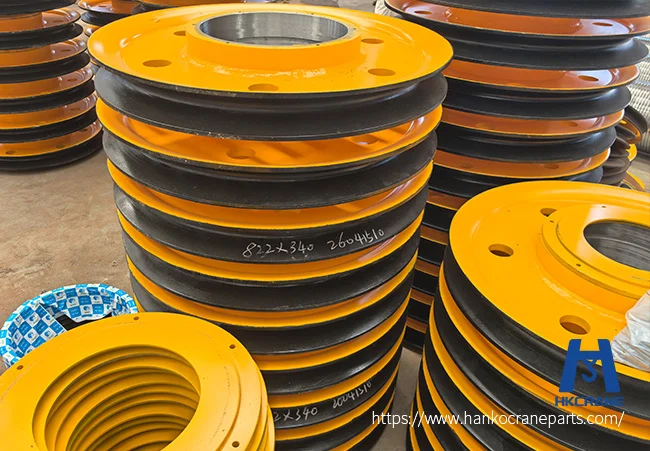
What Is a Crane Sheave?
A crane sheave is a grooved wheel that works together with a wire rope. It rotates around an axle or bearing system to reduce friction and control rope movement.
A complete lifting system may include:
- Crane sheave
- Wire rope
- Hook block
- Shaft
- Bearings
- Sheave frame
In many applications, multiple sheaves are combined into a crane sheave block to increase lifting capacity and improve load balance.
Types of Crane Sheaves by Function
The first way to classify crane sheaves is by their working purpose.
Fixed Sheave
A fixed sheave has a stationary axle position.
Its main function is to change the direction of the wire rope. It does not increase mechanical advantage but helps create a smoother rope path.
Fixed sheaves are commonly used in:
- Overhead cranes
- Tower cranes
- Hoisting mechanisms
- Wire rope guidance systems
They are especially useful when the crane structure requires a specific rope direction.
Moving Sheave
A moving sheave moves together with the lifted load.
It works with fixed sheaves to create mechanical advantage. By increasing the number of rope sections supporting the load, the system can lift heavier loads with lower rope tension.
Moving sheaves are commonly found in:
- Hook blocks
- Heavy-duty lifting systems
- Large industrial cranes
Guide Sheave
A guide sheave controls wire rope direction and prevents unwanted contact between the rope and crane structure.
It helps reduce:
- Rope bending stress
- Rope wear
- Abnormal rope movement
Guide sheaves are often installed near rope drums or areas where rope direction changes.
Types of Crane Sheaves by Number of Wheels
Single Sheave
A single sheave contains one wheel.
It has a simple structure and is suitable for:
- Light lifting applications
- Small cranes
- Rope direction changes
Single sheaves offer easy maintenance and lower installation costs.
Double Sheave
A double sheave uses two wheels installed together.
Compared with a single sheave, it provides:
- Better load distribution
- Higher lifting capacity
- Improved hook stability
Double sheaves are common in medium-duty overhead and gantry cranes.
Multi-Sheave Block
A multi-sheave block combines several sheaves into one assembly.
It is designed for heavy lifting applications where high load capacity is required.
Typical applications include:
- Steel plants
- Shipyards
- Ports
- Mining equipment
A multi-sheave block improves lifting capacity by increasing the rope supporting sections.
Types of Crane Sheaves by Manufacturing Process
Manufacturing methods influence strength, durability, and cost.
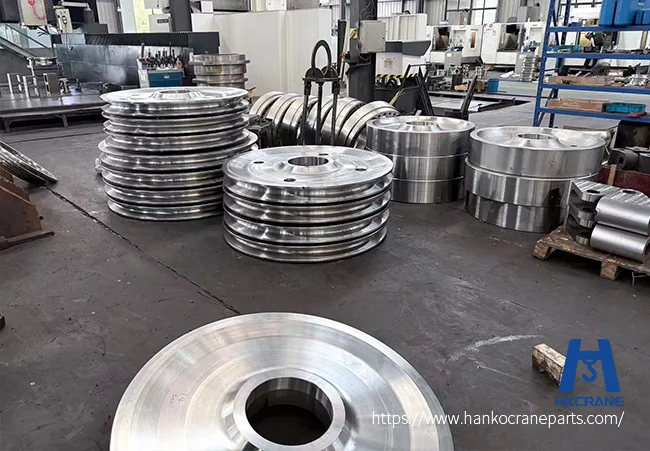
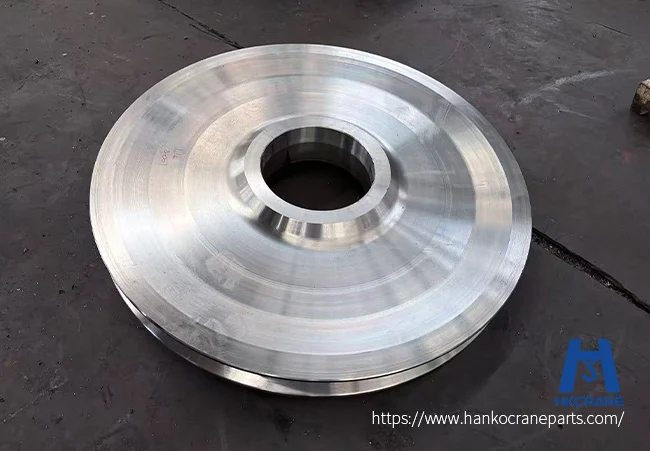
Forged Crane Sheaves
Forged crane sheaves are produced through metal forming under high pressure.
Advantages include:
- High material density
- Excellent impact resistance
- Better fatigue performance
Forged sheaves are suitable for:
- Heavy-duty cranes
- High-frequency operation
- Harsh industrial environments
Cast Crane Sheaves
Cast crane sheaves are manufactured by pouring molten metal into molds.
Benefits include:
- Flexible shapes
- Lower manufacturing cost
- Good performance in standard applications
However, casting quality control is important because internal defects may affect strength.
Rolled Crane Sheaves
Rolled crane sheaves are formed from steel plates through rolling processes.
They provide:
- Consistent dimensions
- Good wear resistance
- Lower weight
They are often used in medium-duty lifting equipment.
Welded Crane Sheaves
Welded crane sheaves are manufactured by assembling steel sections through welding.
They are suitable for:
- Large diameter sheaves
- Special designs
- Non-standard applications
Proper welding procedures and inspection are essential to ensure reliability.
Types of Crane Sheaves by Material
Material selection affects service life and operating performance.
Steel Sheave
A steel sheave is widely used in industrial cranes.
Advantages:
- High strength
- Good wear resistance
- Suitable for heavy loads
Steel sheaves are common in factories, ports, and steel plants.
Cast Iron Sheave
A cast iron sheave provides good vibration absorption and cost efficiency.
However, because cast iron has lower impact resistance, it is usually used for:
- Light-duty applications
- Stable operating conditions
Non-Metallic Sheaves
Non-metallic sheaves usually use materials such as nylon or engineering plastics.
Advantages include:
- Lightweight design
- Corrosion resistance
- Reduced wire rope damage
They are suitable for:
- Marine environments
- Chemical industries
- Corrosive conditions
Types of Crane Sheaves by Bearing Design
The bearing system affects rotation efficiency and load capacity.
Deep Groove Ball Bearing Sheaves
These sheaves use ball bearings for smooth rotation.
Advantages:
- Low friction
- High rotation speed
- Easy maintenance
They are suitable for lighter and medium loads.
Cylindrical Roller Bearing Sheaves
These sheaves provide higher radial load capacity.
They are commonly used for:
- Heavy-duty cranes
- Large lifting systems
- Continuous operation
Double-Row Full-Complement Cylindrical Roller Bearing Sheaves
This design provides maximum load capacity because it uses more rollers without a cage.
It is suitable for:
- Extremely heavy loads
- High shock loads
- Heavy industrial applications
Plain Bearing Sheaves
Plain bearing sheaves use sliding contact instead of rolling elements.
Advantages include:
- Simple structure
- Strong impact resistance
- Good performance at low speed
They are often used in special heavy-duty applications.
Types of Crane Sheave Grooves
The groove design directly affects wire rope life.
U-Groove Sheaves
U-groove sheaves are the standard choice for most lifting applications.
They provide:
- Better rope support
- Lower contact stress
- Longer wire rope life
V-Groove Sheaves
V-groove sheaves create stronger rope gripping force.
However, they can increase wire rope wear.
They are mainly used for:
- Traction systems
- Applications requiring stronger rope holding force
How to Select Crane Sheaves?
Choosing the correct sheave requires matching the component with the crane working conditions. Before going into the details below, it helps to review how to select crane sheaves step by step from a whole-system perspective.
1. Match Crane Sheave and Wire Rope Diameter
Correct matching crane sheave and wire rope diameter is essential.
A wrong combination can cause:
- Faster rope wear
- Excessive bending stress
- Reduced service life
The groove size must support the rope correctly without excessive pressure.
2. Check Crane Sheave Diameter Ratio
The crane sheave diameter ratio (D/d) refers to the relationship between sheave diameter and wire rope diameter.
A larger ratio reduces rope bending stress and improves fatigue life.
Heavy-duty cranes usually require higher diameter ratios because they operate under frequent lifting cycles.
3. Consider Working Environment
Different environments require different designs.
For example:
- Steel plants need heat-resistant materials.
- Ports require corrosion protection.
- Mining applications need wear-resistant designs.
4. Consider Duty Class
The crane working class affects sheave selection.
High-duty cranes require:
- Stronger materials
- Better bearings
- Higher fatigue resistance
How to Maintain Crane Sheaves?
Proper maintenance prevents unexpected failures.
Crane Sheave Inspection
Regular crane sheave inspection should check:
- Groove wear
- Cracks
- Flange damage
- Bearing condition
- Rope alignment
Replace damaged sheaves before they affect lifting safety.
Crane Sheave Wear Monitoring
Common wear signs include:
- Enlarged grooves
- Uneven groove surfaces
- Edge damage
- Abnormal rope movement
Excessive crane sheave wear can shorten wire rope life.
Crane Sheave Lubrication
Proper crane sheave lubrication reduces friction and protects bearings.
Maintenance teams should:
- Follow lubrication schedules
- Use suitable grease
- Avoid excessive lubrication
Crane Sheave Alignment
Correct crane sheave alignment ensures the rope runs smoothly.
Misalignment can cause:
- Uneven wear
- Rope damage
- Increased operating resistance
Why Choose Hanko for Crane Sheaves?
Hanko manufactures crane sheaves and related lifting components for industrial applications.
Our manufacturing process focuses on:
- CNC machining accuracy
- Material traceability
- Suitable heat treatment processes
- Dimensional inspection
Hanko also supplies a complete range of crane components, including:
For different working conditions, our engineering team can help customers select suitable materials, structures, and manufacturing methods.
FAQ
What are the most common types of crane sheaves?
The most common types include fixed sheaves, moving sheaves, guide sheaves, single sheaves, and multi-sheave blocks.
What is the difference between a crane pulley and a crane sheave?
A crane pulley usually refers to the complete rope guiding system, while a crane sheave specifically refers to the grooved wheel inside the pulley system.
Which crane sheave material is best for heavy-duty cranes?
Steel and forged crane sheaves are commonly selected for heavy-duty cranes because they provide high strength and fatigue resistance.
How often should crane sheaves be inspected?
Inspection frequency depends on crane duty class, working environment, and operating hours. Heavy-duty cranes require more frequent inspection.
How can I extend crane sheave service life?
Use the correct sheave size, maintain proper alignment, lubricate bearings regularly, and replace worn components early.

 English
  Korean
  Russian
  Spanish
  Malay
Malay  Afrikaans
  Bulgarian
  French
  Bengali
  Italian
  Hungarian
  Vietnamese
  Thai
Thai  Indonesian
  German
  Arabic
  Japanese