Bevezetés
In crane systems, wire rope failure is one of the most critical safety risks affecting lifting operations. Because the wire rope directly bears dynamic loads, any failure can immediately lead to dropped loads, equipment damage, and serious injuries.
Therefore, understanding the causes, inspection standards, and discard criteria of wire ropes is essential for ensuring operational safety and reliability.
Based on GB/T 5972-2023 and practical industry experience, this guide provides a structured analysis of wire rope failure mechanisms and actionable prevention strategies.
1. Common Types of Wire Rope Failure
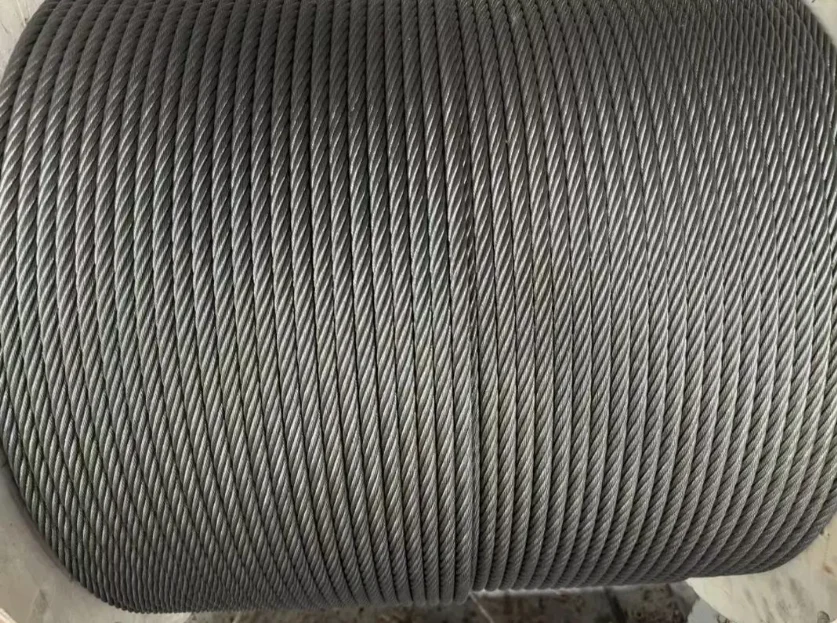
In practice, wire rope failure does not occur suddenly. Instead, it develops progressively under repeated stress, wear, and environmental impact.
1.1 Broken Wires (Fatigue Failure)
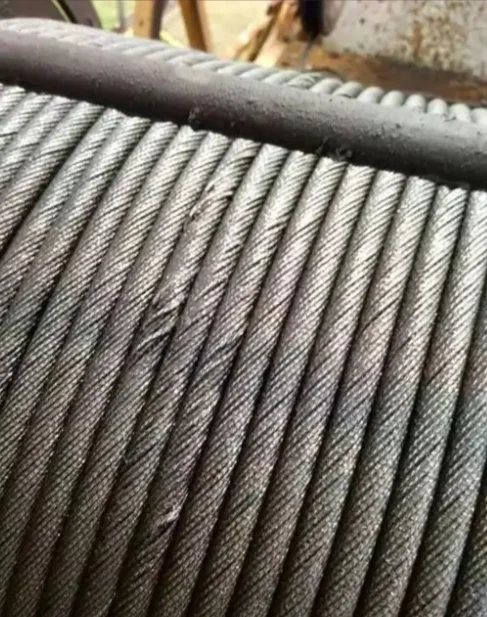
Broken wires are the most common indicator of wire rope failure. They typically result from cyclic bending, overload, or improper sheave alignment.
Key conditions for discard:
- Visible broken wires within a length of 6d or 30dexceed allowable limits
- Broken wires appear locally concentrated, even below threshold values
- 3 or more broken wires at rope end connections: immediate discard
- 2 or more valley (strand groove) breaks within one lay length (6d): discard
In particular, localized breakage often signals internal fatigue, which accelerates failure.
1.2 Diameter Reduction
Wire rope diameter reduction reflects internal wear, core damage, or corrosion.
Uniform diameter reduction limits:
- Fiber core rope ≥ 10%: discard
- Steel core or compacted rope ≥ 5%: discard
- Rotation-resistant rope ≥ 5%: discard
Local diameter reduction:
- Any localized thinning caused by internal damage: immediate discard
In other words, even small local deformation can indicate severe internal structural failure.
1.3 Strand Breakage
When a complete strand breaks, the rope loses structural integrity.
- Any full strand break: immediate discard
This type of wire rope failure often occurs under overload or advanced fatigue conditions.
1.4 Corrosion Damage
Corrosion significantly reduces load capacity and accelerates fatigue.
External corrosion:
- Surface pitting, loose wires, or rust debris
- Metal loss reaching:
- 6% within 6d length, or
- 10% within 30d length: discard
Internal corrosion:
- Visible rust inside strands
- Friction-induced oxidation and debris
Notably, internal corrosion is more dangerous because it is harder to detect.
1.5 Deformation and Mechanical Damage
Mechanical deformation directly leads to wire rope failure if not addressed promptly.
Common deformation types include:
- Madárkalitkák
- Kinks and twists
- Local flattening
- Core protrusion
- Heat or arc damage
Once these defects appear, the rope must be discarded immediately.
2. Root Causes of Wire Rope Failure
To effectively prevent wire rope failure, it is necessary to identify the root causes behind these defects.
2.1 Overloading and Shock Loads
Exceeding rated capacity or applying sudden loads accelerates fatigue and structural damage.
2.2 Improper Installation
Incorrect winding, poor alignment with sheaves, or uneven tension distribution leads to abnormal wear.
2.3 Harsh Operating Environment
High temperature, moisture, dust, and corrosive media accelerate degradation.
2.4 Inadequate Maintenance
Lack of lubrication and irregular inspection significantly shorten service life.
2.5 Poor Selection
Using the wrong rope type for the application increases the risk of early wire rope failure.
3. Inspection and Maintenance Best Practices
To minimize risks, operators should implement a structured inspection system.
3.1 Daily Inspection
- Check for broken wires, deformation, and corrosion
- Observe rope alignment and tension
3.2 Periodic Inspection
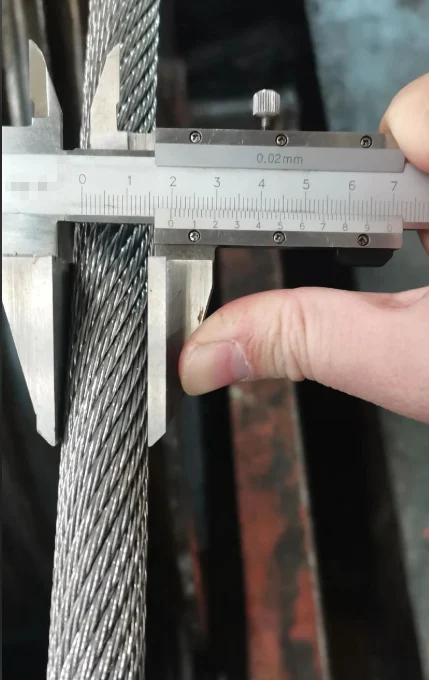
- Measure rope diameter
- Evaluate wear and fatigue condition
- Record inspection data for trend analysis
3.3 Lubrication Management
- Apply appropriate lubricant regularly
- Reduce internal friction and corrosion
Consistent maintenance significantly delays the onset of wire rope failure.
4. Prevention Strategies for Crane Systems
In addition to inspection, proactive measures improve safety and extend service life.
- Select the correct rope type based on load and environment
- Ensure proper drum and sheave design compatibility
- Maintain correct winding and tension
- Avoid shock loading and sudden starts/stops
- Train operators on proper handling procedures
Ultimately, prevention is always more cost-effective than replacement.
5. Engineering Support from Hanko
At Hanko, we provide reliable solutions for crane systems, including high-quality wire ropes and related components.
Moreover, our engineering team supports customers with selection guidance, failure analysis, and customized solutions tailored to complex working conditions.
If you are facing frequent wire rope failure issues, our experts can help you identify root causes and improve system performance.
Kapcsolódó cikkek
Megbízható darualkatrészeket keres?
A biztonságos és hatékony emelési műveletekhez elengedhetetlenek a kiváló minőségű darualkatrészek. A tartós alkatrészek nemcsak a daru teljesítményét javítják, hanem csökkentik a karbantartási költségeket és a váratlan állásidőket is.
Hanko specializes in manufacturing and supplying a full range of crane parts for industrial lifting systems, including:
Professzionális mérnöki támogatással és szigorú minőségellenőrzéssel segítünk ügyfeleinknek a megfelelő alkatrészek kiválasztásában a különféle darualkalmazásokhoz.
Vegye fel a kapcsolatot Hankoval még ma, hogy megbeszélje darualkatrész-igényeit és szakértői támogatást kapjon.