
Introduction
In crane systems, wire rope failure is one of the most critical safety risks affecting lifting operations. Because the wire rope directly bears dynamic loads, any failure can immediately lead to dropped loads, equipment damage, and serious injuries.
Therefore, understanding the causes, inspection standards, and discard criteria of wire ropes is essential for ensuring operational safety and reliability.
Based on GB/T 5972-2023 and practical industry experience, this guide provides a structured analysis of wire rope failure mechanisms and actionable prevention strategies.
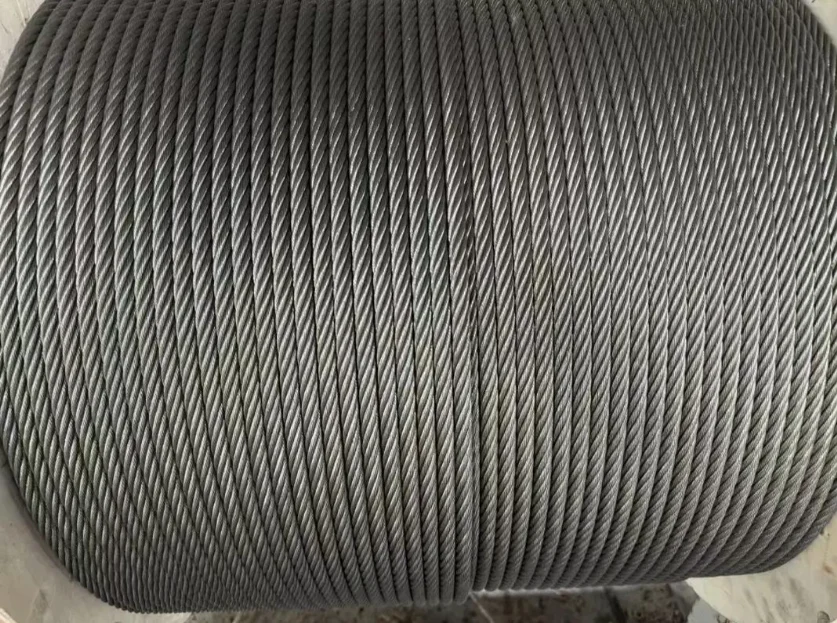
1. Common Types of Wire Rope Failure
In practice, wire rope failure does not occur suddenly. Instead, it develops progressively under repeated stress, wear, and environmental impact.
1.1 Broken Wires (Fatigue Failure)
Broken wires are the most common indicator of wire rope failure. They typically result from cyclic bending, overload, or improper sheave alignment.
Key conditions for discard:
- Visible broken wires within a length of 6d or 30dexceed allowable limits
- Broken wires appear locally concentrated, even below threshold values
- 3 or more broken wires at rope end connections→ immediate discard
- 2 or more valley (strand groove) breaks within one lay length (6d)→ discard
👉 In particular, localized breakage often signals internal fatigue, which accelerates failure.
1.2 Diameter Reduction
Wire rope diameter reduction reflects internal wear, core damage, or corrosion.
Uniform diameter reduction limits:
- Fiber core rope ≥ 10%→ discard
- Steel core or compacted rope ≥ 5%→ discard
- Rotation-resistant rope ≥ 5%→ discard
Local diameter reduction:
- Any localized thinning caused by internal damage → immediate discard
👉 In other words, even small local deformation can indicate severe internal structural failure.
1.3 Strand Breakage
When a complete strand breaks, the rope loses structural integrity.
- Any full strand break → immediate discard
This type of wire rope failure often occurs under overload or advanced fatigue conditions.
1.4 Corrosion Damage
Corrosion significantly reduces load capacity and accelerates fatigue.
External corrosion:
- Surface pitting, loose wires, or rust debris
- Metal loss reaching:
- 6% within 6d length, or
- 10% within 30d length→ discard
Internal corrosion:
- Visible rust inside strands
- Friction-induced oxidation and debris
👉 Notably, internal corrosion is more dangerous because it is harder to detect.
1.5 Deformation and Mechanical Damage
Mechanical deformation directly leads to wire rope failure if not addressed promptly.
Common deformation types include:
- Birdcaging
- Kinks and twists
- Local flattening
- Core protrusion
- Heat or arc damage
👉 Once these defects appear, the rope must be discarded immediately.
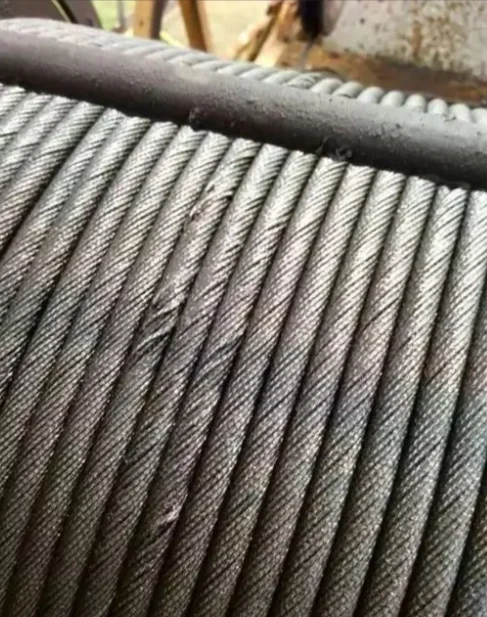
2. Root Causes of Wire Rope Failure
To effectively prevent wire rope failure, it is necessary to identify the root causes behind these defects.
2.1 Overloading and Shock Loads
Exceeding rated capacity or applying sudden loads accelerates fatigue and structural damage.
2.2 Improper Installation
Incorrect winding, poor alignment with sheaves, or uneven tension distribution leads to abnormal wear.
2.3 Harsh Operating Environment
High temperature, moisture, dust, and corrosive media accelerate degradation.
2.4 Inadequate Maintenance
Lack of lubrication and irregular inspection significantly shorten service life.
2.5 Poor Selection
Using the wrong rope type for the application increases the risk of early wire rope failure.
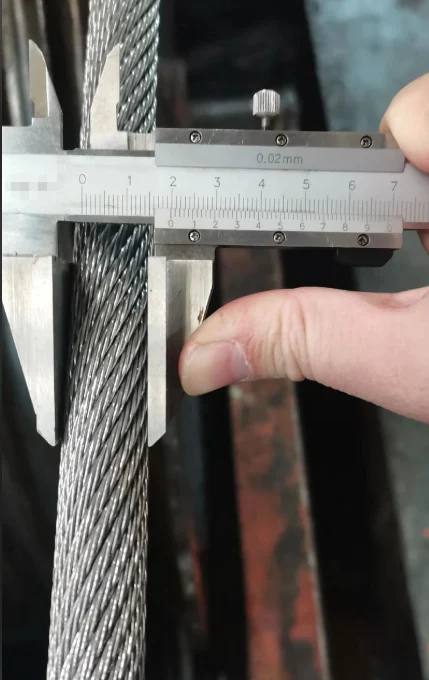
3. Inspection and Maintenance Best Practices
To minimize risks, operators should implement a structured inspection system.
3.1 Daily Inspection
- Check for broken wires, deformation, and corrosion
- Observe rope alignment and tension
3.2 Periodic Inspection
- Measure rope diameter
- Evaluate wear and fatigue condition
- Record inspection data for trend analysis
3.3 Lubrication Management
- Apply appropriate lubricant regularly
- Reduce internal friction and corrosion
👉 Consistent maintenance significantly delays the onset of wire rope failure.
4. Prevention Strategies for Crane Systems
In addition to inspection, proactive measures improve safety and extend service life.
- Select the correct rope type based on load and environment
- Ensure proper drum and sheave design compatibility
- Maintain correct winding and tension
- Avoid shock loading and sudden starts/stops
- Train operators on proper handling procedures
👉 Ultimately, prevention is always more cost-effective than replacement.
5. Engineering Support from Hanko
At Hanko, we provide reliable solutions for crane systems, including high-quality wire ropes and related components.
Moreover, our engineering team supports customers with selection guidance, failure analysis, and customized solutions tailored to complex working conditions.
If you are facing frequent wire rope failure issues, our experts can help you identify root causes and improve system performance.
Related Articles
- Crane Drum Price Guide
- Wire Rope in Crane Systems
- How to Pick the Perfect Wire Rope Drums for Maximum Performance?
- Crane Drum Design and Selection
Looking for Reliable Crane Components?
High-quality crane components are essential for safe and efficient lifting operations. Durable parts not only improve crane performance but also reduce maintenance costs and unexpected downtime.
Hanko specializes in manufacturing and supplying a full range of crane parts for industrial lifting systems, including:
With professional engineering support and strict quality control, we help customers select the right components for various crane applications.
👉 Contact Hanko today to discuss your crane parts requirements and get expert support.
FAQ: Wire Rope Failure in Crane Systems
What is the main cause of wire rope failure?
The main cause is fatigue due to repeated loading, often combined with poor maintenance or overloading.
How often should wire ropes be inspected?
Visual inspection should be performed daily, while detailed inspections should follow scheduled maintenance intervals.
What is the most critical discard criterion?
Any strand break, severe deformation, or local diameter reduction requires immediate replacement.
Can a damaged wire rope be repaired?
No. Wire ropes must never be repaired or reused once they meet discard criteria.
How can wire rope life be extended?
Proper lubrication, correct selection, and regular inspection significantly extend service life.

 English
  Korean
  Russian
  Spanish
  Malay
Malay  Afrikaans
  Bulgarian
  French
  Bengali
  Italian
  Hungarian
  Vietnamese
  Thai
Thai  Indonesian
  German
  Arabic
  Japanese