Introduction
When selecting crane travel components, understanding the difference between a forged vs cast crane wheel is critical.
Crane wheels operate under continuous load, friction, and impact. Therefore, choosing the wrong manufacturing process can lead to:
- Premature wear
- Wheel cracking or failure
- Increased maintenance costs
In this guide, we break down the key differences, performance characteristics, and application scenarios to help you make the right decision.
What Is a Crane Wheel?
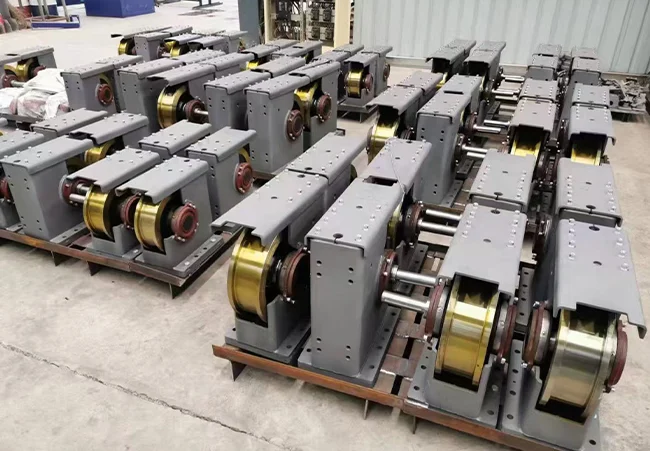
A crane wheel is a critical traveling component that:
- Supports the crane and load
- Guides movement along rails
- Absorbs vibration and impact
- Maintains operational stability
Basic Structure of Crane Wheel Assembly:
- Wheel body
- Axle
- Bearings
- Bearing housing
Related reading:
Forged vs Cast Crane Wheel: Quick Comparison
|
Factor |
Forged Crane Wheel |
Cast Crane Wheel |
|
Manufacturing Process |
Forging under pressure |
Molten metal casting |
|
Internal Structure |
Dense, fiber flow | Porous, possible defects |
|
Strength |
Very high | Moderate |
|
Toughness |
Excellent | Lower |
| Wear Resistance | High |
Medium |
|
Cost |
Higher | Lower |
| Service Life | Long |
Shorter |
| Application | Heavy-duty cranes |
Light/medium duty cranes |
1. Manufacturing Process Differences
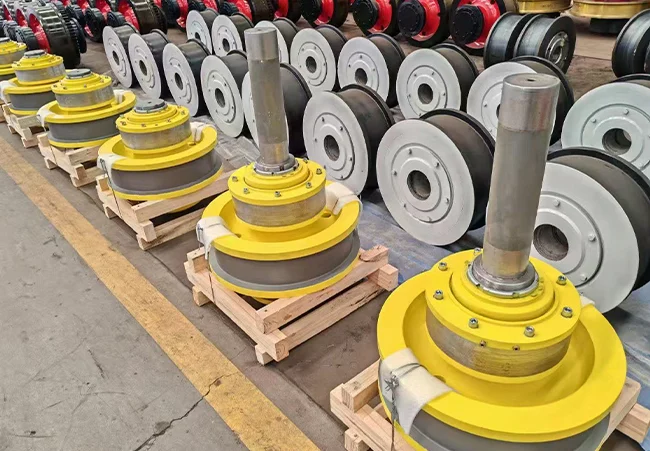
Forged Crane Wheel
Forged crane wheels are produced by applying high pressure to heated metal billets.
Key advantages:
- Refined grain structure
- Improved fiber continuity
- No internal defects
This process ensures superior mechanical performance.
Cast Crane Wheel
Cast crane wheels are made by pouring molten metal into molds.
Key characteristics:
- Easier to produce complex shapes
- Lower production cost
- Risk of internal defects (porosity, shrinkage)
2. Material and Microstructure
Forged Wheels
- Materials: 45#, 65Mn, 42CrMo
- Fine grain (~20μm)
- Dense and uniform structure
Cast Wheels
- Materials: ZG45#, ZG50MnMo, etc.
- Coarser grain (~80μm)
- Possible internal defects
Result: Forged wheels deliver significantly better fatigue resistance.
3. Mechanical Performance Comparison
Forged Crane Wheels
- High strength
- Excellent impact resistance
- Superior fatigue performance
- Resistant to cracking and deformation
Cast Crane Wheels
- Lower strength
- Limited impact resistance
- More prone to cracking under heavy loads
4. Weight and Heat Dissipation
- Forged wheels: lighter, better heat dissipation
- Cast wheels: heavier, slower heat transfer
Better heat dissipation reduces wear and extends service life.
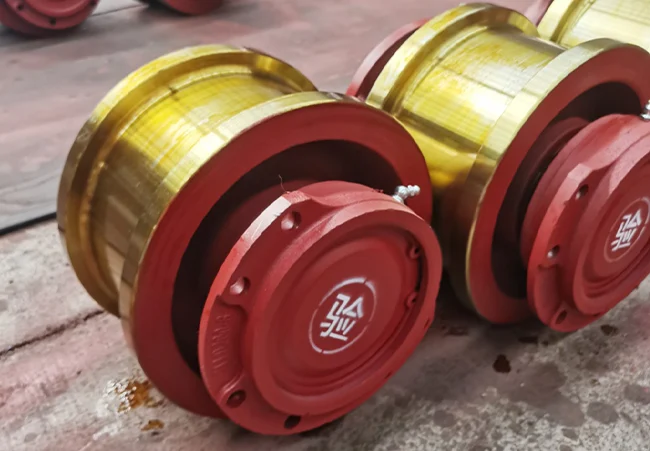
5. Cost vs Lifecycle Value
Cast Crane Wheels
- Lower initial cost
- Shorter lifespan
- Higher replacement frequency
Forged Crane Wheels
- Higher upfront cost
- Longer service life
- Lower long-term cost
Conclusion: Forged wheels are more cost-effective over time.
6. Application Scenarios
Forged Crane Wheels (Recommended for):
- Heavy-duty cranes
- Metallurgical cranes
- Port cranes
- High-frequency operations
- Harsh environments
Cast Crane Wheels (Suitable for):
- Light-duty cranes
- Workshop cranes
- Low-frequency operations
- Cost-sensitive projects
7. Heat Treatment and Performance Optimization
Both types require heat treatment, but approaches differ:
- Forged wheels:
- Surface hardening or quenching + tempering
- High hardness + strong core toughness
- Cast wheels:
- Basic heat treatment
- Limited performance improvement
Conclusion
Choosing between a forged vs cast crane wheel depends on your operating conditions, load requirements, and budget.
- Choose forged crane wheelsfor durability, safety, and long-term performance
- Choose cast crane wheelsfor cost-sensitive, light-duty applications
For industrial operations, investing in forged wheels often results in lower lifecycle cost and higher reliability.
Related Articles

CTA – Contact Hanko
Looking for high-quality crane wheels?
Hanko provides:
- Forged crane wheels (42CrMo, 65Mn)
- Custom machining solutions
- Heat-treated high-performance wheels
- Global delivery support
Visit:
Contact Hanko today for a tailored crane wheel solution.