
What Is a نظام فرامل الرافعة?
A crane brake system is a safety mechanism that slows, stops, or holds crane motion during lifting, traveling, slewing, and luffing operations. Crane brakes prevent uncontrolled movement, suspended load drops, and equipment damage. Common crane brake types include drum brakes, disc brakes, and band brakes. Modern crane systems use automatic fail-safe brakes that engage during power loss or emergency shutdown.
Introduction
In modern lifting equipment, the crane brake system is one of the most critical safety components. It directly controls stopping, holding, and emergency braking functions during crane operation.
Without a reliable braking system, cranes may experience:
- Load dropping
- Uncontrolled trolley movement
- Crane drifting under wind load
- Structural overload
- Serious workplace accidents
Therefore, industrial operators must understand how crane brake systems work, which brake types are commonly used, and how proper maintenance improves safety and equipment lifespan.
This guide explains:
- Common crane brake types
- Brake system working principles
- Lifting brake requirements
- Traveling, trolley, slewing, and luffing brakes
- Brake inspection and maintenance
- Safety standards and best practices
1. What Is a Crane Brake System?
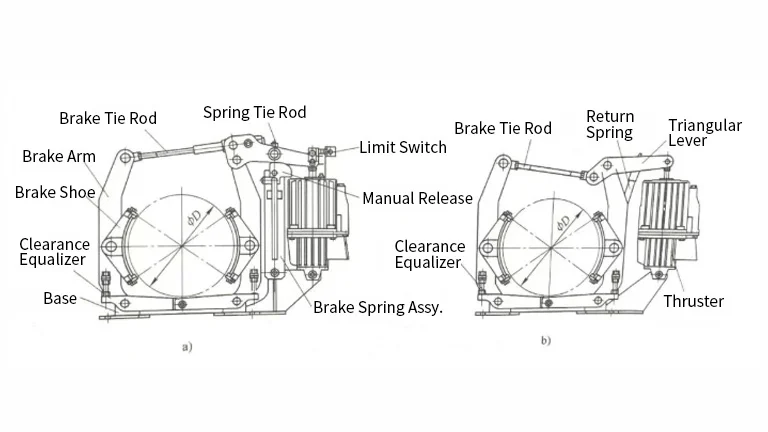
A crane brake system controls the motion of crane mechanisms by generating frictional braking torque.
The system performs three primary functions:
- Stop moving components safely
- Hold suspended loads securely
- Prevent unintended movement during power loss
In crane applications, brake systems are installed on:
- Hoisting mechanisms
- Trolley traveling systems
- Bridge traveling systems
- Slewing mechanisms
- Luffing systems
Moreover, industrial crane brakes must operate reliably under dynamic loads, shock loading, and harsh environments.
2. Common Types of Crane Brakes
Different crane applications require different brake designs. Below are the most commonly used crane brake types in industrial systems.
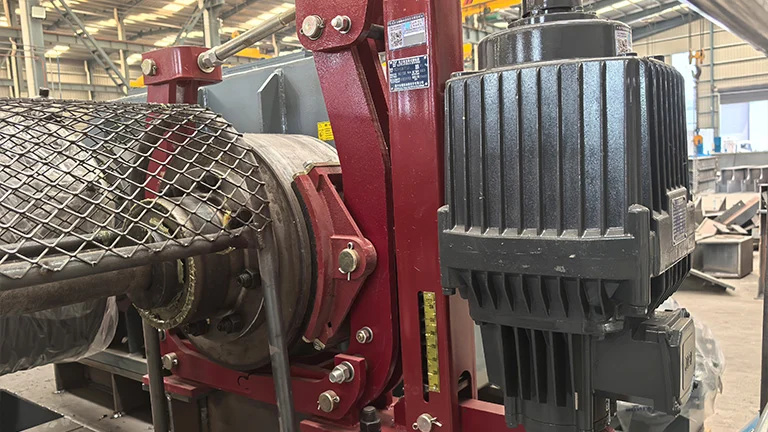
2.1 Drum Brake (Block Brake)
Drum brakes are the most widely used crane brakes for hoisting and traveling mechanisms.
Main Components
- Brake wheel
- Brake shoe
- Brake arm
- Compression spring
- Electromagnet or hydraulic thruster
Working Principle
The compression spring forces the brake shoes against the brake wheel to create braking torque. When energized, the electromagnetic or hydraulic actuator releases the brake.
Advantages
- Simple structure
- Reliable operation
- Easy maintenance
- Low operating cost
Typical Applications
- Hoist mechanisms
- Gantry cranes
- Overhead cranes
- Trolley systems
👉 Most industrial overhead cranes still use drum brakes because they provide stable holding force and high reliability.
2.2 Disc Brake
Disc brakes use calipers and friction pads to clamp a rotating brake disc.
Advantages
- Fast braking response
- Excellent heat dissipation
- Smooth braking performance
- Compact structure
- High braking precision
Typical Applications
- High-speed crane drives
- Heavy-duty hoisting systems
- Automated crane systems
- Precision positioning equipment
Compared with drum brakes, disc brakes provide better thermal performance during continuous operation.
2.3 Band Brake
Band brakes use a friction band wrapped around a brake drum.
Advantages
- Simple design
- Low manufacturing cost
Limitations
- Uneven wear
- Poor heat dissipation
- Lower braking stability
Typical Applications
- Small cranes
- Low-speed mechanisms
- Auxiliary equipment
Although band brakes are less common today, some compact lifting systems still use them.
3. Crane Brake System Working Principle
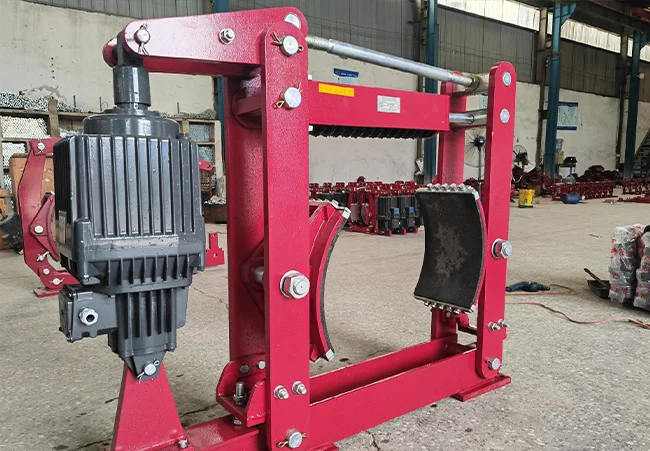
3.1 Normally Closed Brakes
Most crane brake systems use a normally closed design.
Under normal conditions:
- The compression spring keeps the brake engaged.
- The crane remains safely stopped.
When the crane starts operating:
- The electromagnetic actuator or hydraulic thruster releases the brake.
- The motor drives the mechanism.
Key Advantage
If power fails unexpectedly, the brake automatically engages.
👉 This fail-safe design prevents suspended loads from falling.
3.2 Normally Open Brakes
Normally open brakes remain released during standard operation and engage only when external force or power activates them.
These systems are less common in crane applications but may appear in special automation systems requiring rapid control response.
4. Crane Brake Safety Requirements
Industrial crane brake systems must satisfy strict safety requirements.
4.1 Mechanical Brake Requirements
Crane drive systems should include mechanical brakes.
However, self-locking gear systems may eliminate the brake requirement only if:
- Excessive stress cannot occur
- Uncontrolled movement is impossible
In addition:
- Brake mechanisms must allow easy inspection
- Brake springs should use compression-type designs
- Brake linings must be replaceable
- Brake systems must remain adjustable
5. Hoist Brake Requirements
5.1 Automatic Hoist Brakes
Hoisting mechanisms must include automatic braking devices capable of safely holding the test load if:
- Power is interrupted
- Drive failure occurs
- Emergency stop activates
5.2 Brake Torque Requirement
The braking system should support:
- 6 times the lifting load
- Dynamic braking without destructive grabbing
- Controlled stopping without unacceptable overheating
Moreover, crane brake arrangements must provide a reliable mechanical connection between:
- The braking torque source
- The load-supporting components
5.3 Double Brakes for Molten Metal Handling
Cranes handling molten materials require:
- Two independently operated mechanical brakes
- Independent braking sequences
- Time delay between primary and secondary braking
Additionally, emergency braking systems should:
- Act directly on the rope drum
- Automatically activate at 1.5 times rated lowering speed
- Integrate with emergency stop systems
👉 These requirements significantly improve operational safety in hazardous environments.
6. Traveling and Trolley Brake Systems
Traveling and trolley mechanisms typically use automatic brakes or operator-controlled brakes.
Brake Requirements
The brake must:
- Stop the crane within a safe distance
- Hold the crane under wind load
- Remain effective during power failure
For cranes exposed to wind:
- Traveling brakes should include clamping or anchoring devices
Moreover, automatic travel brakes should achieve:
- Minimum safety factor: 1.1 under non-operating conditions
👉 Molten metal cranes require travel brakes regardless of operating speed.
7. Slewing Brake Systems
Power-driven slewing systems require brakes capable of:
- Stopping rotation safely
- Holding the rotating structure under wind load
- Preventing uncontrolled movement during power loss
Slewing brakes are especially important for:
- Tower cranes
- Port cranes
- Offshore cranes
- Shipyard lifting equipment
8. Luffing Brake Systems
Luffing systems control boom angle movement.
Therefore, luffing brakes must automatically engage when:
- The drive system shuts down
- Mechanical failure occurs
- Emergency stop activates
Minimum Brake Torque
The braking torque should equal:
- 6 × hook load moment
- 6 × boom self-weight moment
- 0 × wind load moment
under the most unfavorable operating conditions.
For cranes out of service, the braking system should withstand:
- 1 × boom self-weight moment
- Maximum out-of-service wind load
👉 Proper luffing brake design prevents dangerous boom collapse accidents.
9. Key Components of a Crane Brake System
Brake Wheel or Brake Disc
The friction surface transfers braking torque and requires:
- High wear resistance
- Good thermal stability
- Crack resistance
Brake Lining
Brake linings generate frictional force.
Operators should replace them when:
- Riveted lining wear reaches 50%
- Cartridge lining wear reaches 2/3
- Cracks, carbonization, or peeling appear
Compression Springs
Springs generate braking force.
Technicians can adjust braking torque by modifying spring compression.
Electromagnetic or Hydraulic Thrusters
These components release the brake during operation.
Hydraulic systems provide smoother braking performance and stronger control force.
10. Common Crane Brake Problems
Brake Slippage
Causes
- Worn brake lining
- Oil contamination
- Weak spring force
- Uneven brake gap
Solutions
- Replace brake lining
- Clean brake wheel
- Adjust spring tension
- Re-align brake components
Brake Overheating
Causes
- Brake drag
- Poor release clearance
- Rough brake wheel surface
Solutions
- Adjust brake clearance
- Polish brake wheel
- Inspect hydraulic thruster
Brake Failure to Release
Causes
- Electrical failure
- Hydraulic oil problems
- Jammed push rod
- Excessive spring force
Solutions
- Repair wiring
- Replace hydraulic oil
- Adjust spring tension
- Repair actuator
11. Crane Brake Inspection Checklist
Operators should inspect crane brakes regularly.
Daily Inspection
- Check brake response
- Observe abnormal noise
- Inspect brake clearance
- Verify emergency stop function
Weekly Inspection
- Inspect brake lining wear
- Check bolts and pins
- Inspect hydraulic leakage
- Verify brake wheel condition
Monthly Inspection
- Measure brake wheel wear
- Check actuator performance
- Test braking torque
- Inspect electrical control system
👉 Preventive maintenance greatly reduces unexpected crane downtime.
12. How to Extend Crane Brake Service Life
To improve brake reliability:
- Avoid overload operation
- Prevent sudden stopping
- Keep brake surfaces clean
- Replace worn linings promptly
- Lubricate moving joints correctly
- Perform periodic adjustment
Additionally, operators should avoid continuous slipping during lowering operations because overheating accelerates brake wear.
13. Why Choose Hanko for Crane Brake Solutions?
At Hanko, we supply industrial crane brake systems designed for:
- Overhead cranes
- Gantry cranes
- Port cranes
- Metallurgical cranes
- Heavy-duty lifting systems
Our solutions include:
- Drum brakes
- Disc brakes
- Hydraulic thrusters
- Brake wheels
- Brake linings
- Complete brake assemblies
Moreover, our engineering team provides:
- Brake selection support
- Brake torque calculation
- OEM replacement solutions
- Custom industrial brake systems
- Technical troubleshooting
Need Reliable Crane Brake Components?
Looking for durable and high-performance crane brake systems?
Hanko Can Help You:
✅ Select the correct brake type
✅ Improve crane stopping performance
✅ Reduce brake wear and downtime
✅ Upgrade outdated braking systems
✅ Meet industrial safety standards
👉 Contact Hanko today for professional crane brake solutions and technical support.
FAQ: Crane Brake System
What is the most common crane brake type?
Drum brakes are the most commonly used crane brakes because they provide reliable holding force and simple maintenance.
Why do cranes use normally closed brakes?
Normally closed brakes automatically engage during power failure, which prevents suspended loads from dropping.
When should brake linings be replaced?
Brake linings should be replaced when wear reaches 50% for riveted linings or when cracks and carbonization appear.
Why do cranes handling molten metal require double brakes?
Double brakes improve operational safety and provide backup braking protection in hazardous applications.
How often should crane brakes be inspected?
Operators should perform daily visual inspections and conduct detailed weekly and monthly maintenance checks.
Related Articles
- Crane Brake Troubleshooting: Common Problems and Fixes
- How to Extend Crane Service Life: Practical Tips
- Wire Rope Failure Analysis in Crane Systems
- How to Choose the Right Crane Gearbox
- Crane Maintenance Checklist: Daily, Weekly & Monthly Guide
- Heavy Duty Crane Wheel Guide for Industrial Applications
Conclusion
The crane brake system plays a vital role in lifting safety, load control, and operational stability.
By understanding brake types, working principles, inspection standards, and maintenance requirements, operators can significantly reduce accident risks and improve crane reliability.
Furthermore, selecting the right brake system for each crane application ensures:
- Better stopping performance
- Longer equipment life
- Lower maintenance costs
- Improved workplace safety
Ultimately, a properly maintained crane brake system protects both personnel and equipment in every lifting operation.

 English
  Korean
  Russian
  Spanish
  Malay
Malay  Afrikaans
  Bulgarian
  French
  Bengali
  Italian
  Hungarian
  Vietnamese
  Thai
Thai  Indonesian
  German
  Arabic
  Japanese