Crane wheels play a critical role in the safe operation of overhead cranes, gantry cranes, and other heavy lifting systems. However, crane wheels constantly endure heavy loads, rail friction, impact forces, and frequent starts and stops. Over time, they gradually wear.
Without proper crane wheel inspection, small defects can quickly develop into major failures, including:
- Crane derailment
- Excessive crane rail wear
- Wheel flange cracking
- Misalignment
- Abnormal vibration
- Costly downtime
Therefore, regular inspection is essential for maintaining operational safety and reducing maintenance costs. In this guide, Hanko explains how to inspect crane wheels properly. You will learn what problems to look for and when replacement becomes necessary.
Featured Snippet: Proper crane wheel inspection covers seven checks: surface cracks, tread and flange wear, diameter deviation, bearing condition, installation accuracy, wheel-to-rail contact, and early failure signs. Most facilities inspect daily visually, weekly operationally, monthly by measurement, and annually in depth.
Why Crane Wheel Inspection Matters
Crane wheels support the entire crane structure and transferred load during operation. As a result, they experience continuous stress and friction.
If wheel defects remain undetected, they can cause:
- Uneven wheel loading
- Increased power consumption
- Rail misalignment
- Crane skewing
- Structural fatigue
- Safety accidents
Therefore, preventive inspections significantly extend both wheel and rail service life.
Common Causes of Crane Wheel Wear
Before starting inspections, maintenance teams should understand the major causes of crane wheel damage.
Common Problems Include:
- Poor rail alignment
- Wheel misalignment
- Improper wheel installation
- Insufficient lubrication
- Excessive side thrust
- Overloading
- Frequent emergency braking
- Low-quality wheel material
These issues often lead to both crane wheel wear and crane rail wear simultaneously. The wheel-versus-rail wear causes and solutions guide covers this interaction in detail.
Step-by-Step Crane Wheel Inspection Guide
1. Visual Inspection for Cracks and Surface Damage
Start with a detailed visual inspection.
Check the Following Areas:
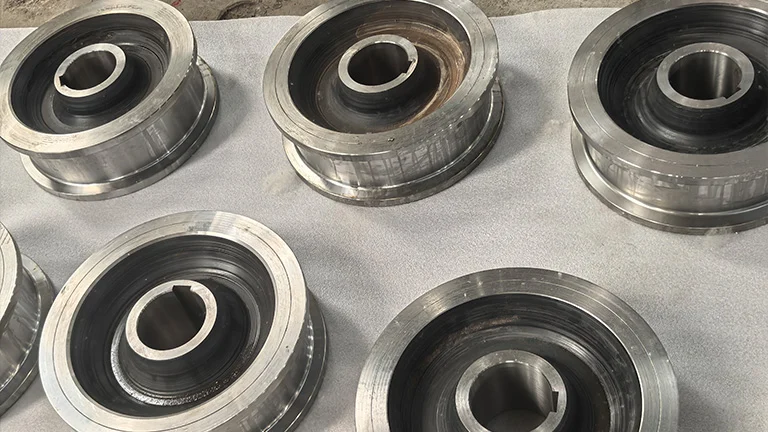
- Wheel tread
- Wheel flange
- Wheel hub
- Wheel spokes
- Keyway area
Look for:
- Surface cracks
- Chipping
- Spalling
- Deformation
- Corrosion
- Fatigue marks
Important:
If cracks appear on the wheel flange or tread, replace the wheel immediately. Welding repairs are generally not recommended for critical crane wheel structures.
Recommended Inspection Tools
- Flashlight
- Magnifying glass
- Dye penetrant testing
- Magnetic particle inspection (MPI)
2. Measure Crane Wheel Wear
Wheel wear directly affects crane stability and rail contact.
Tread Wear Inspection
Use:
- Vernier calipers
- Thickness gauges
- Precision measuring tools
Replacement Standard
If tread wear reaches approximately 15% of original tread thickness, the wheel should be replaced.
Excessive tread wear can cause:
- Uneven load distribution
- Rail chewing
- Crane vibration
3. Inspect Wheel Flange Condition
The wheel flange keeps the crane aligned on the rail.
Check For:
- Flange thinning
- Bending
- Edge cracking
- Uneven wear
Replacement Criteria
Replace the wheel if:
- Flange wear exceeds 50% of original thickness
- Flange deformation exceeds allowable limits
Excessive flange wear often indicates crane skewing or rail alignment issues.
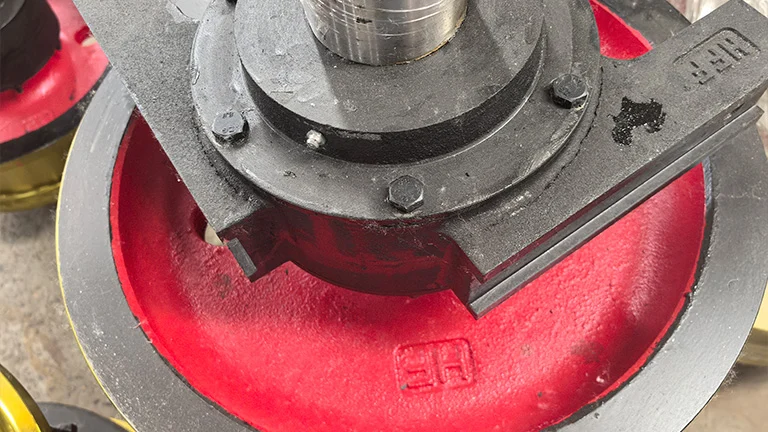
4. Check Wheel Diameter Deviation
Wheel diameter inconsistency is a major cause of crane skewing.
If drive wheels have different diameters, one side travels faster than the other, causing:
- Crane wheel failure
- Rail side wear
- Increased motor load
Typical Inspection Method
Measure wheel diameters using:
- Outside micrometers
- Laser measuring systems
Common Standards
For active drive wheels:
| Wheel Diameter | Maximum Allowable Difference |
| 250–500 mm | 0.125–0.25 mm |
| 500–900 mm | 0.25–0.45 mm |
If deviations exceed limits, re-machining or wheel replacement may be necessary.
5. Inspect Wheel Rotation and Bearings
Next, check whether the wheel rotates smoothly.
Look For:
- Abnormal noise
- Vibration
- Resistance
- Bearing overheating
- Lubrication failure
Poor bearing conditions accelerate wheel wear and increase drive system stress.
Maintenance Recommendation
- Re-grease bearings regularly
- Replace damaged bearings immediately
- Monitor operating temperature
6. Verify Wheel Installation Accuracy
Improper installation creates severe side loading on rails and wheels.
Inspect:
- Axial runout
- Wheel verticality
- Bearing housing alignment
- Wheel spacing
- Diagonal deviation
Typical Standards
- Wheel radial runout ≤ 0.1 mm
- Vertical inclination ≤ 1 mm
Proper alignment reduces:
- Flange wear
- Crane skewing
- Power loss
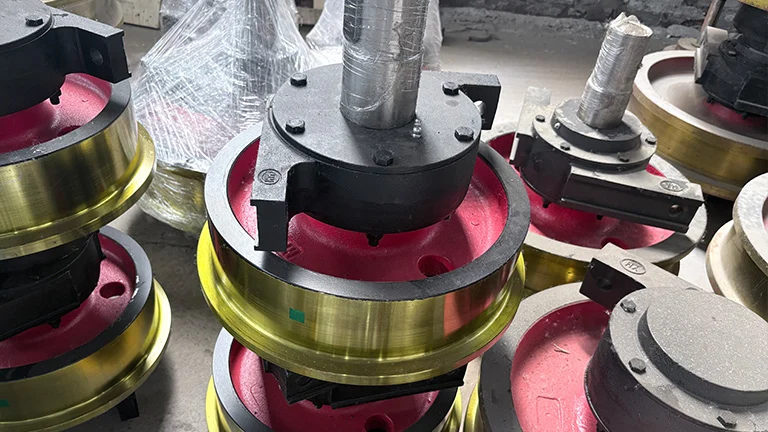
7. Check Crane Rail Contact Condition
Wheel-to-rail contact provides important clues about system condition.
Signs of Problems Include:
- Rail side polishing
- Uneven contact marks
- Excessive flange friction
- Metal debris
- Rail scoring
These symptoms often indicate:
- Misaligned rails
- Uneven wheel loads
- Crane frame distortion
Common Signs of Crane Wheel Failure
Maintenance teams should respond immediately if they observe:
- Loud grinding noises
- Repeated derailment
- Excessive vibration
- Uneven wheel wear
- Abnormal motor load
- Rail edge damage
- Frequent bearing failure
Ignoring these warning signs can lead to major crane shutdowns.
Recommended Crane Wheel Inspection Schedule
Daily Inspection
Operators should check:
- Visible cracks
- Abnormal sounds
- Wheel rotation
- Rail cleanliness
Weekly Inspection
Maintenance teams should inspect:
- Wheel wear
- Lubrication condition
- Bearing temperature
- Flange contact
Monthly Inspection
Perform detailed measurements for:
- Diameter deviation
- Wheel alignment
- Rail condition
- Installation precision
Annual Inspection
Conduct comprehensive inspections including:
- Non-destructive testing (NDT)
- Load testing
- Structural alignment checks
- Wheel hardness testing
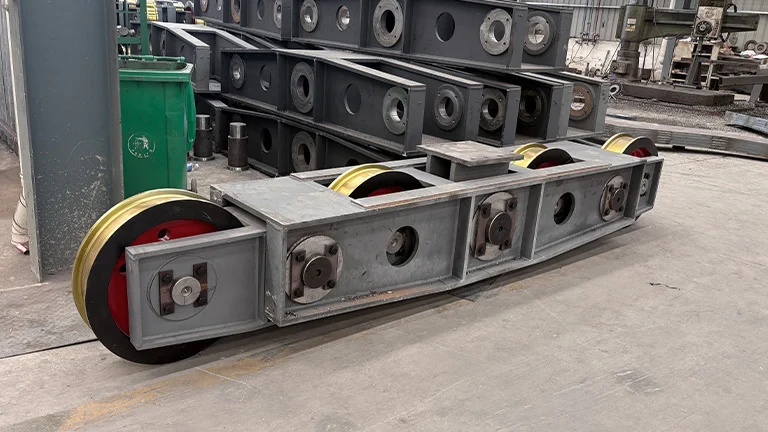
How Hanko Supports Crane Wheel Maintenance
At Hanko, we provide complete crane wheel inspection and replacement support for industrial lifting systems.
Our Services Include:
- Crane wheel inspection support
- Forged crane wheel replacement
- Rail matching analysis
- Wheel hardness testing
- CNC-machined wheel assemblies
- Custom crane wheel manufacturing
We manufacture high-strength wheels using premium alloy steel such as 42CrMo and 65Mn, plus forged alloy steel grades for heavy-duty cranes. If you are weighing materials, the forged vs cast crane wheels comparison explains the trade-offs.
Need Crane Wheel Inspection or Replacement Support?
Worn crane wheels can quickly damage rails, increase downtime, and create serious safety risks.
Hanko helps industrial operators:
- Inspect crane wheel wear
- Diagnose crane wheel failure
- Replace damaged wheel assemblies
- Improve wheel-to-rail alignment
- Reduce long-term maintenance costs
Our engineering team can help you evaluate wheel wear conditions, select replacement crane wheels, improve crane operating stability, and extend crane service life. Get technical support and a fast quotation for your crane wheel project.