Introduction
In crane operations, brake systems play a critical role in ensuring safety, load control, and positioning accuracy. However, crane brake problems can quickly lead to load slipping, uncontrolled motion, or even severe accidents.
Therefore, understanding typical failure modes and implementing effective troubleshooting methods is essential for maintaining system reliability.
In this guide, we analyze the most common crane brake issues, their root causes, and practical solutions based on real-world maintenance experience.
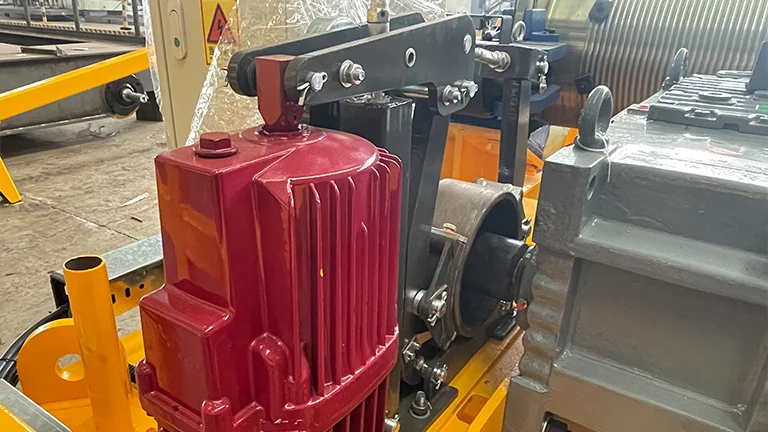
1. Brake Slippage (Brake Not Holding)
One of the most dangerous crane brake problems is brake slippage, which may cause load dropping or crane drifting.
Common Causes
- Worn brake linings with exposed rivets
- Oil contamination on brake wheel surface
- Weak or fatigued main spring
- Uneven brake shoe clearance
- Improper brake installation
Solutions
- Replace worn brake linings immediately
- Clean or machine the brake wheel surface
- Adjust or replace the main spring
- Re-align the brake to ensure uniform clearance
- Remove any external interference (e.g., improper counterweight support)
👉 In most cases, brake slippage is a combination of wear and poor adjustment.
2. Brake Not Releasing
Another critical issue is when the brake fails to open, preventing normal crane operation.
Common Causes
- Electromagnet coil failure or wiring issues
- Bent or jammed push rod
- Seized mechanical linkage
- Excessive spring tension
- Hydraulic thruster malfunction
Solutions
- Repair or replace the electromagnet coil
- Straighten or replace the push rod
- Remove mechanical obstructions
- Adjust spring tension properly
- Service hydraulic thruster (oil refill, air bleeding)
👉 This type of crane brake problem often involves both mechanical and electrical systems.
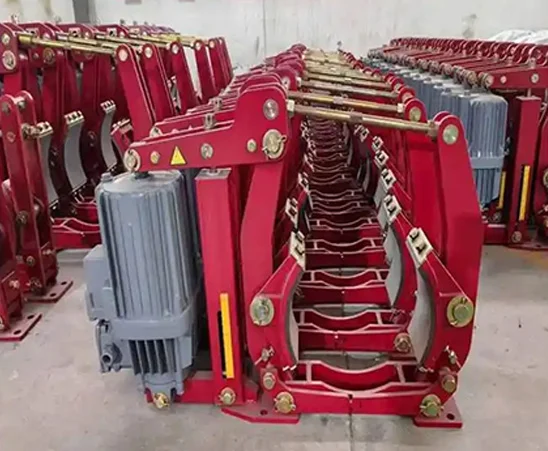
3. Brake Overheating and Friction Damage
Overheating leads to rapid wear and reduced braking efficiency.
Common Causes
- Brake shoe clearance too small
- Brake not fully releasing after operation
- Rough brake wheel surface
- Damaged auxiliary spring
Solutions
- Adjust clearance between brake shoe and wheel
- Ensure full disengagement after release
- Machine or polish brake wheel
- Replace damaged auxiliary components
👉 Persistent overheating significantly shortens brake lifespan.
4. Unstable Braking Torque
Unstable braking torque results in jerky or inconsistent stopping performance.
Common Causes
- Brake wheel out-of-roundness
- Misalignment between brake and wheel
- Gearbox vibration or loose mounting bolts
Solutions
- Re-machine or replace brake wheel
- Align brake system components
- Tighten foundation bolts and stabilize structure
👉 Stability issues often indicate deeper mechanical alignment problems.
5. Hydraulic Brake System Failures
Hydraulic systems introduce additional complexity in crane brake troubleshooting.
Common Causes
- Thruster impeller blockage
- Contaminated or insufficient hydraulic oil
- Air in hydraulic system
- Faulty pressure regulating valve
- Pipeline leakage or blockage
Solutions
- Clean and inspect the hydraulic thruster
- Replace hydraulic oil and remove air
- Adjust or replace pressure valves
- Repair leaks and clear pipelines
👉 Preventive maintenance is crucial for hydraulic brake reliability.
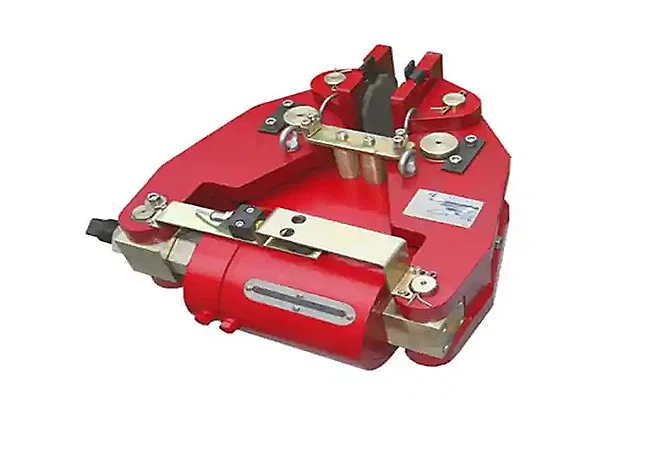
6. Electrical Control Failures
Electrical faults can directly affect brake response and safety.
Common Causes
- Low voltage in electromagnet coil
- Wiring faults (open/short circuit)
- Worn or burnt controller contacts
Solutions
- Ensure stable and correct voltage supply
- Inspect and repair wiring connections
- Replace damaged electrical contacts
👉 Electrical issues are often overlooked but critical in crane brake problems.
7. Preventive Maintenance Best Practices
To reduce crane brake problems, operators should adopt a proactive maintenance approach:
- Perform regular inspection of brake linings and springs
- Keep brake wheel surfaces clean and free of oil
- Check electrical and hydraulic systems routinely
- Ensure proper installation and alignment
- Train operators on correct braking procedures
👉 Preventive maintenance significantly reduces unexpected downtime and safety risks.
8. Engineering Support from Hanko
At Hanko, we provide high-performance crane brake components and system solutions designed for demanding industrial environments.
Our services include:
- Brake system selection and optimization
- Troubleshooting support for crane brake problems
- Custom brake solutions for heavy-duty applications
If your crane system experiences frequent braking issues, our engineering team can help improve performance and safety.
Related Articles
- How Does a Crane Brake Work?
- Danh sách các bộ phận an toàn của cần cẩu
- Hướng dẫn Lắp ráp Bánh xe Cần cẩu: Cấu trúc, Các loại và Mẹo lựa chọn
- Wire Rope Failure Analysis in Crane Systems
- Crane Drum Design Guide: Structure, Materials & Standards
Conclusion
Crane brake problems are not random failures—they are typically the result of wear, improper adjustment, or system imbalance.
By identifying root causes early and applying structured troubleshooting methods, operators can significantly improve braking performance and operational safety.
Ultimately, combining regular maintenance with proper system design is the most effective way to prevent crane brake failures and ensure long-term reliability.
FAQ: Crane Brake Problems
What causes crane brake slippage?
Brake slippage is usually caused by worn linings, oil contamination, or insufficient spring force.
Why won’t a crane brake release?
This is typically due to electrical faults, excessive spring tension, or mechanical jamming.
How often should crane brakes be inspected?
Daily visual checks and periodic detailed inspections are recommended for safe operation.
Can brake overheating be prevented?
Yes. Proper adjustment, clean surfaces, and regular maintenance can prevent overheating.
What is the most critical crane brake failure?
Brake slippage is the most critical, as it can directly lead to load dropping accidents.

 English
  Korean
  Russian
  Spanish
  Malay
Malay  Afrikaans
  Bulgarian
  French
  Bengali
  Italian
  Hungarian
  Vietnamese
  Thai
Thai  Indonesian
  German
  Arabic
  Japanese