
Featured Snippet: What Are the Common Crane Sheave Failures?
The most common crane sheave failures include uneven groove wear, bearing seizure, sheave misalignment, loose components, cracked rims, wire rope derailment, and bearing overheating. These problems usually result from incorrect wire rope matching, poor alignment, insufficient lubrication, overload, corrosion, or long-term wear.
Early crane sheave inspection can identify these problems before they cause wire rope damage, lifting instability, or unplanned crane downtime.
Introduction
A crane sheave guides the wire rope through the lifting system and helps control the direction and movement of the rope. Because the sheave and wire rope work together under repeated loads, even a small mechanical problem can increase wear across the entire hoisting system.
For this reason, operators and maintenance teams should not wait until a sheave fails completely. Instead, they should monitor crane sheave wear, bearing condition, alignment, and wire rope movement during routine inspections.
This guide explains the most common crane sheave failures, why they happen, and what maintenance teams can do to reduce the risk.
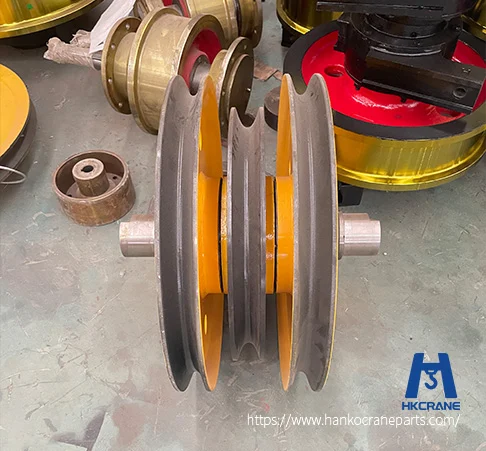
1. Uneven Crane Sheave Groove Wear
Uneven groove wear is one of the most common crane sheave failures.
Common Signs
Maintenance personnel may notice:
- Deep wear at the bottom of the rope groove
- Excessive wear on one side of the groove
- Pitting or surface damage
- A sharp or deformed groove profile
- Increased wire rope wear
- The rope no longer sitting correctly in the groove
The problem often becomes more serious when the sheave and wire rope do not match correctly.
Main Causes
Several factors can cause uneven groove wear:
- Incorrect sheave-to-wire-rope diameter matching
- Poor crane sheave alignment
- Insufficient lubrication
- Excessive side loading
- Incorrect installation
- Long-term operation under heavy loads
- Damaged or improperly shaped rope grooves
How to Prevent It
During inspection, compare the groove condition with the original design dimensions. Also check whether the wire rope runs through the center of the groove without excessive side contact.
Correct matching crane sheave and wire rope diameter is particularly important because an unsuitable groove can increase local contact pressure and accelerate both sheave and rope wear.
2. Crane Sheave Bearing Seizure or Poor Rotation
A properly installed sheave should rotate smoothly around its shaft or bearing system.
When the sheave becomes difficult to rotate, the problem may indicate bearing damage or shaft-related issues.
Warning Signs
Look for:
- Difficult rotation
- Grinding or metallic noise
- Abnormal vibration
- Excessive bearing temperature
- Visible rust or contamination
- Increasing resistance during operation
In severe cases, the sheave can partially or completely seize.
Common Causes
Typical causes include:
- Insufficient lubrication
- Contaminated bearing grease
- Water or dust entering the bearing
- Bearing fatigue or damage
- Excessive radial load
- Worn sheave shaft
- Deformed sheave components
The correct bearing type also matters. Depending on the application, a crane sheave may use deep groove ball bearings, cylindrical roller bearings, double-row full-complement cylindrical roller bearings, or plain bearings.
The bearing selection should match the load, speed, shaft arrangement, and working environment.
3. Sheave Misalignment and Looseness
Another important source of crane sheave failures is incorrect alignment.
A sheave should maintain the correct position relative to the wire rope and adjacent components. If the sheave tilts or moves sideways, the rope may contact the groove wall unevenly.
Typical Symptoms
Maintenance teams may observe:
- Side-to-side movement
- Excessive vibration
- Uneven groove wear
- Wire rope rubbing against the rim
- Abnormal operating noise
- Loose retaining components
Why Does Crane Sheave Misalignment Happen?
Common causes include:
- Loose retaining nuts
- Damaged spacers
- Incorrect installation
- Worn shafts
- Deformed mounting components
- Uneven loading
A proper crane sheave alignment check should therefore include the shaft, bearings, retaining components, and rope path.
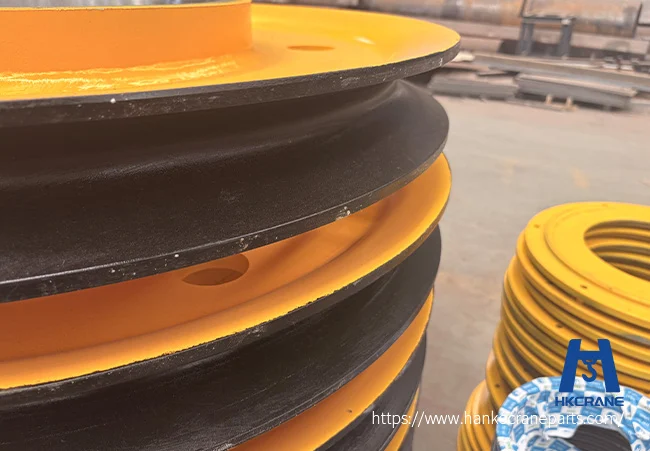
4. Crane Sheave Cracks or Broken Rims
Structural damage represents a more serious failure condition.
A crane sheave may develop cracks in the body, rim, hub, or other highly stressed areas.
Warning Signs
Inspect for:
- Visible cracks
- Broken rim sections
- Deformation
- Deep impact marks
- Corrosion pits
- Localized material damage
Do not continue using a sheave with a serious structural defect.
Possible Causes
Cracks and broken rims may result from:
- Overloading
- Severe impact loads
- Material defects
- Fatigue
- Excessive groove wear
- Corrosion
- Improper manufacturing or heat treatment
For heavy-duty applications, manufacturers should select suitable materials and manufacturing processes based on the crane’s duty class and operating conditions.
5. Wire Rope Jumping Out of the Sheave Groove
Wire rope derailment is one of the most visible crane sheave failures.
The rope should remain properly seated in the sheave groove during normal operation. If it jumps out of the groove, the rope can suffer rapid damage and the lifting system may become unstable.
Common Causes
Wire rope can jump out because of:
- Excessive sheave wear
- Sheave misalignment
- Excessive rope fleet angle
- Damaged rope grooves
- Loose sheave components
- Uneven wire rope tension
- Incorrect rope installation
Why It Matters
Once the rope leaves the groove, it may rub against the sheave rim or nearby steel structure. This can cause:
- Rapid rope wear
- Broken wires
- Sheave damage
- Abnormal vibration
- Increased maintenance costs
Therefore, operators should investigate the root cause instead of simply putting the rope back into the groove.
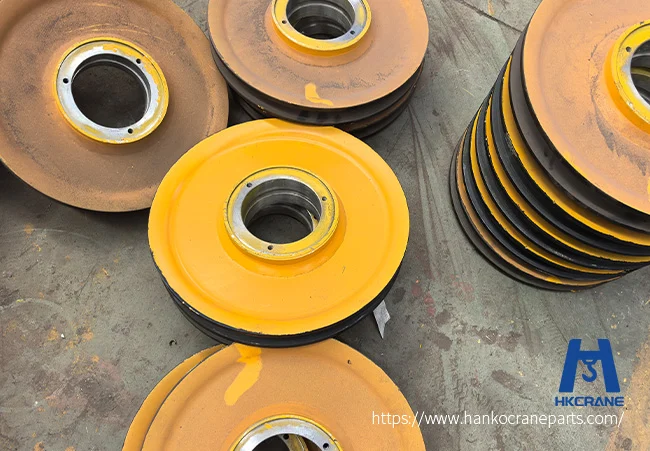
6. Crane Sheave Bearing Noise and Overheating
Bearing problems often develop gradually.
At first, the bearing may produce a slight noise. If the condition continues, friction and temperature can increase.
Common Symptoms
Watch for:
- Grinding sounds
- Squealing
- Abnormal vibration
- Localized heat
- Grease leakage or contamination
- Increasing operating resistance
Common Causes
The most common causes include:
- Poor lubrication
- Incorrect lubricant
- Bearing wear
- Contamination
- Misalignment
- Excessive radial load
- Damaged shaft surfaces
Regular crane sheave lubrication should follow the bearing manufacturer’s recommendations. Over-lubrication can also create problems, so maintenance teams should avoid treating more grease as automatically better.
7. Crane Sheave Shaft Wear
The sheave itself may look acceptable while its shaft or axle has already suffered excessive wear.
Typical Signs
Inspect for:
- Shaft diameter reduction
- Scoring
- Pitting
- Corrosion
- Excessive clearance
- Abnormal sheave movement
A worn shaft can change the sheave’s position and create secondary problems such as misalignment, bearing damage, and uneven rope groove wear.
Therefore, crane sheave inspection should cover the complete assembly rather than focusing only on the sheave wheel.
8. Corrosion and Surface Damage
Outdoor cranes, port cranes, and cranes used in humid environments face additional corrosion risks.
Corrosion can affect:
- Sheave rims
- Grooves
- Hubs
- Shafts
- Bearing housings
- Fasteners
Severe corrosion can reduce the effective material section and create stress concentration points.
For coastal and outdoor applications, maintenance teams should combine regular cleaning with appropriate surface protection and inspection.
How to Diagnose Crane Sheave Failures
A simple troubleshooting process can help maintenance teams identify the root cause.
| Failure | Typical Sign | Possible Cause | Recommended Action |
| Groove wear | Deep or uneven groove | Rope mismatch or misalignment | Check groove and rope dimensions |
| Sheave seizure | Difficult rotation | Bearing or shaft problem | Inspect bearing and shaft |
| Sheave looseness | Side movement | Loose retaining parts | Check fasteners and spacers |
| Rim crack | Visible crack | Fatigue or overload | Stop operation and assess replacement |
| Rope jumping | Rope leaves groove | Misalignment or excessive wear | Check rope path and groove |
| Bearing overheating | High temperature | Poor lubrication or damage | Inspect bearing and lubrication |
| Shaft wear | Excessive clearance | Long-term wear | Measure shaft and bearing fit |
This approach helps maintenance personnel connect the visible symptom with the underlying mechanical problem.
How to Prevent Crane Sheave Failures
Preventive maintenance can significantly reduce the risk of unexpected hoisting-system problems.
1. Match the Sheave to the Wire Rope
Correct matching crane sheave and wire rope diameter is one of the first design checks.
The groove should provide proper support without creating excessive compression or allowing the rope to move excessively inside the groove.
2. Maintain Correct Sheave Diameter Ratio
The crane sheave diameter ratio affects wire rope bending fatigue.
A larger sheave generally reduces bending stress on the rope. However, the correct ratio depends on the crane design, rope construction, duty class, and applicable standards.
Do not select a sheave diameter based only on general rules. Always verify the crane manufacturer’s design requirements and applicable standards.
3. Check Alignment Regularly
Correct crane sheave alignment helps distribute rope contact more evenly.
During inspection, check:
- Sheave position
- Shaft alignment
- Rope entry and exit direction
- Fleet angle
- Adjacent sheaves
- Retaining components
4. Follow a Proper Lubrication Program
Good crane sheave lubrication reduces bearing friction and helps control operating temperature.
However, lubrication should follow the bearing type and manufacturer’s specifications.
Avoid:
- Using incompatible grease
- Mixing unsuitable lubricants
- Over-greasing
- Ignoring contaminated lubricant
5. Monitor Crane Sheave Wear
Create a record of groove wear, bearing condition, shaft clearance, and visible damage.
Trend-based inspection makes it easier to identify gradual deterioration before it becomes a major failure.
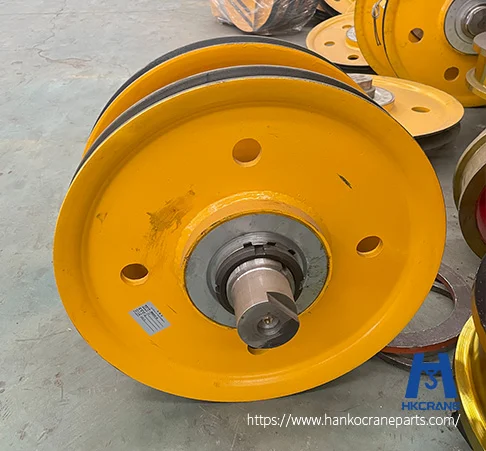
Crane Sheave Inspection Checklist
During routine crane sheave inspection, maintenance personnel should check:
Sheave groove condition
Groove wear and deformation
Sheave rim condition
Cracks or structural damage
Sheave rotation
Bearing noise
Bearing temperature
Shaft wear
Retaining components
Sheave alignment
Wire rope seating
Rope wear caused by the sheave
Lubrication condition
Corrosion
If personnel find a serious structural defect, excessive wear, or unsafe rope movement, the crane should be taken out of service until a qualified person evaluates the condition.
When Should You Replace a Crane Sheave?
There is no single replacement interval that applies to every crane sheave.
Replacement should depend on the actual condition and the limits specified by the crane manufacturer, applicable standards, and inspection procedures.
Consider replacement when you find:
- Structural cracks
- Broken or severely damaged rims
- Excessive groove wear
- Severe deformation
- Unacceptable shaft clearance
- Bearing damage that cannot be economically repaired
- Persistent rope derailment caused by sheave condition
Do not rely on appearance alone. Measurements and inspection records provide a more reliable basis for replacement decisions. For a ready-to-use reference, you can also follow a structured replacement checklist before ordering a new sheave.
Choosing the Right Crane Sheave
A suitable crane sheave should match the complete lifting system rather than only the rated load.
Consider these factors:
Load and Duty Class
Determine the crane’s:
- Rated capacity
- Lifting speed
- Duty class
- Operating frequency
- Dynamic loading
Wire Rope
Check:
- Rope diameter
- Rope construction
- Rope material
- Fleet angle
- Required bending performance
Sheave Construction
Depending on the application, options may include:
- Steel sheaves
- Cast iron sheaves
- Forged crane sheaves
- Rolled crane sheaves
- Welded crane sheaves
- Non-metallic sheaves
The best option depends on load, speed, environment, manufacturing requirements, and expected service life.
Bearing Arrangement
Choose the bearing configuration according to the actual radial load, speed, shaft design, and maintenance conditions.
Why Crane Sheave Quality Matters
A crane sheave does not work independently. It forms part of a system that includes the wire rope, hook block, drum, bearings, and lifting mechanism.
A poor-quality or incorrectly selected sheave can therefore create a chain reaction:
Sheave problem → uneven rope contact → wire rope wear → increased maintenance → unplanned downtime
For industrial cranes, manufacturers and maintenance teams should evaluate the complete lifting system when replacing a sheave.
Hanko supplies industrial crane components for demanding lifting applications, including crane sheaves, crane hooks, crane drums, crane wheels, and crane hook blocks. Engineering requirements, material selection, machining accuracy, and inspection requirements can be matched to the actual crane application.
Conclusion
The most common crane sheave failures include groove wear, bearing problems, misalignment, structural cracks, rope jumping, shaft wear, and overheating.
Most of these problems do not appear without warning. Changes in groove shape, operating noise, temperature, rope movement, or sheave alignment can provide early signs of deterioration.
Therefore, effective crane sheave maintenance should focus on three areas:
- Inspect the sheave and bearing condition regularly.
- Maintain correct wire rope matching, alignment, and lubrication.
- Replace components when measured wear or structural damage reaches the applicable limit.
A well-maintained crane sheave helps protect the wire rope, reduce unplanned downtime, and keep the lifting system operating reliably.
Frequently Asked Questions
What are the most common crane sheave failures?
The most common failures include groove wear, bearing seizure, misalignment, loose components, cracked rims, wire rope derailment, shaft wear, and bearing overheating.
What causes crane sheave groove wear?
Incorrect wire rope matching, misalignment, excessive side loading, insufficient lubrication, and long-term heavy-duty operation can accelerate groove wear.
How do I know if a crane sheave needs replacement?
Look for structural cracks, severe groove deformation, excessive wear, abnormal rope movement, damaged bearings, or shaft clearance outside the manufacturer’s specified limits.
How often should crane sheaves be inspected?
Inspection frequency depends on crane duty, operating environment, usage frequency, and applicable requirements. Operators should perform routine checks and qualified personnel should conduct scheduled inspections.
Why does a crane sheave make abnormal noise?
Abnormal noise may indicate bearing damage, insufficient lubrication, contamination, shaft problems, misalignment, or excessive loading.
How can I reduce crane sheave wear?
Use a properly matched wire rope and sheave, maintain correct alignment, follow the correct lubrication schedule, monitor wear, and avoid overload or excessive side loading.
What is the difference between a crane sheave and a crane pulley?
In industrial lifting equipment, the terms are often used interchangeably. A crane sheave usually refers specifically to the grooved wheel that guides a wire rope, while a crane pulley can describe the broader pulley assembly or system.
Need reliable crane sheaves for your lifting equipment?
Hanko provides industrial crane components designed for overhead cranes, gantry cranes, and heavy-duty lifting applications.
Contact our engineering team today to discuss your crane requirements and receive a suitable solution.

 English
  Korean
  Russian
  Spanish
  Malay
Malay  Afrikaans
  Bulgarian
  French
  Bengali
  Italian
  Hungarian
  Vietnamese
  Thai
Thai  Indonesian
  German
  Arabic
  Japanese