
Introduction
Many buyers and engineers often confuse crane sheave vs pulley, assuming they are interchangeable. However, this misunderstanding can lead to improper selection, reduced performance, and even safety risks.
Although both components guide ropes and change force direction, crane sheaves are engineered for heavy-duty lifting, while pulleys are typically used for light-duty applications.
This guide explains the key differences, technical requirements, and real-world applications to help you choose correctly.
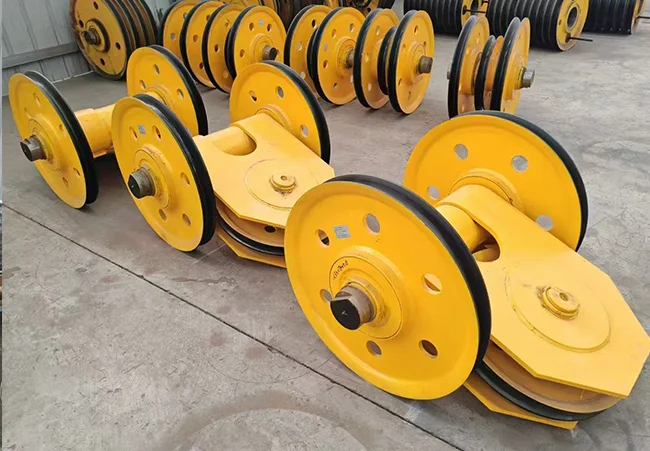
What Is a Crane Sheave?
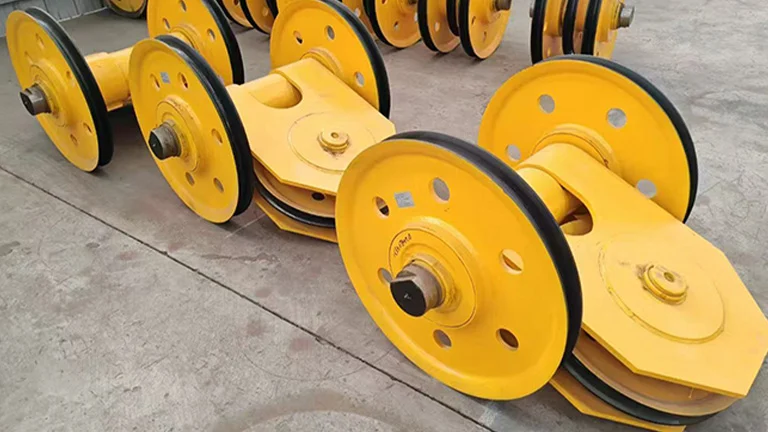
A crane sheave is a specially designed pulley used in lifting systems such as cranes, hoists, and winches.
Key Functions:
- Guide wire rope movement
- Reduce friction and wear
- Support heavy loads
- Maintain lifting efficiency
👉 Related reading:
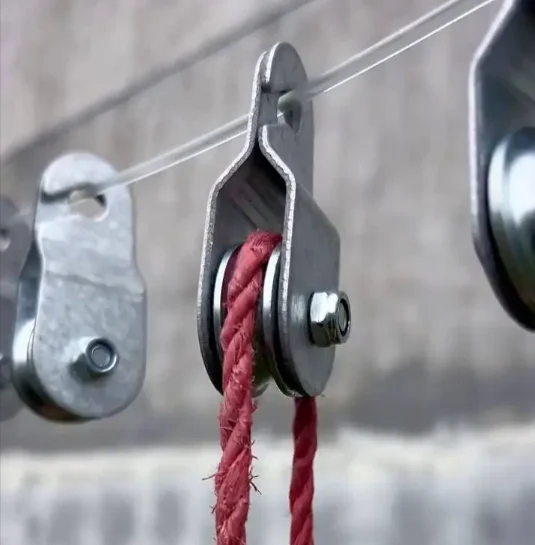
What Is a Pulley?
A pulley is a general mechanical component used to change the direction of force or provide mechanical advantage.
Common Uses:
- Curtain systems
- Garage doors
- Light lifting tools
- Small machinery
Crane Sheave vs Pulley: Key Differences
1. Design Standards and Safety Requirements
Crane Sheave:
- Designed according to strict standards (e.g., GB/T lifting standards)
- Controlled tolerances and safety factors
- Must meet lifting safety regulations
Pulley:
- No strict universal standards
- Flexible design
- Lower safety requirements
👉 Conclusion: Crane sheaves are safety-critical components.
2. Material and Strength
Crane Sheave:
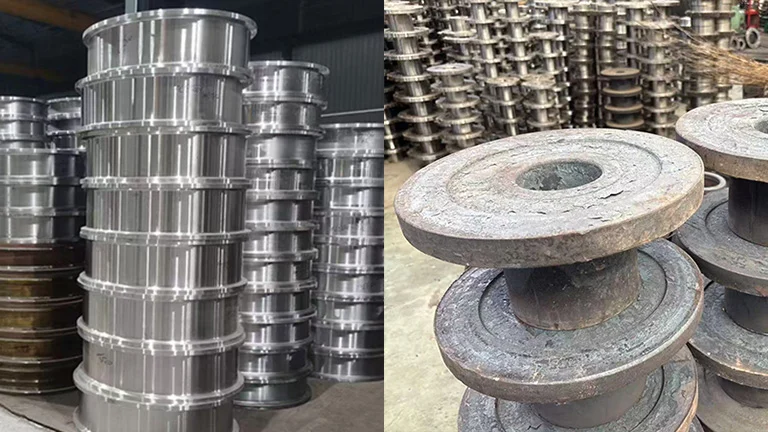
- Cast steel, alloy steel, ductile iron
- High tensile strength
- Designed for shock loads
Pulley:
- Cast iron, plastic, or even wood
- Lower strength
- Suitable for light-duty use
3. Structure and Engineering Complexity
Crane Sheave:
- Equipped with bearings (ball or roller)
- Includes dust covers and spacers
- Optimized groove design for wire rope
Pulley:
- Simple structure
- May not include bearings
- Basic groove or flat surface
4. Load Capacity and Size
Crane Sheave:
- High load capacity
- Diameter typically ≥ 20× wire rope diameter
- Designed for continuous operation
Pulley:
- Lower load capacity
- No strict diameter ratio
- Suitable for occasional use
5. Application Scenarios
Crane Sheave Applications:
- Overhead cranes
- Gantry cranes
- Hoisting systems
- Winches
Pulley Applications:
- Household systems
- Light mechanical transmission
- DIY lifting tools
Quick Comparison Table
|
Factor |
Crane Sheave |
Pulley |
|
Load Capacity |
High |
Low |
|
Material |
Alloy / cast steel | Plastic / cast iron |
|
Standards |
Strict (lifting standards) | Flexible |
| Structure | Complex (with bearings) |
Simple |
| Application | Industrial lifting |
General use |
How to Choose Between Crane Sheave and Pulley
To select the right component, consider the following:
Choose a Crane Sheave if:
- You are handling heavy loads
- Safety is critical
- You use wire ropes
- The system runs frequently
Choose a Pulley if:
- Load is light
- Usage is occasional
- Cost is a priority
- Safety risk is minimal
Common Selection Mistakes
Many users mistakenly use pulleys in lifting systems.
⚠️ This can result in:
- Rope wear and damage
- Premature failure
- Safety hazards
👉 Best practice: Always use crane-grade sheaves for lifting equipment.
Conclusion
Although both components serve similar basic functions, the difference between crane sheave vs pulley is significant.
- Crane sheaves are engineered for safety, durability, and heavy loads
- Pulleys are designed for simplicity and light-duty tasks
Choosing the correct component ensures safe operation, longer service life, and better performance.
Related Articles
CTA – Contact Hanko
Looking for high-performance crane sheaves?
Hanko offers:
- Custom crane sheaves (various diameters)
- Alloy steel and cast steel options
- Precision machining & heat treatment
- Fast global delivery
👉 Visit:
📩 Contact Hanko today for a professional selection solution.
FAQ – Crane Sheave vs Pulley
1. Is a crane sheave the same as a pulley?
No. A crane sheave is a heavy-duty pulley specifically designed for lifting applications with strict safety requirements.
2. Can I use a pulley instead of a crane sheave?
No. Using a standard pulley in lifting systems can cause failure and safety risks.
3. Why are crane sheaves larger in diameter?
Crane sheaves must meet rope diameter ratios (typically ≥20×) to reduce wear and extend rope life.
4. What materials are used for crane sheaves?
Common materials include cast steel, ductile iron, and alloy steel for high strength and durability.
5. Do crane sheaves require maintenance?
Yes. Regular inspection of grooves, bearings, and alignment is necessary to ensure safe operation.
6. What is the main advantage of crane sheaves?
They provide high load capacity, durability, and safety for heavy-duty lifting operations.
 English
  Korean
  Russian
  Spanish
  Malay
Malay  Afrikaans
  Bulgarian
  French
  Bengali
  Italian
  Hungarian
  Vietnamese
  Thai
Thai  Indonesian
  German
  Arabic
  Japanese