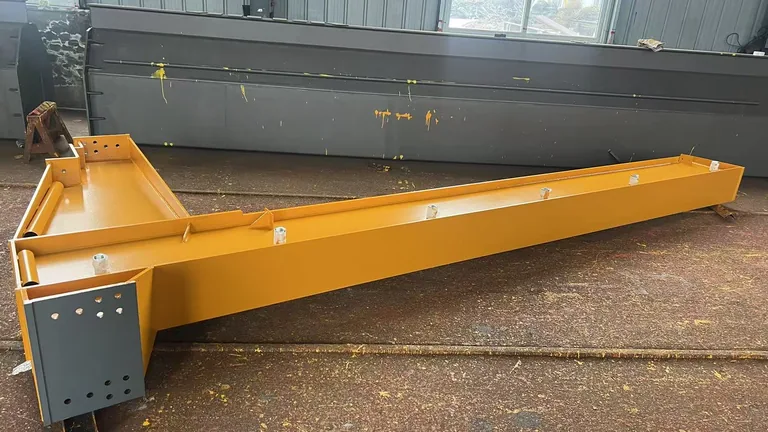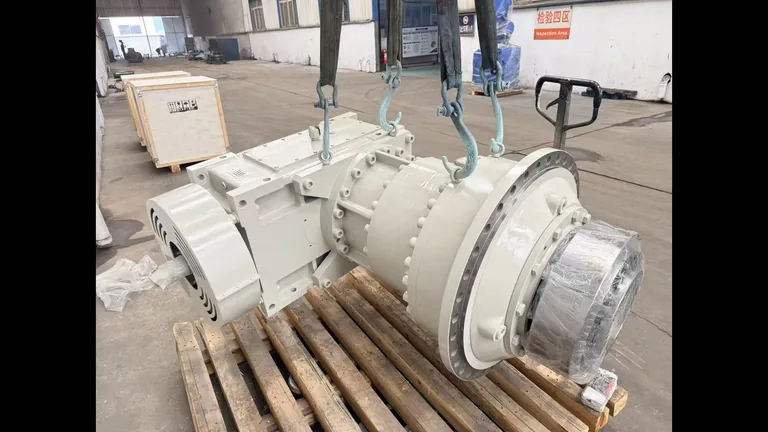
How often must a crane be inspected? The rules set a clear floor. Critical parts of a crane must be inspected daily, before each shift. A full periodic inspection then follows every 1 to 12 months.
Выделенный фрагмент: The minimum crane inspection frequency for critical parts is daily, before each shift, performed by a competent person. Federal rules also require periodic inspections at 1 to 12 month intervals. The interval depends on the crane’s activity, severity of service, and environment.
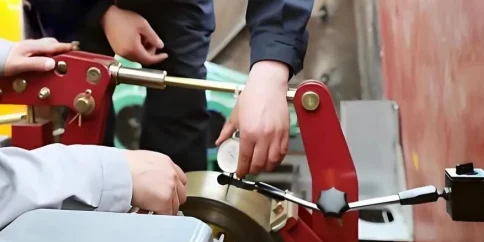
The Short Answer: Daily, Before Each Shift
Workplace safety rules in the United States answer this question directly. OSHA crane standard 29 CFR 1910.179(j) requires employers to ensure daily inspection of critical parts. The check must happen before the first use of each shift.
The inspector must be a competent person. That means someone trained to identify crane hazards and authorized to stop work on a defect.
If any part fails the daily check, the crane stays out of service. It returns only after repair and re-inspection.
Why Daily Is the Legal Minimum
Critical parts fail between inspections, not during them. A brake lining, a wire rope strand, or a hook latch can pass on Friday and fail on Monday.
Daily checks catch the window of decay:
- Overnight rope kinks from slack storage.
- Brake dust buildup and clearance drift.
- Latch damage from the previous shift’s mishandling.
- Limit switch faults from vibration and wear.
A weekly or monthly check alone leaves this window unguarded. That is why the daily interval is the floor, not the target.
The Full Crane Inspection Frequency Framework
OSHA 1910.179(j) defines two inspection classes for overhead and gantry cranes. Both run on their own clocks.
Frequent Inspections: Daily to Monthly
Frequent inspections cover the parts that wear fastest:
- All functional operating mechanisms, checked for maladjustment.
- Members that are deformed, cracked, or corroded.
- Loose bolts and rivets.
- Cracked or worn sheaves and drums.
- Wire rope and its reeving, per the rope standard.
- Hydraulic system lines for leaks and drift.
- Hook latches and hook deformation.
The most safety-critical items in this list—operating mechanisms, hooks, rope, and brakes—require the daily interval covered above.
Periodic Inspections: Every 1 to 12 Months
Periodic inspections dig deeper. The interval depends on three factors:
- Activity: how many hours and cycles the crane works.
- Severity of service: duty class and load levels.
- Environment: heat, dust, moisture, and corrosion.
A foundry crane in heavy service may need the quarterly end of the range. A clean-room hoist in light duty may qualify for the annual end.
Periodic inspections record cracked or worn members, hook spread, drum and sheave wear, rope deterioration, and legibility of load markings. OSHA requires a dated record of these inspections.
| Inspection Level | Minimum Frequency | Typical Scope |
|---|---|---|
| Pre-shift check | Daily, each shift | Brakes, hooks, rope, limit switches, latches |
| Frequent inspection | Daily to monthly | Operating mechanisms, fasteners, sheaves, drums, structure |
| Periodic inspection | 1 to 12 months | Full detailed exam with dated written record |
| Complete overhaul | Per manufacturer and duty class | Teardown, measurement, component renewal |
What Counts as Critical Parts
Daily checks focus on the parts whose failure drops a load:
- Wire rope: broken wires, kinks, corrosion, drum winding.
- Hook assembly: deformation, cracks, throat opening, safety latch.
- Brakes: clearance, lining wear, and stopping response.
- Limit switches: upper and lower travel cut-off.
- Drums and sheaves: groove wear and smooth rope guidance.
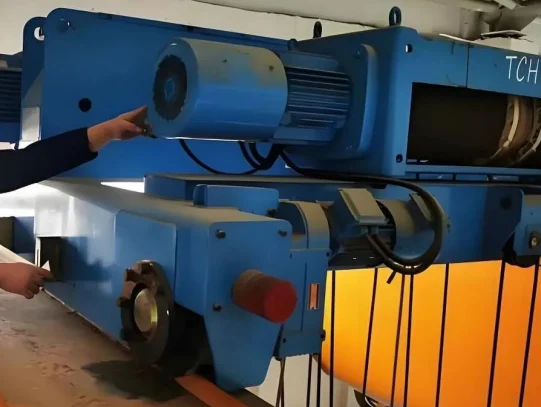
For wheel-related wear, our guide on how to inspect crane wheels gives measurable criteria. A complete task-by-task routine is in our overhead crane inspection checklist. The full maintenance cycle sits in this Контрольный список технического обслуживания крана.
Who Performs the Inspection
The daily and frequent inspections are performed by a competent person designated by the employer. Periodic inspections may require a qualified or certified inspector, depending on local rules and company policy.
Keep the chain of responsibility clear. The employer ensures the inspection system exists. The competent person performs and documents it. The operator verifies the check happened before the first lift.
Records and Compliance
Three records matter most:
- Dated periodic inspection records, required by OSHA.
- Defect reports and tag-out actions for failed daily checks.
- Maintenance logs that trace repairs back to findings.
Records also protect you after an incident. They prove the inspection system was real, not a signature on a blank form.
When Inspection Finds a Defect
A daily check only has value when findings trigger action. Rope at discard limits, hooks beyond wear limits, and worn brake linings call for immediate replacement with matched components. For context on how skipped checks turn into incidents, see распространенные аварии с кранами and their causes.
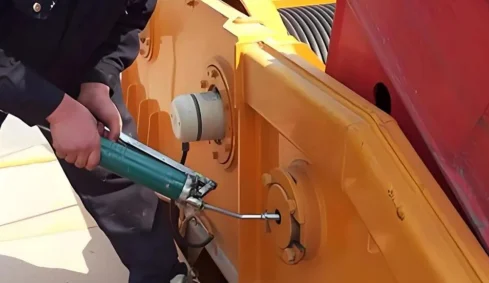
Hanko supplies replacement wire rope drums, hooks, brake parts, and sheaves for common crane models. Inspection records and material documentation are available on request.
ЧЗВ
What is the minimum frequency for inspecting critical parts of cranes?
How often is a periodic crane inspection required?
Which crane parts count as critical?
Who must perform crane inspections?
Do crane inspections need written records?
Keep Every Inspection on Schedule
The daily check is the floor, not the finish line. If your inspections reveal worn critical parts, Hanko can supply matched replacements.
Отправьте нам:
- Фотографии табличек с названием и информация о модели крана.
- Чертежи деталей или номера деталей
- Измерения износа по данным ваших протоколов осмотра.
Contact Hanko today for replacement components that keep every crane inspection passing.
Электронная почта: info@hankocrane.com