
In overhead cranes and gantry cranes, the crane wheel assembly plays a critical role in supporting heavy loads and ensuring smooth movement along the rails. Although crane wheels are often overlooked compared with larger components such as girders or hoists, they directly influence operational stability, safety, and equipment lifespan.
Therefore, understanding the structure, types, and maintenance requirements of a crane wheel assembly helps operators improve efficiency and reduce maintenance costs.
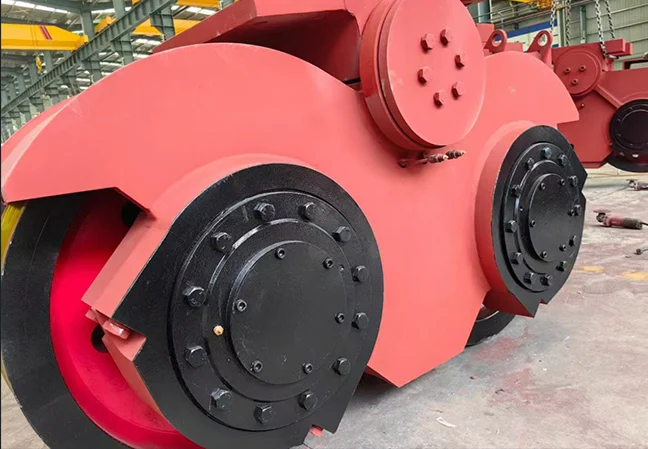
What Is a Crane Wheel Assembly?
A crane wheel assembly is a mechanical unit composed of several components, including the wheel, axle, bearings, and bearing housing. This assembly allows cranes and trolleys to move smoothly along tracks while supporting the weight of the crane structure and the lifted load.
In industrial lifting systems, crane wheels perform two important functions. First, they support the combined weight of the crane and its load. Second, they enable the crane to travel along the runway rails during lifting operations.
Because crane wheels carry heavy loads under continuous movement, manufacturers usually produce them as forged or cast steel components with high mechanical strength.
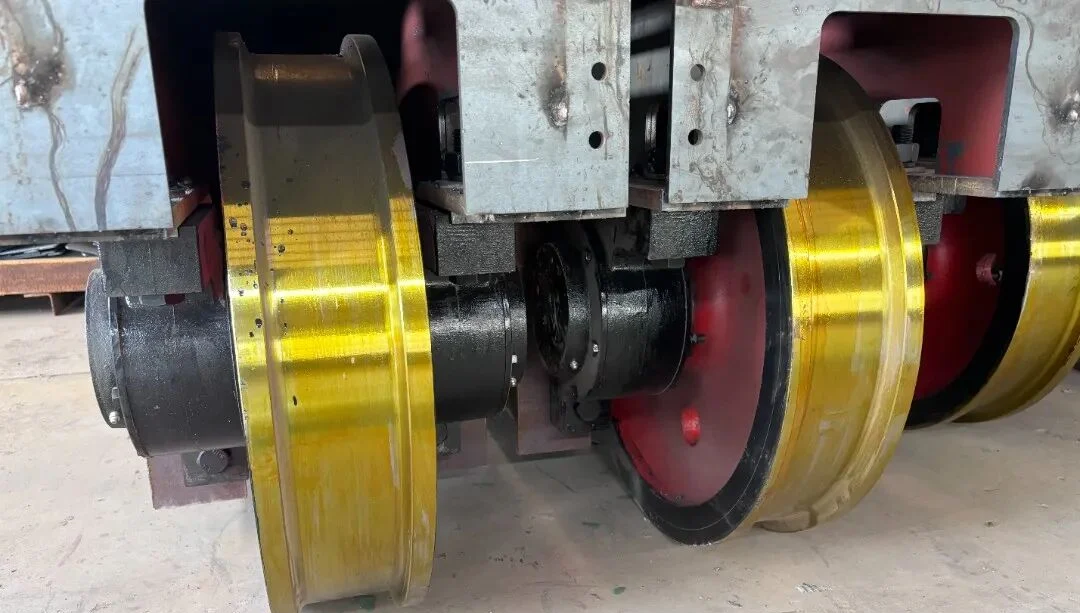
Main Components of a Crane Wheel Assembly
A typical crane wheel assembly consists of several key parts that work together to ensure reliable operation.
Колесо крана
The crane wheel is the primary load-bearing component. It contacts the rail directly and supports the weight of the crane and the load being lifted.
To improve wear resistance and service life, the wheel tread often undergoes surface heat treatment. For example, the typical hardness requirement is HB300–350, with a hardened depth of at least 20 mm.
Ось
The axle connects the wheel to the drive system and transmits rotational motion. It also supports the wheel under heavy loads during crane movement.
Bearings
Bearings reduce friction between the rotating wheel and the stationary structure. High-quality bearings ensure smooth rotation and stable crane operation.
Bearing Housing
The bearing housing protects the bearings and keeps them properly aligned. It also allows easy installation and maintenance.
Together, these components form the complete crane wheel assembly, ensuring reliable movement of the crane along the rails.
Types of Crane Wheels
Crane wheels can be classified according to several structural characteristics.
Classification by Wheel Flange
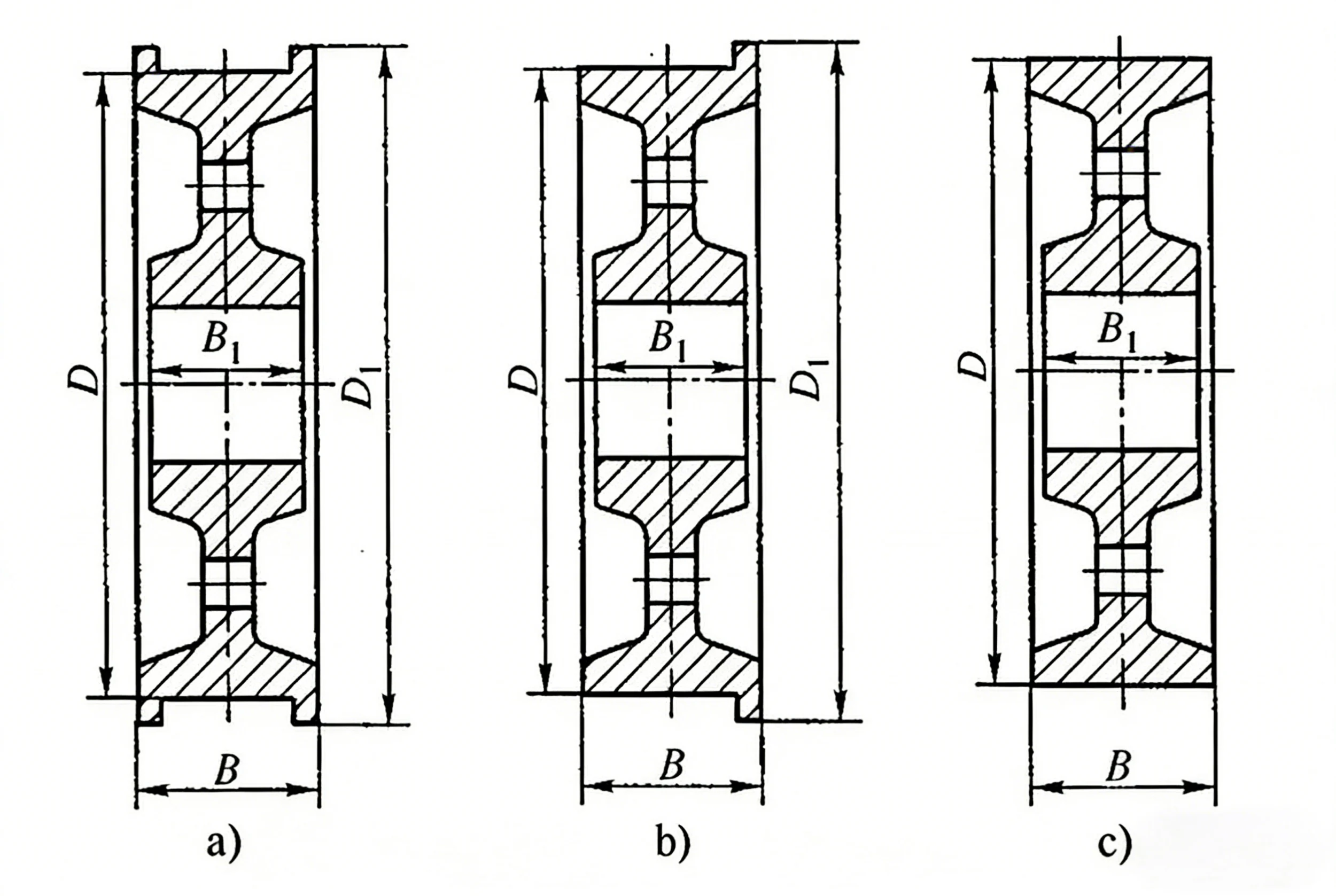
Double Flange Wheels
Double flange wheels are the most commonly used wheels for crane long travel systems. The flanges guide the wheel along the rail and help prevent derailment.
Single Flange Wheels
Single flange wheels are typically used in crane trolley systems. They guide the wheel while allowing flexibility in rail alignment.
Flangeless Wheels
Flangeless wheels do not include guiding flanges. Instead, they rely on horizontal guide wheels to maintain alignment on the rail.
This design reduces friction between the wheel flange and rail side surface, which helps extend wheel service life.
Classification by Wheel Tread Shape
Cylindrical Tread Wheels
Cylindrical wheels are commonly used as driven or idle wheels. Their simple structure allows stable movement under moderate loads.
Conical Tread Wheels
Conical wheels are often used as driving wheels for crane travel systems. The typical taper ratio is 1:10, which improves self-centering performance during crane movement.
Drum-Shaped (Crowned) Wheels
Drum-shaped wheels feature a slightly curved tread surface. They are commonly used in electric hoist trolleys or circular track cranes, where they help reduce additional friction and wear.
Importance of Wheel Alignment
Proper wheel alignment is one of the most important technical requirements in a crane wheel assembly.
If the wheel alignment deviates beyond acceptable limits, several problems may occur:
- Rail biting or misalignment
- Increased running resistance
- Excessive vibration and noise
- Accelerated wear of wheels and rails
- Reduced service life of the crane
To prevent these issues, manufacturers usually assemble crane wheels into wheel sets or wheel blocks before installation. After installation, technicians adjust the wheel alignment carefully and fix the assembly in place.
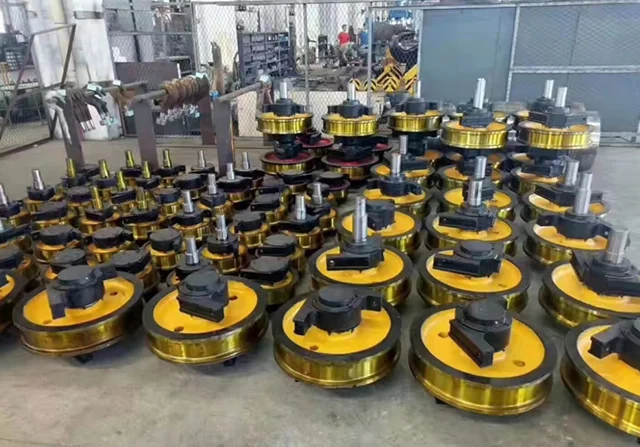
How to Choose the Right Crane Wheel Assembly
Selecting the correct crane wheel assembly requires evaluating several operational factors.
Working Environment
First, consider the working environment. For example, cranes operating in corrosive or humid environments may require corrosion-resistant materials or protective coatings.
Load Capacity
Next, evaluate the crane’s lifting capacity. Heavy-duty cranes typically require wheels with larger diameters, wider flanges, and higher-strength materials.
Travel Speed
Crane travel speed also affects wheel selection. High-speed cranes require wheels with better wear resistance and smoother surface finishing.
Cost and Maintenance
Finally, cost and maintenance requirements should also be considered. Selecting durable and reliable components often reduces long-term maintenance costs.
Manufacturers such as Hanko design crane wheel assemblies with optimized material selection, structural design, and precision machining to ensure reliable performance in demanding industrial environments.
Crane Wheel Inspection and Maintenance
Regular inspection helps maintain the safety and reliability of the crane wheel assembly.
Operators should inspect the following conditions:
Check for Cracks
Wheel flanges, tread surfaces, and spokes should not contain cracks. If cracks appear, the wheel must be replaced immediately.
Monitor Tread Wear
When tread wear reaches 15% of the original thickness, the wheel should be replaced.
Inspect Flange Wear
If flange thickness decreases by 50%, the wheel must be scrapped.
Check Deformation
Excessive flange deformation may indicate structural damage and requires immediate inspection.
Verify Smooth Rotation
The wheel should rotate smoothly without abnormal noise or vibration. Bearings must remain properly lubricated.
Regular maintenance significantly improves the lifespan of crane wheels and reduces operational risks.
Заключение
The crane wheel assembly is a fundamental component that supports crane movement and load stability. From supporting heavy loads to guiding the crane along the rails, its performance directly affects lifting efficiency and equipment safety.
By understanding the structure, types, and maintenance requirements of crane wheel assemblies, operators and engineers can improve crane reliability and extend equipment service life.
High-quality crane wheel assemblies manufactured by Hanko combine durable materials, precision machining, and optimized design to ensure safe and efficient lifting operations in demanding industrial environments.
ЧЗВ
What is a crane wheel assembly?
A crane wheel assembly is a mechanical unit consisting of the wheel, axle, bearings, and bearing housing that allows cranes to move along rails while supporting heavy loads.
What material is used for crane wheels?
Crane wheels are typically made from cast steel such as ZG430-640 or forged steel. The tread surface is usually heat treated to improve wear resistance.
Why is wheel alignment important for cranes?
Improper wheel alignment can cause rail biting, vibration, increased resistance, and excessive wear on both the wheel and the rail.
When should a crane wheel be replaced?
A crane wheel should be replaced if the tread wear reaches 15%, flange wear reaches 50%, or cracks and deformation appear.
What industries use crane wheel assemblies?
Crane wheel assemblies are widely used in steel plants, ports, warehouses, manufacturing facilities, and mining operations.

 English
  Korean
  Russian
  Spanish
  Malay
Malay  Afrikaans
  Bulgarian
  French
  Bengali
  Italian
  Hungarian
  Vietnamese
  Thai
Thai  Indonesian
  German
  Arabic
  Japanese