
Featured Snippet: How Do You Choose the Right Crane Motor?
The correct crane motor selection depends on load capacity, duty cycle, starting torque, operating environment, speed control requirements, and power supply conditions. Most industrial cranes use squirrel cage induction motors with variable frequency drives (VFDs) for stable performance, energy efficiency, and precise control.
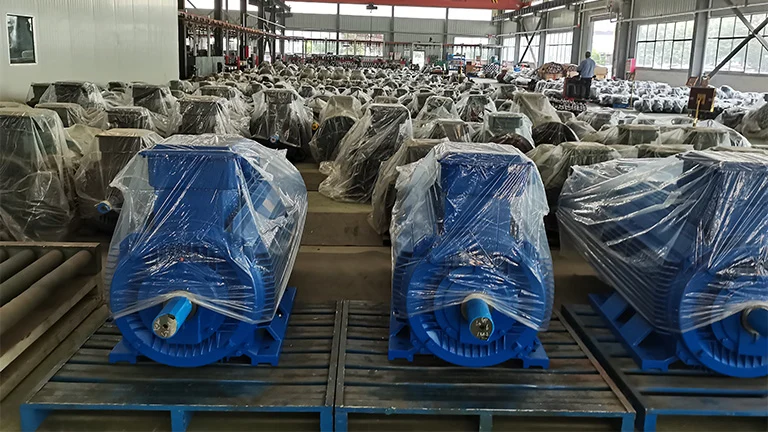
Why Crane Motor Selection Matters
Crane motors directly affect lifting performance, positioning accuracy, safety, and maintenance costs. If the motor is undersized, the crane may overheat, lose torque, or fail under heavy loads. On the other hand, oversized motors increase energy consumption and operating costs.
Therefore, choosing the correct crane motor improves:
- Lifting efficiency
- Equipment reliability
- Energy savings
- Service life
- Safety performance
For industrial operations, proper motor selection also reduces downtime and maintenance expenses.
What Is a Crane Motor?
A crane motor is an electric motor specifically designed for crane and hoist applications. Unlike standard industrial motors, crane motors must handle:
- Frequent starting and braking
- Reversing operation
- Heavy shock loads
- High starting torque
- Intermittent duty cycles
Crane motors are commonly used in:
- Hoisting mechanisms
- Trolley travel systems
- Bridge travel systems
- Slewing mechanisms
- Luffing systems
Common Types of Crane Motors
1. Squirrel Cage Induction Motor
This is the most commonly used crane motor in modern industrial cranes.
Advantages
- Simple structure
- Low maintenance
- High reliability
- Good efficiency
- Compatible with VFD systems
Applications
- Kren atas
- Kren gantri
- Pengangkat elektrik
- Workshop cranes
2. Slip Ring Motor
Slip ring motors provide high starting torque and smooth acceleration.
Advantages
- Excellent starting performance
- Adjustable starting resistance
- Suitable for heavy loads
Applications
- Heavy-duty cranes
- Metallurgical cranes
- Mining cranes
However, they require more maintenance because of brushes and slip rings.
3. Variable Frequency Crane Motor
VFD-controlled motors are increasingly popular because they improve positioning accuracy and reduce power consumption.
Benefits
- Smooth acceleration and deceleration
- Reduced mechanical impact
- Better load control
- Lower energy usage
These motors are ideal for automated and precision lifting applications.
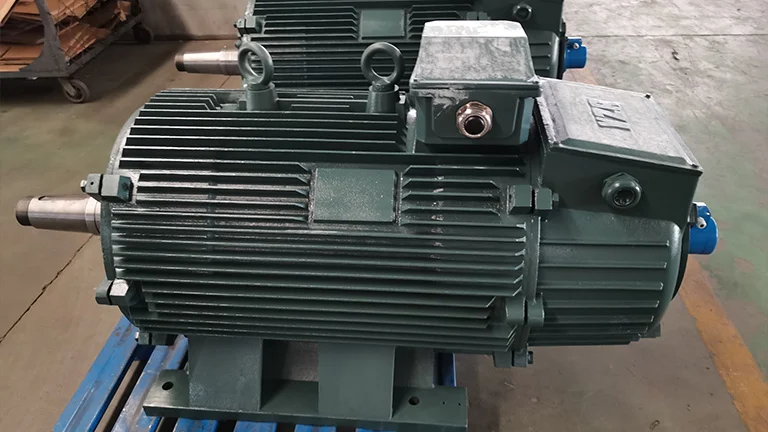
Key Factors in Crane Motor Selection
1. Rated Load Capacity
First, determine the crane’s maximum lifting load.
The motor must generate sufficient torque to safely lift and move the rated load under full operating conditions.
Always include:
- Hook weight
- Lifting attachments
- Dynamic load factors
Most engineers also add a safety margin to prevent motor overload.
2. Duty Cycle and Working Class
Crane motors operate under different duty classes.
Common classifications include:
| Duty Class | Permohonan |
|---|---|
| M3/M4 | Light-duty workshop cranes |
| M5 | General industrial cranes |
| M6 | Heavy-duty production cranes |
| M7/M8 | Continuous and severe-duty cranes |
Higher duty classes require motors with better thermal capacity and stronger insulation systems.
3. Starting Torque Requirements
Crane applications often require high starting torque.
For example:
- Hoisting systems
- Steel mill cranes
- Grab bucket cranes
Generally, crane motors should provide:
- 150%–250% starting torque
- Stable acceleration under load
Insufficient torque may cause:
- Gelinciran beban
- Motor overheating
- Brake wear
- Reduced lifting efficiency
4. Speed Control Requirements
Different applications require different speed control methods.
Single-Speed Motors
Suitable for:
- Basic lifting applications
- Low-cost systems
Dual-Speed Motors
Provide:
- Fast lifting speed
- Slow positioning speed
Suitable for:
- General industrial handling
VFD Speed Control
Best for:
- Precision lifting
- Automated cranes
- Smart crane systems
Benefits include:
- Accurate positioning
- Reduced load swing
- Lower mechanical stress
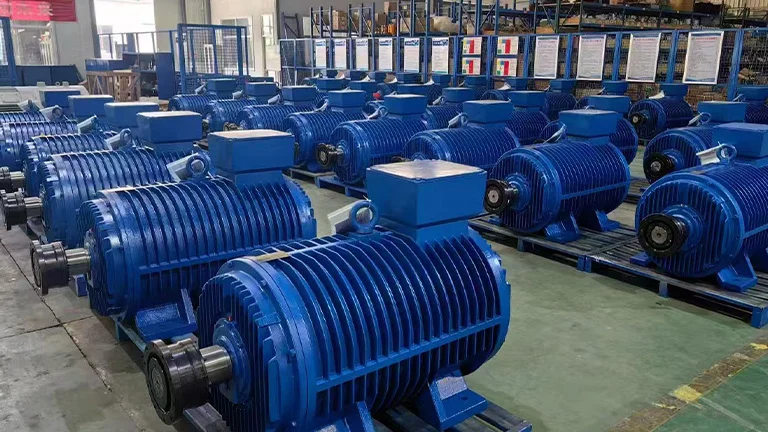
5. Operating Environment
The working environment significantly affects crane motor selection.
High-Temperature Areas
Use motors with:
- Heat-resistant insulation
- Improved cooling systems
Common in:
- Steel plants
- Foundries
- Metallurgical workshops
Dusty or Humid Environments
Choose motors with:
- IP55 or IP65 protection
- Sealed housing
- Corrosion-resistant coatings
Explosive Environments
Use explosion-proof motors for:
- Chemical plants
- Oil and gas facilities
- Mining operations
These motors must comply with explosion-proof standards.
6. Power Supply Conditions
Before selecting a crane motor, verify:
- Voltage
- Frequency
- Phase type
Common industrial configurations include:
- 380V / 50Hz / 3-phase
- 460V / 60Hz / 3-phase
Incorrect voltage matching may damage the motor or reduce efficiency.
7. Energy Efficiency
Modern industrial facilities increasingly prioritize energy-saving equipment.
High-efficiency crane motors can:
- Reduce electricity consumption
- Lower operating costs
- Improve sustainability targets
Combining VFD systems with IE3 or IE4 motors delivers substantial energy savings.
Crane Motor Selection Formula
Engineers typically calculate motor power using the following formula:
P = (F × V) / (1000 × η)
Where:
- P = Motor power (kW)
- F = Load force (N)
- V = Lifting speed (m/s)
- η = Transmission efficiency
Additional correction factors should include:
- Starting load
- Shock load
- Duty cycle
- Environmental conditions
Common Crane Motor Problems Caused by Incorrect Selection
Improper motor selection may lead to several operational issues.
Common Problems
- Frequent overheating
- Excessive vibration
- Poor braking performance
- Gearbox overload
- High energy consumption
- Reduced motor lifespan
Therefore, matching the motor to actual crane operating conditions is essential.
Recommended Crane Motor Configuration by Application
| Permohonan | Recommended Motor |
|---|---|
| Workshop Crane | Squirrel cage motor |
| Steel Mill Crane | Heavy-duty slip ring motor |
| Precision Lifting | VFD motor |
| Explosion-Proof Area | Ex-proof motor |
| Automated Crane | Servo or VFD motor |
Maintenance Tips for Crane Motors
Proper maintenance extends crane motor service life.
Recommended Practices
- Inspect insulation regularly
- Check bearing lubrication
- Monitor operating temperature
- Clean cooling fans and vents
- Test brake coordination
- Tighten electrical terminals
Preventive maintenance reduces unexpected failures and downtime.
Need Reliable Crane Motors and Crane Components?
Hanko Provides Complete Crane Drive Solutions
Hanko supplies industrial-grade crane components for various lifting systems, including:
- Motor kren
- Pengangkat elektrik
- Crane brakes
- Gearboxes
- Crane wheels
- Couplings
- Wire rope drums
- VFD control systems
Our engineering team can help you select the correct motor configuration based on your crane type, load conditions, and operating environment.
Contact Hanko today for:
- Technical consultation
- OEM solutions
- Fast quotations
- Global shipping support
Soalan Lazim
What type of motor is commonly used in cranes?
Most industrial cranes use squirrel cage induction motors because they offer reliability, low maintenance, and good compatibility with VFD systems.
Why do cranes require high starting torque?
Crane motors must lift heavy loads from a stationary position. Therefore, they need high starting torque to ensure safe and stable lifting performance.
Are VFD motors better for cranes?
Yes. VFD-controlled motors provide smoother acceleration, precise positioning, lower energy consumption, and reduced mechanical wear.
What protection level is recommended for crane motors?
Most industrial cranes use IP55 motors. However, dusty, humid, or outdoor environments may require IP65 protection.
How long does a crane motor last?
With proper maintenance, a crane motor can typically operate for 10–20 years depending on workload and operating conditions.
Related Articles
- How to Choose an Electric Hoist
- Crane Brake System Explained
- Heavy Duty Crane Wheel Guide for Industrial Applications
- Crane Maintenance Checklist: Daily, Weekly & Monthly Guide
- How to Extend Crane Service Life: Practical Tips
- Crane Parts Cost Breakdown: What Affects the Price?
- Industrial Crane Components List: Full Guide

 English
  Korean
  Russian
  Spanish
  Malay
Malay  Afrikaans
  Bulgarian
  French
  Bengali
  Italian
  Hungarian
  Vietnamese
  Thai
Thai  Indonesian
  German
  Arabic
  Japanese