
In industrial material handling, cranes play a critical role in improving efficiency and workplace safety. Among the most widely used lifting systems are overhead cranes and gantry cranes. Although both machines perform similar lifting and transportation tasks, their structural design, installation method, and application environments are significantly different.
Therefore, understanding the differences between overhead crane vs gantry crane helps engineers, facility managers, and equipment buyers choose the most suitable lifting equipment for their operations.
In this guide, we explain how each crane works, their structural differences, and when to use them.
What Is an Overhead Crane?
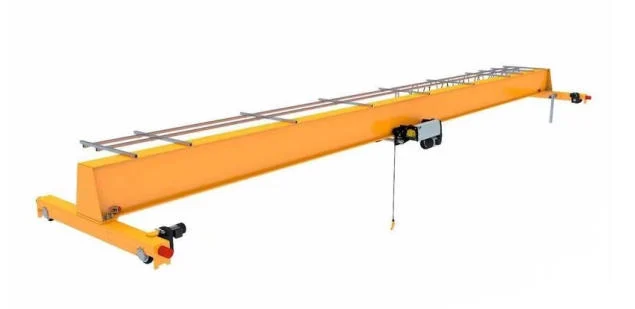
An overhead crane, also known as a bridge crane or traveling crane, is a lifting system installed inside industrial buildings such as factories, warehouses, and workshops.
The crane bridge spans the working area and travels along rails mounted on elevated runway beams. Meanwhile, a trolley moves across the bridge and carries the hoisting mechanism to lift and transport loads.
Because the crane operates above the workspace, overhead cranes allow factories to move materials efficiently without interfering with ground equipment.
Main Components of an Overhead Crane
A typical overhead crane system includes:
- Crane bridge (main girder and end carriages)
- Hoist and trolley system
- Runway beams and rails
- Electrical control system
- Crane motor and gearbox
Overhead cranes may use single girder or double girder configurations depending on load capacity and span requirements.
Typical Applications
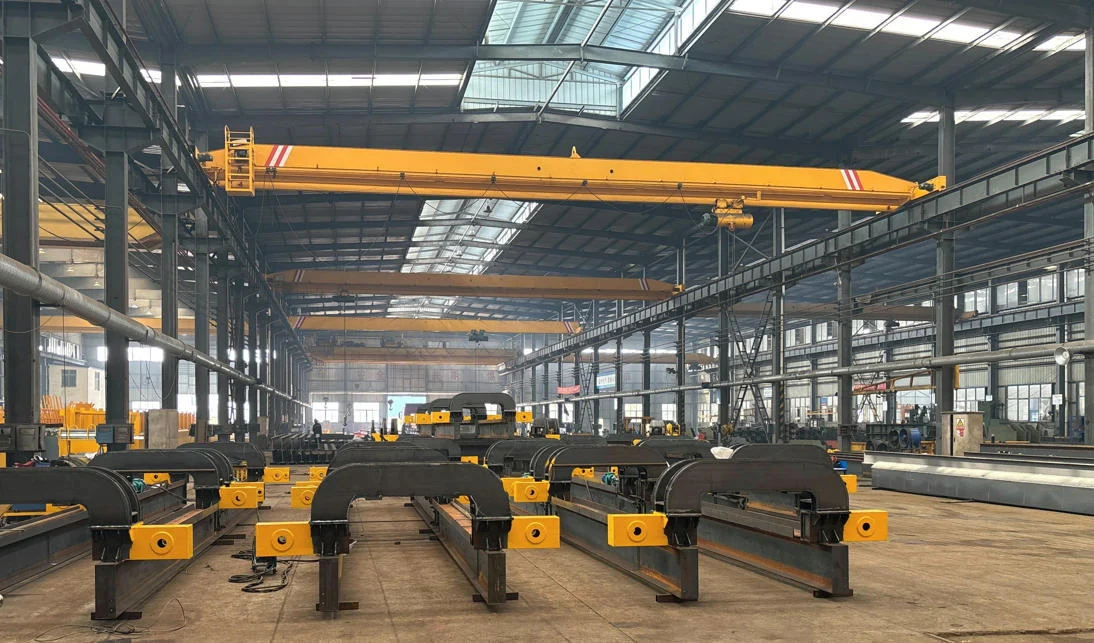
Overhead cranes are commonly used in:
- Manufacturing plants
- Steel fabrication workshops
- Warehouses and logistics centers
- Machinery assembly lines
Because they operate indoors, overhead cranes maximize vertical space and improve production efficiency.
What Is a Gantry Crane?
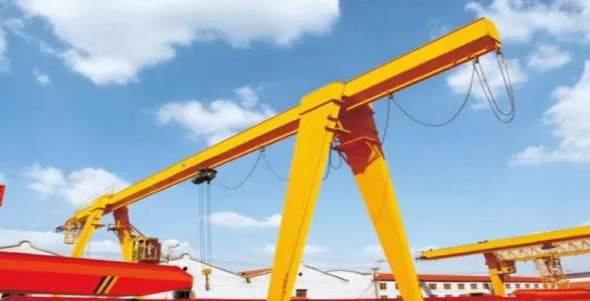
A gantry crane is a lifting system supported by legs that travel on rails or wheels installed on the ground.
Unlike overhead cranes, gantry cranes do not rely on building structures for support. Instead, the crane bridge is mounted on two or more legs that move along ground-level tracks.
As a result, gantry cranes are particularly suitable for outdoor operations and large working areas.
Structural Features
A typical gantry crane consists of:
- Main girder (bridge beam)
- Supporting legs
- Ground rails or wheels
- Hoisting trolley
- Electrical control system
Some gantry cranes also feature cantilever extensions on one or both sides of the main beam, which increase the working coverage.
Typical Applications
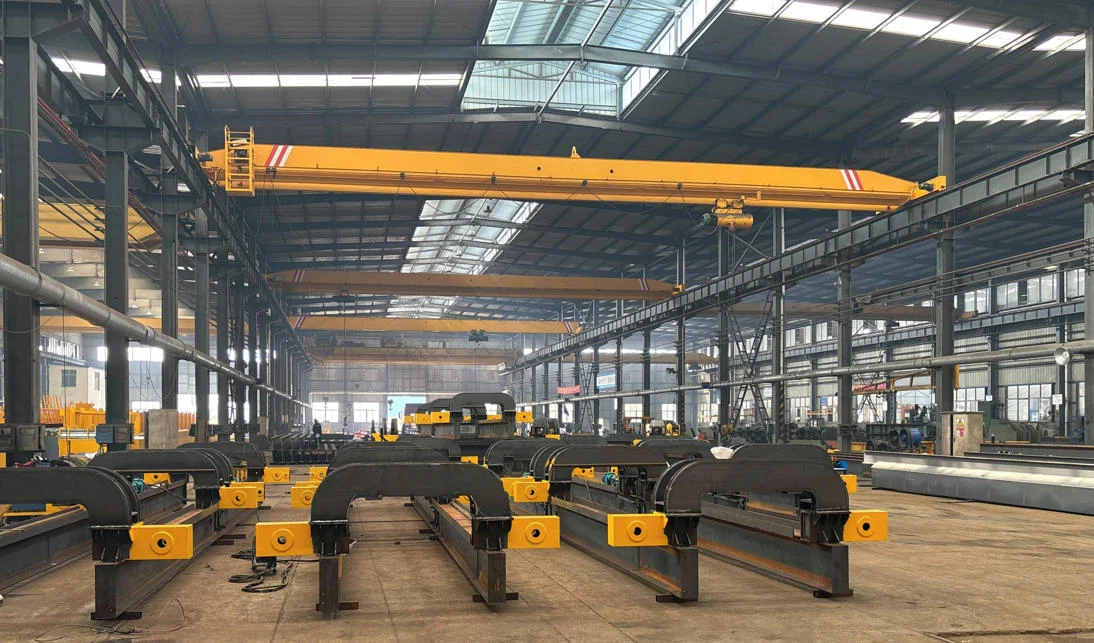
Gantry cranes are widely used in:
- Container terminals
- Shipyards
- Construction sites
- Outdoor storage yards
- Precast concrete plants
Since gantry cranes often operate outdoors, they typically include wind-resistant designs and heavy-duty structural components.
Overhead Crane vs Gantry Crane: Key Differences
Although both systems are used for lifting and transporting loads, several key differences distinguish overhead crane vs gantry crane.
Structural Design
|
Feature |
Overhead Crane | Gantry Crane |
| Support structure | Supported by building columns |
Supported by ground legs |
|
Rail location |
Elevated runway beams |
Ground rails |
| Structural appearance | Bridge suspended above workspace | Door-shaped frame structure |
Overhead cranes depend on building structures, while gantry cranes are self-supporting machines.
Installation Environment
Another important difference between overhead crane vs gantry crane is the installation location.
Overhead cranes are typically installed inside factories or warehouses, where runway beams are integrated into the building structure.
In contrast, gantry cranes are commonly installed outdoors, especially in large open areas such as ports or storage yards.
Space Utilization
Overhead cranes maximize vertical space because the bridge travels above the working area. Consequently, ground equipment and production lines remain unobstructed.
However, gantry cranes occupy ground space with their supporting legs. Nevertheless, they provide greater flexibility for large outdoor operations.
Load Capacity and Span
Both crane types can handle heavy loads, but their typical use cases differ.
- Overhead cranesare ideal for indoor lifting tasks with medium to heavy loads.
- Gantry cranesare often designed for larger spans and outdoor heavy-duty operations.
For example, container gantry cranes in ports can lift extremely heavy cargo.
When to Choose an Overhead Crane
An overhead crane is typically the best choice when:
- The lifting operation takes place inside a building
- Floor space must remain clear
- Precise load positioning is required
- The crane will be integrated into aproduction line
Factories prefer overhead cranes because they improve workflow efficiency and maximize space utilization.
When to Choose a Gantry Crane
A gantry crane is more suitable when:
- Lifting operations occur outdoors
- The working area is large or temporary
- Installing runway beams is not practical
- Heavy loads must be moved across open yards
Therefore, gantry cranes are widely used in construction sites, ports, and container terminals.
Kesimpulan
Understanding the differences between overhead crane vs gantry crane is essential when selecting the right lifting equipment.
In summary:
- Overhead cranes operate inside buildings and use elevated runway beams for support.
- Gantry cranes operate on ground rails and are commonly used in outdoor environments.
Both crane types play vital roles in modern material handling systems. By selecting the appropriate crane based on working conditions, companies can improve operational efficiency, safety, and productivity.
Soalan Lazim
What is the difference between overhead crane and gantry crane?
The primary difference between overhead crane vs gantry crane is their support structure. Overhead cranes use building runway beams, while gantry cranes rely on legs that move on ground rails.
Which crane is better for factories?
Most factories prefer overhead cranes because they save floor space and integrate easily with production lines.
Can gantry cranes be used indoors?
Yes. Portable or semi-gantry cranes can be used indoors when installing overhead runway beams is not feasible.
Are gantry cranes more flexible than overhead cranes?
In many cases, yes. Gantry cranes can sometimes be relocated and installed without major building modifications.
- Main Components of an Overhead Crane Explained
- How Does a Crane Hoist Work
- Apa Itu Drum Crane dan Cara Kerjanya
- Senarai Komponen Keselamatan Kren
- Overhead Crane Parts List: Essential Components Explained
Need Reliable Crane Components for Your Lifting System?
High-quality crane components are essential for safe and efficient lifting operations. Durable parts not only improve crane performance but also reduce maintenance costs and downtime.
Hanko provides a wide range of industrial crane components, including:
👉 Contact Hanko today to discuss your crane parts requirements and get professional support.

 English
  Korean
  Russian
  Spanish
  Malay
Malay  Afrikaans
  Bulgarian
  French
  Bengali
  Italian
  Hungarian
  Vietnamese
  Thai
Thai  Indonesian
  German
  Arabic
  Japanese