Introduction
The interaction between crane wheels and rails is one of the most critical factors affecting crane stability, service life, and operational safety. Improper interaction leads to a common but serious issue known as rail gnawing (wheel-rail misalignment wear).
Understanding how crane wheels engage with rails—and what goes wrong—can significantly reduce maintenance costs, downtime, and accident risks.
What Is 크레인 휠 vs Rail Interaction?
Crane wheel vs rail interaction refers to how the wheel tread, flange, and rail surface work together during crane movement.
Under ideal conditions:
- Wheels roll smoothly on rails
- Flanges do NOT contact rail sides
- Load is evenly distributed
When misalignment occurs, wheel flanges press against the rail, causing:
- Friction
- Noise
- Abnormal wear
- Structural stress
This phenomenon is commonly called crane rail gnawing.
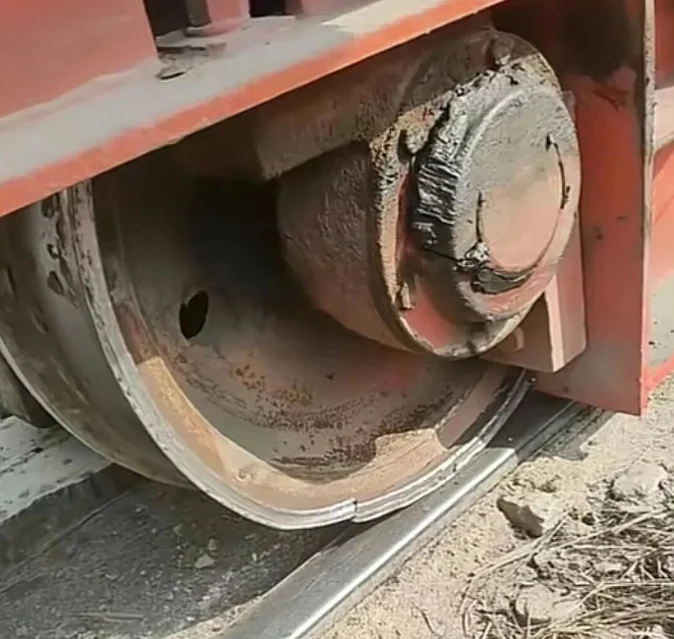
5 Key Signs of Poor Wheel–Rail Interaction
You can quickly diagnose problems by identifying these symptoms:
1. Shiny Wear Marks on Rail Sides
- Bright streaks or grooves
- Indicates flange contact and friction
2. Wheel Flange Damage
- Burrs or polished spots
- Suggests constant side الضغط
3. Uneven Rail Top Wear
- Marks on rail head edges
- Shows improper load distribution
4. Changing Wheel Clearance
- Flange gaps fluctuate during movement
- Indicates misalignment or deformation
5. Abnormal Noise
- “Squealing” → friction
- “Clunking” → severe impact or climbing risk
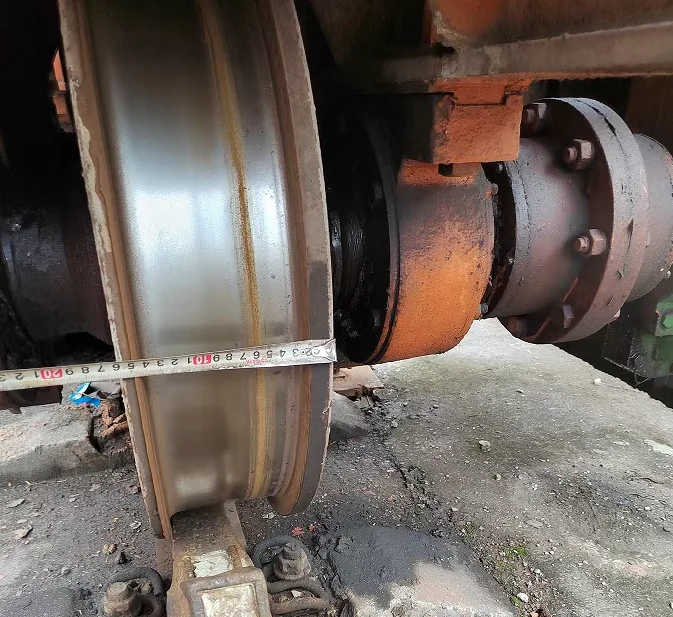
6 Main Causes of Crane Wheel vs Rail Problems
1. Wheel Manufacturing or Installation Errors
- Unequal wheel diameters
- Horizontal or vertical misalignment
- Installation inaccuracies
👉 Result: Crane travels unevenly → flange presses rail
2. Rail Installation Deviations
- Rail height differences
- Span misalignment
- Poor straightness
👉 Result: Crane shifts laterally → constant friction
3. Drive System Imbalance
- Unequal motor speeds
- Gear backlash differences
- Brake force inconsistency
👉 Result: One side moves faster → skewing
4. Structural Deformation
- Bridge frame distortion
- Uneven load distribution
- Long-term overload
👉 Result: Wheel alignment permanently affected
5. Incorrect Wheel Design or Assembly
- Wrong taper direction (for conical wheels)
- Improper flange configuration
👉 Result: Self-correction fails → worsened misalignment
6. Installation Issues (Especially Gantry Cranes)
- Uneven foundation
- Improper leg alignment
- Welding distortion
👉 Result: System-wide geometric deviation
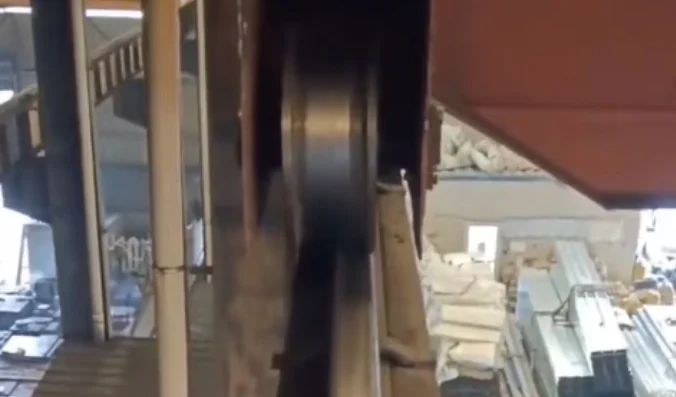
Why Crane Wheel vs Rail Issues Are Dangerous
Poor interaction is not just a wear issue—it’s a safety hazard:
- Increased running resistance
- Accelerated wear of wheels and rails
- Gearbox and motor overload
- Structural deformation
- Risk of derailment
- Potential for severe accidents
5 Practical Solutions to Improve Wheel–Rail Interaction
1. Maintain Wheel Consistency
- Ensure equal diameters on driving wheels
- Replace worn wheels in pairs
2. Adjust Wheel Alignment
- Correct horizontal and vertical deviation
- Use shims (1–2 mm adjustments)
- Recheck after installation
3. Improve Rail Installation Accuracy
- Control:
- Rail height difference
- Span tolerance
- Straightness
- Regular inspection and cleaning
4. Balance the Drive System
- Synchronize motor speeds
- Adjust brake torque
- Inspect gearbox backlash
5. Optimize Operator Practices
- Avoid overload
- Prevent crane collisions
- Ensure smooth start/stop
5 Engineering Improvements (Advanced Optimization)
For long-term performance upgrades:
1. High-Flange & Large Radius Wheels
- Reduce stress concentration
- Extend service life
2. Conical Tread Wheels
- Enable self-alignment
- Improve tracking stability
3. Increase Structural Rigidity
- Reinforce crane frame
- Reduce deformation
4. Use Horizontal Guide Wheels
- Replace flange friction with rolling guidance
- Reduce wear significantly
5. Variable Frequency Drives (VFD)
- Smooth acceleration/deceleration
- Balance load distribution
Crane Wheel vs Rail Optimization Table
|
Factor |
Ideal Condition | Problem Impact |
Solution |
|
Wheel Diameter |
Equal | Skewing | Replace in pairs |
| Rail Alignment | Straight & level | Side |
Reinstall rails |
|
Drive System |
Synchronized | Uneven motion | Adjust motors/brakes |
|
Structure |
Rigid | Deformation | Reinforce frame |
|
Wheel Type |
Correct orientation | Misalignment | Proper assembly |
FAQ Section
What causes crane wheel rail misalignment?
Crane wheel rail misalignment is caused by uneven wheel diameters, poor rail installation, drive system imbalance, and structural deformation.
How do you fix crane rail gnawing?
Fix it by adjusting wheel alignment, correcting rail installation, synchronizing drive systems, and replacing worn components.
Why do crane wheels wear unevenly?
Uneven wear occurs due to side between wheel flanges and rails, usually caused by misalignment or uneven loading.
What is the best wheel type to reduce rail wear?
Conical tread wheels and properly aligned flanged wheels help reduce rail wear and improve tracking.
How often should crane wheel alignment be checked?
It should be checked during routine maintenance, especially after installation, heavy use, or abnormal noise detection.
결론
Crane wheel vs rail interaction is a core mechanical relationship that directly impacts crane performance, safety, and maintenance cost.
By:
- Ensuring precise installation
- Maintaining alignment
- Optimizing design
you can significantly extend equipment life and improve operational reliability.
Related Articles
To deepen your understanding of crane components and improve system performance, explore these guides:
- Crane Wheel Material Selection: Performance & Durability
- 크레인 휠 조립 가이드: 구조, 유형 및 선택 팁
- Wire Rope in Crane Systems: A Complete Guide
- How to Choose the Right Crane Drum
- Crane Drum Price Guide: Cost Factors, Types & How to Choose
- Overhead Crane Parts and Components: Complete Guide
Related Products (Recommended Crane Parts)
To solve crane wheel vs rail issues and improve system performance, the following crane components are highly recommended:
- 크레인 바퀴
High-strength forged crane wheels designed for precise rail matching, reduced wear, and long service life. - Crane Rails & Wheel Assemblies (Custom Solutions)
Engineered wheel assemblies with optimized alignment to minimize rail gnawing and improve tracking stability. - 크레인 시브
Precision-machined sheaves to ensure smooth wire rope movement and reduce system imbalance. - 크레인 드럼
High-quality crane drums that ensure proper rope winding and reduce uneven load distribution. - 크레인 기어박스
Stable transmission systems that help synchronize wheel movement and prevent skewing. - 크레인 브레이크
Reliable braking systems to ensure balanced stopping force and reduce misalignment during operation.
Need Reliable Crane Wheels and Components?
Need reliable crane wheels or technical support for your project?
At Hanko Crane Parts, we specialize in high-performance crane components, including forged crane wheels, drums, sheaves, hooks, and more—engineered for durability and precision.
👉 Whether you are dealing with rail wear issues, wheel misalignment, or looking for OEM replacement parts, our engineering team can provide tailored solutions.
Contact us today to get:
- Expert selection advice
- Custom crane wheel solutions
- Competitive factory pricing
- Fast global delivery
🔗 Visit: https://www.hankocraneparts.com/
📩 Send your inquiry and get a response within 24 hours
 English
  Korean
  Russian
  Spanish
  Malay
Malay