
소개
A well-engineered crane drum design is critical for safe and efficient lifting operations. The drum directly interacts with the wire rope, meaning poor design can lead to:
- Rope wear and damage
- Irregular winding
- Reduced lifting efficiency
- 안전 위험
Therefore, engineers must carefully consider structure, materials, and design standards when selecting or designing a crane drum.
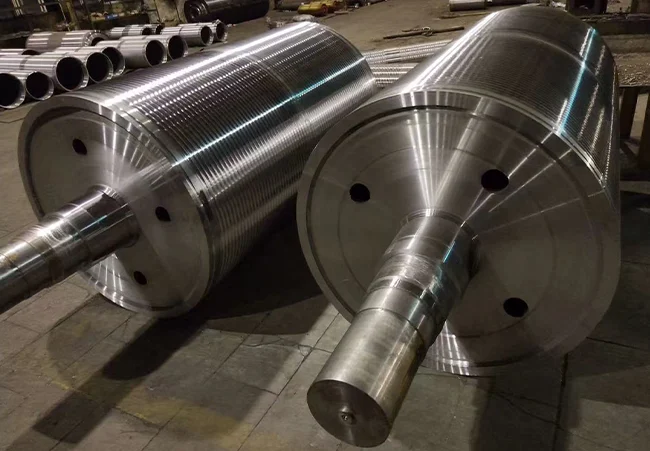
What Is a Crane Drum?
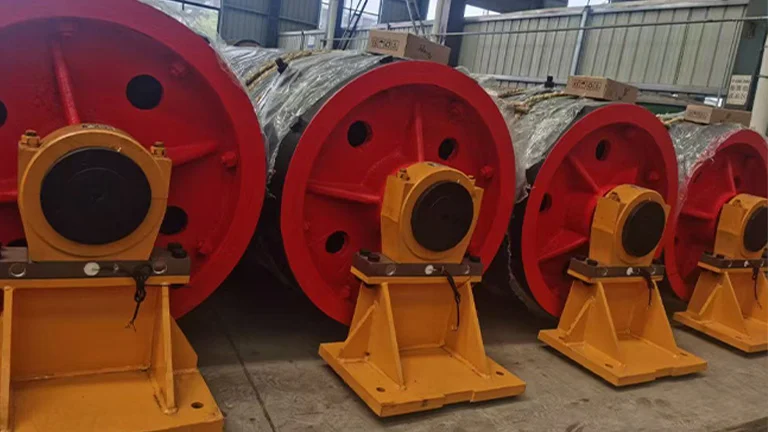
A crane drum is a cylindrical component used to wind and store wire rope during lifting operations.
Key Functions:
- Store wire rope
- Transmit lifting force
- Ensure smooth winding/unwinding
- Maintain rope alignment
👉 Related reading:
Crane Drum Structure
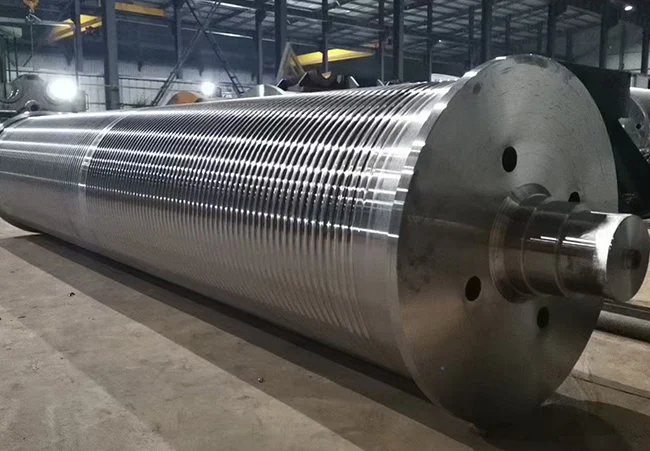
A typical crane drum consists of the following components:
핵심 구성 요소:
- Drum shell (cylindrical body)
- Rope grooves (optional but recommended)
- Flanges (end plates)
- Shaft or coupling connection
- Rope fixing device (wedge or clamp type)
Design Focus:
- Prevent rope slipping
- Ensure uniform winding
- 응력 집중 완화
Key Crane Drum Design Standards
1. Diameter Ratio (D/d Ratio)
According to GB/T 3811-2008:
Lifting Mechanism (M1–M6):
- Standard wire rope: D/d = 11.2 – 20
- Rotation-resistant rope: D/d = 12.5 – 22.4
Luffing Mechanism:
- Standard rope: D/d = 14 – 16
- Rotation-resistant rope: D/d = 16 – 20
👉 Larger drum diameter = longer rope life
2. Minimum Drum Diameter
According to GB/T 26472-2011:
- Hoisting drum: D/d ≥ 16
- Luffing drum: D/d ≥ 14
3. Rope Capacity Requirement
To ensure safety:
- Wedge fixing → ≥ 3 rope turns remain
- Clamp fixing → ≥ 5 rope turns remain
👉 This prevents rope slipping during operation.
4. Flange Height Requirement
- Flange height ≥ 5 × rope diameter
This ensures the rope does not jump off the drum.
5. Groove Design (Critical for Performance)
According to GB/T 34529-2017:
- Groove radius: 525d – 0.550d
- Optimal value: 5375d
👉 Proper groove design:
- Reduces rope wear
- Improves winding alignment
- Extends service life
6. Rope Deviation Angle
- Grooved drum: ≤ 5°
- Smooth drum (multi-layer): ≤ 7°
👉 Excessive angle leads to:
- Rope disorder
- Uneven wear
- Mechanical damage
Crane Drum Materials
Material selection directly affects durability and safety.
Common Materials:
- Carbon steel
- Alloy steel
Key Requirements:
- 고강도
- Good toughness
- Wear resistance
- Corrosion resistance
👉 For heavy-duty cranes, alloy steel is recommended.
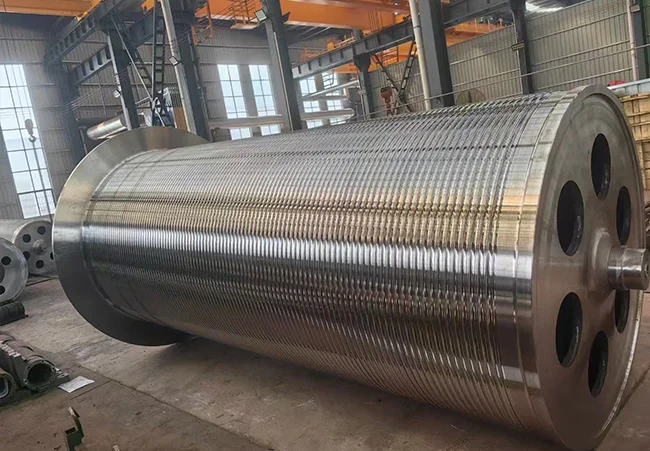
Crane Drum Manufacturing Process
A standard crane drum production process includes:
- Raw material preparation
- Rough machining
- Heat treatment (quenching & tempering)
- Precision machining
- Groove cutting
- Surface treatment
- Final inspection
👉 Each step ensures structural integrity and dimensional accuracy.
Design Optimization Tips
To improve crane drum performance:
1. Use Grooved Drums
They ensure better rope alignment and longer service life.
2. Increase D/d Ratio
Larger drums reduce bending stress on wire rope.
3. Select Proper Rope Fixing Method
Choose wedge or clamp based on load and safety requirements.
4. Control Rope Angle
Install guide devices if necessary.
Common Design Mistakes
Avoid these typical errors:
- Undersized drum diameter
- Poor groove design
- Insufficient flange height
- Ignoring rope capacity
- Using low-grade materials
👉 These mistakes often lead to premature failure.
결론
A proper crane drum design must balance:
- Structural integrity
- Rope compatibility
- Safety standards
- Operational efficiency
By following international standards and optimizing design parameters, you can significantly improve crane performance and reduce maintenance costs.
Related Articles
CTA – Contact Hanko
Looking for high-performance crane drums?
Hanko 제공합니다
- Custom crane drum design
- Precision grooved drums
- Alloy steel heavy-duty drums
- OEM & global supply
👉 Visit:
📩 Contact Hanko today for a professional crane drum solution.
FAQ – Crane Drum Design
1. What is the ideal D/d ratio for crane drum design?
Typically between 11.2 and 20 depending on working conditions and rope type.
2. Why is groove design important for crane drums?
Proper groove design reduces rope wear, improves alignment, and extends service life.
3. How many rope turns should remain on the drum?
At least 3 turns (wedge fixing) or 5 turns (clamp fixing) must remain for safety.
4. 크레인 드럼에 가장 적합한 재질은 무엇입니까?
Carbon steel for general use; alloy steel for heavy-duty applications.
5. What happens if the drum diameter is too small?
It increases rope stress, causing faster wear and potential failure.
6. Are grooved drums better than smooth drums?
Yes, grooved drums provide better rope control and reduce operational issues.
 English
  Korean
  Russian
  Spanish
  Malay
Malay  Afrikaans
  Bulgarian
  French
  Bengali
  Italian
  Hungarian
  Vietnamese
  Thai
Thai  Indonesian
  German
  Arabic
  Japanese