Electric hoists are widely used in manufacturing plants, warehouses, construction sites, and material handling systems. Although modern hoists are highly reliable, improper operation, insufficient maintenance, or component wear can still lead to unexpected failures.
Understanding common electric hoist problems helps operators reduce downtime, improve workplace safety, and extend equipment service life.
In this guide, Hanko explains the most frequent electric hoist failures, their root causes, and effective troubleshooting methods.
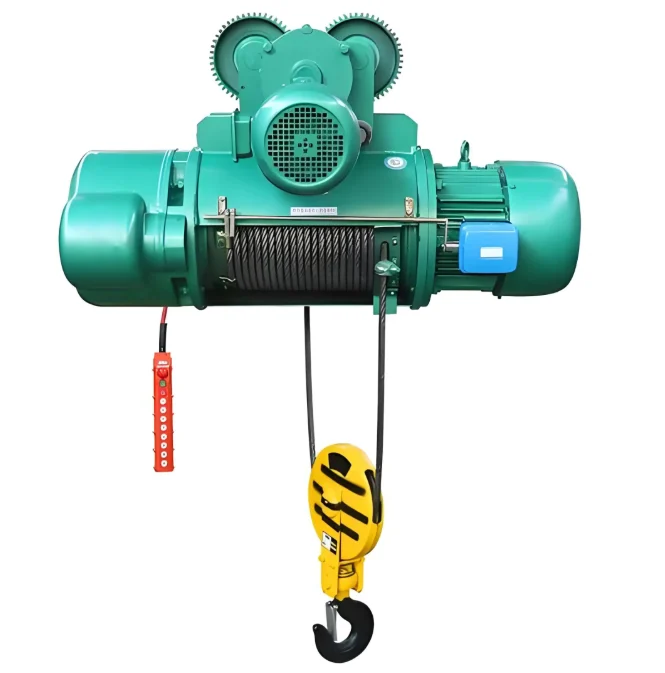
Featured Snippet: What Are the Most Common Electric Hoist Problems?
The most common electric hoist problems include:
- Hoist motor does not start.
- Motor hums but does not rotate.
- Hoist fails to stop properly.
- Brake slipping or excessive hook drift.
- Gearbox noise or oil leakage.
- Wire rope disorder or bird nesting.
- Excessive motor overheating.
- Hook deformation or safety latch failure.
Regular inspection and preventive maintenance can significantly reduce these failures and improve hoist reliability.
1. Electric Hoist Motor Does Not Run
One of the most common electric hoist problems occurs when the motor fails to start after pressing the control button.
Possible Causes
- Power supply interruption.
- Phase loss.
- Low voltage (more than 10% below rated voltage).
- Overloading.
- Brake fails to release completely.
- Damaged electrical wiring.
- Motor rotor stator contact (motor rubbing).
Recommended Solutions
- Check the main power supply and electrical connections.
- Verify that all phases are present.
- Restore voltage to the rated range.
- Reduce the load to the rated capacity.
- Clean and repair seized brake components.
- Repair damaged wiring or replace the motor if necessary.
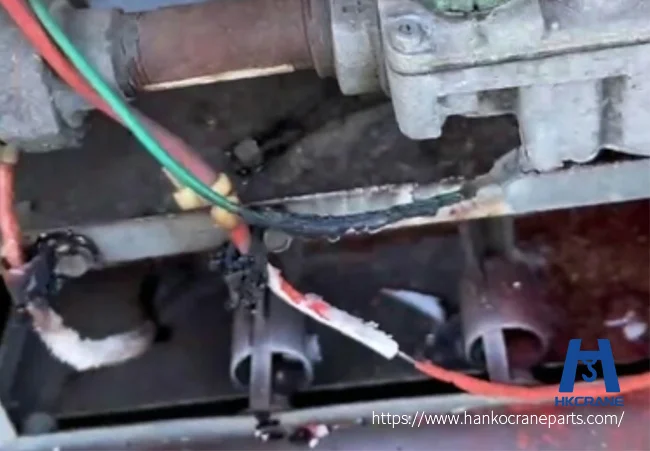
2. Motor Hums but Does Not Rotate
If the motor produces a humming sound without rotation, electrical issues are usually responsible.
Common Causes
- Single-phase operation due to phase loss.
- Defective contactor.
- Poor electrical contact.
How to Fix It
- Inspect incoming power phases.
- Check contactor contacts for burning or damage.
- Replace faulty contactors immediately.
3. Hoist Does Not Respond When the Button Is Pressed
A completely unresponsive hoist can stop production unexpectedly.
Possible Reasons
- Emergency stop button remains engaged.
- Damaged push-button station.
- Limit switch activation.
- Broken control circuit.
Solutions
- Reset the emergency stop button.
- Inspect and replace damaged control buttons.
- Reset or repair limit switches.
- Check control wiring continuity.
4. Hoist Cannot Stop or Continues Running at Limit Position
This failure creates a serious safety hazard and requires immediate action.
Causes
- Contactor contacts welded together.
- Malfunctioning limit switch.
- Incorrect wiring.
Corrective Actions
- Disconnect the main power supply immediately.
- Replace defective contactors.
- Repair or replace the limit switch.
- Verify control circuit wiring.
5. Brake Slipping or Excessive Hook Drift
Brake failure can result in load dropping, which poses significant safety risks.
Symptoms
- Load slowly descends after stopping.
- Excessive stopping distance.
Possible Causes
- Worn brake lining or brake ring.
- Reduced spring force.
- Oil contamination on friction surfaces.
- Coupling malfunction.
Recommended Solutions
- Replace worn brake components.
- Clean contaminated brake surfaces.
- Adjust brake spring pressure.
- Repair or replace damaged couplings.
According to senior lifting equipment engineers, brake systems should be inspected daily in heavy-duty applications to ensure safe operation.
6. Excessive Motor Temperature
Overheating shortens motor life and may lead to unexpected shutdowns.
Causes
- Continuous overloading.
- Excessive operating frequency.
- Brake clearance too small, causing friction during operation.
Solutions
- Operate within rated capacity.
- Reduce operating cycles if necessary.
- Adjust brake clearance according to manufacturer specifications.
7. Gearbox Noise or Oil Leakage
Abnormal gearbox noise often indicates internal wear or lubrication problems.
Common Causes
- Insufficient lubrication.
- Worn gears or bearings.
- Damaged seals.
- Loose fasteners.
- Excessive lubricant quantity.
Solutions
- Refill or replace lubricant.
- Replace damaged gears and bearings.
- Install new seals.
- Tighten loose bolts.
- Maintain the proper oil level.
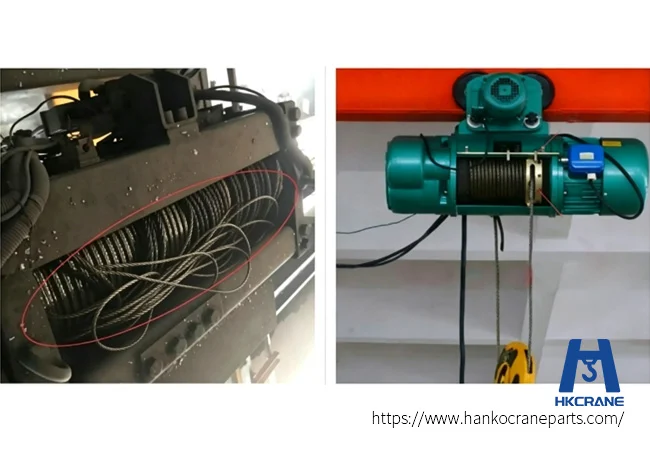
8. Wire Rope Disorder or Bird Nesting
Wire rope disorder frequently occurs in wire rope electric hoists.
Causes
- Worn rope guide.
- Damaged drum grooves.
- Side pulling or angular lifting.
Solutions
- Replace damaged rope guides.
- Repair or replace the drum.
- Avoid side pulling during lifting operations.
9. Excessive Wire Rope Wear or Broken Wires
Common Causes
- Insufficient lubrication.
- Twisted or kinked rope.
- Normal wear exceeding discard standards.
Corrective Actions
- Lubricate wire ropes regularly.
- Never operate with kinked ropes.
- Replace ropes immediately when discard criteria are reached.
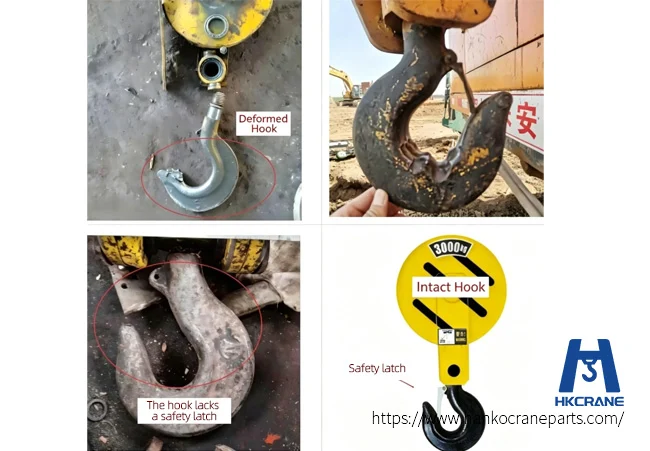
10. Hook Deformation or Safety Latch Failure
The crane hook is a critical load-bearing component.
Common Causes
- Hook opening exceeds allowable limits.
- Safety latch spring failure.
- Plastic deformation caused by overloading.
Solutions
- Replace deformed hooks immediately.
- Install a new safety latch.
- Never repair crane hooks by welding.
Preventive Maintenance Tips for Electric Hoists
To minimize electric hoist problems, Hanko recommends:
✔ Conduct daily visual inspections.
✔ Lubricate moving components regularly.
✔ Avoid overloading and side pulling.
✔ Inspect brake systems periodically.
✔ Check wire ropes and hooks routinely.
✔ Replace worn parts before failure occurs.
✔ Perform scheduled electrical inspections.
Preventive maintenance always costs less than emergency repairs.
결론
Most electric hoist failures originate from wear, insufficient maintenance, or improper operation. Early diagnosis and timely repairs can significantly reduce downtime while improving operational safety.
By implementing a preventive maintenance program, facilities can maximize hoist performance and extend equipment lifespan.
자주 묻는 질문
What is the most common electric hoist problem?
Brake slipping, electrical faults, and wire rope disorder are among the most common electric hoist problems.
Why does my electric hoist motor hum but not run?
The most likely causes are phase loss, low voltage, or defective contactors.
How often should electric hoists be inspected?
Operators should perform daily visual inspections, while comprehensive inspections should be carried out monthly or according to local regulations.
When should a wire rope be replaced?
Wire ropes should be replaced when broken wires, excessive wear, corrosion, or deformation exceed applicable standards.
용접으로 손상된 크레인 갈고리를 수리할 수 있습니까?
No. Industry standards prohibit welding repairs on load-bearing crane hooks. Damaged hooks must be replaced.
관련 기사
- Electric Hoist vs Wire Rope Hoist
- Chain Hoist vs Wire Rope Hoist: Pros and Cons
- How to Choose the Right Crane Hook
- Crane Brake Failure Analysis and Prevention
- Crane Gearbox Common Problems and Solutions
- How to Inspect Crane Wheels Properly
Need Electric Hoist Spare Parts or Technical Support?
Experiencing persistent electric hoist problems?
Hanko supplies a complete range of electric hoist spare parts, including:
- Brake assemblies
- 와이어 로프
- Rope guides
- Hooks
- 기어박스
- 모터
- 커플링
- Electrical control components
Our engineering team can help you diagnose failures, select replacement parts, and minimize equipment downtime.
Contact Hanko today for technical consultation and fast spare parts support.

 English
  Korean
  Russian
  Spanish
  Malay
Malay  Afrikaans
  Bulgarian
  French
  Bengali
  Italian
  Hungarian
  Vietnamese
  Thai
Thai  Indonesian
  German
  Arabic
  Japanese