
Featured Snippet: What Is a Crane Sheave?
A crane sheave is a grooved wheel that guides a wire rope through a crane lifting system. It can change the rope direction, support the rope path, and work with other sheaves to distribute load forces. The correct sheave must match the wire rope, crane duty, load, speed, and installation geometry.
For industrial cranes, the sheave design also affects wire rope life, bearing performance, maintenance frequency, and overall lifting reliability.
What Is a Crane Sheave?
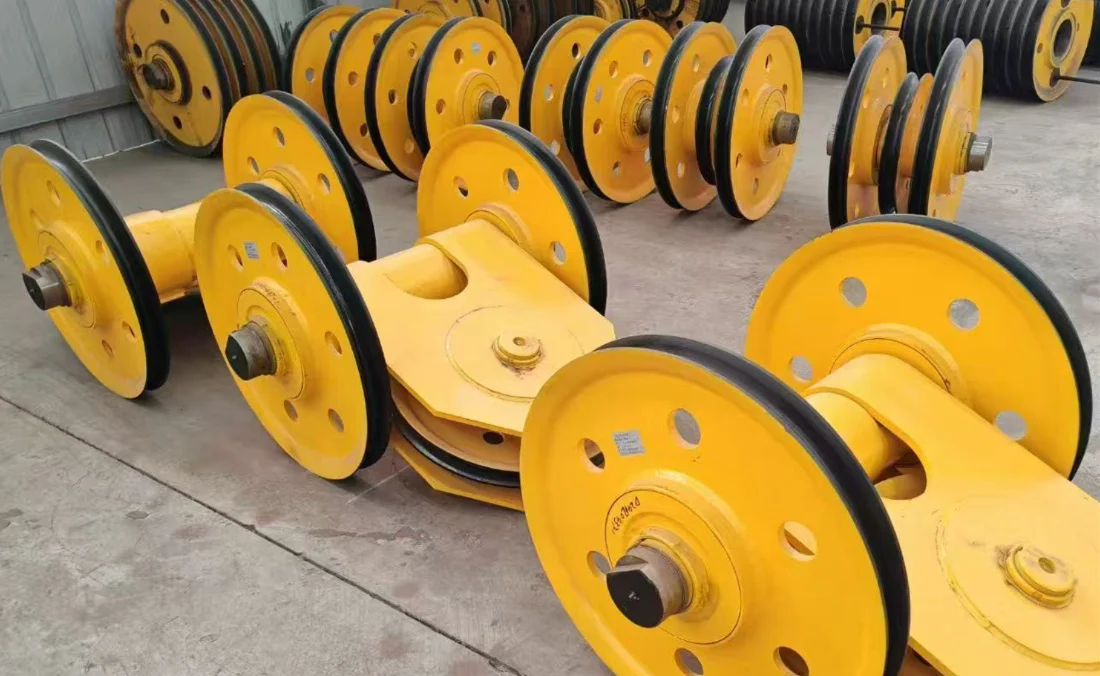
A crane sheave is a grooved wheel that rotates around a shaft or bearing while the wire rope moves through its groove.
You can find crane sheaves in:
- Overhead cranes
- Gantry cranes
- Port cranes
- Tower cranes
- Mobile cranes
- Hook blocks
- Boom assemblies
The sheave does more than change rope direction. It controls how the rope bends, moves, and contacts the lifting system.
That is why a small change in sheave design can affect the service life of the entire hoisting system.
Why Does a Crane Sheave Matter?
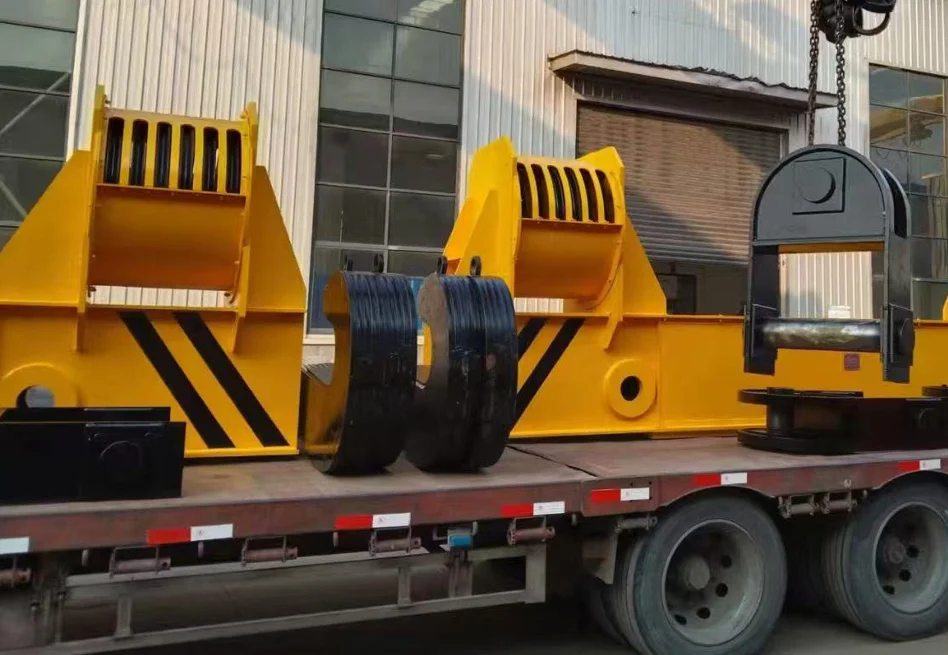
A crane sheave works together with the wire rope, drum, hook block, and hoist. If one part does not match the others, the entire system can wear faster.
A properly selected sheave helps to:
- Guide the wire rope correctly
- Reduce unnecessary friction
- Control rope bending
- Distribute load forces
- Support smooth lifting
- Reduce wire rope wear
However, a sheave cannot compensate for poor installation or incorrect rope selection.
For this reason, engineers should evaluate the complete rope path, not the sheave alone.
How a Crane Sheave Works in a Lifting System
The working process is simple.
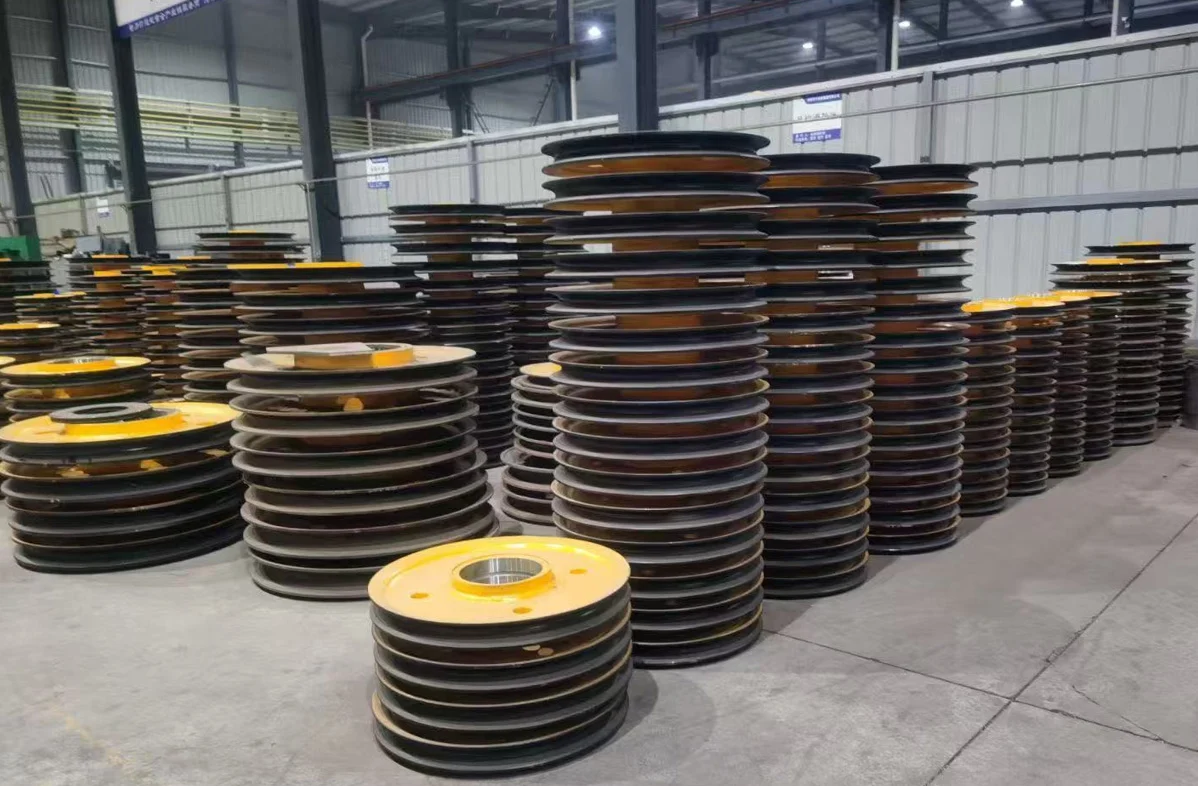
First, the crane drum pulls or releases the wire rope. The rope then passes over one or more sheaves. Each sheave rotates as the rope moves across the groove.
When the system uses several sheaves, the rope forms multiple supporting sections around the hook block.
The result is different from using one guide wheel alone.
Single sheave
A single sheave mainly changes the direction of the rope.
Multiple sheaves
A multi-sheave arrangement can distribute the load across several rope sections and create mechanical advantage. The guide to how each block configuration changes mechanical advantage explains this in more detail.
The actual load distribution depends on the reeving arrangement, friction, rope angles, and the design of the lifting system.
Crane Sheave Types by Function
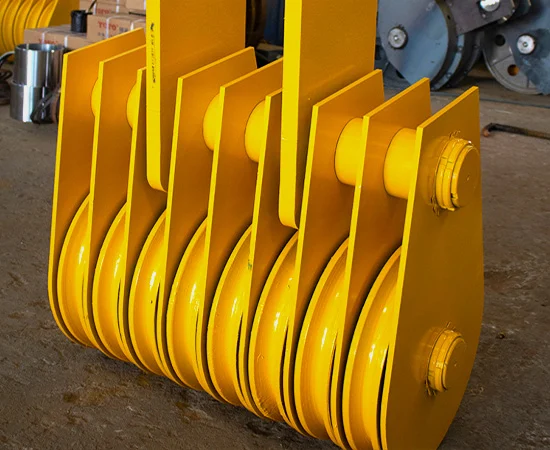
Different sheaves perform different jobs.
| Crane Sheave Type | Main Function | Typical Application | Key Selection Point |
|---|---|---|---|
| Fixed Sheave | Changes rope direction | Overhead cranes, gantry cranes, boom systems | Rope path and alignment |
| Moving Sheave | Supports the load and increases mechanical advantage | Hook blocks, heavy lifting systems | Load capacity and reeving |
| Guide Sheave | Guides the wire rope | Drum-to-hook rope paths | Fleet angle and groove condition |
| Equalizer Sheave | Helps balance rope tension | Multi-rope lifting systems | Rope tension and alignment |
Transition paragraph:
In practice, these types often work together rather than operate as separate components. Therefore, engineers should evaluate the complete reeving system before selecting a replacement sheave.
Fixed Sheave
A fixed sheave stays in one position.
Its main purpose is to guide the rope or change its direction.
You may find fixed sheaves near:
- Boom heads
- Rope drums
- Structural guide points
- Fixed sections of lifting systems
A fixed sheave does not automatically increase lifting capacity.
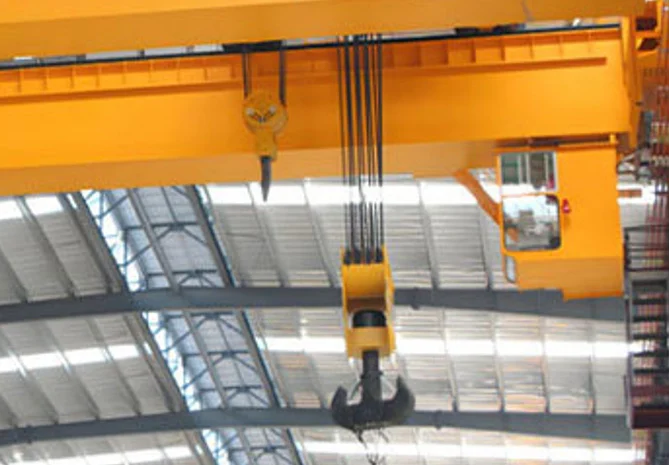
Moving Sheave
A moving sheave travels with the load or hook block.
It forms part of the reeving system and helps distribute the load across multiple rope sections.
Moving sheaves are common in heavy-duty hook blocks.
Guide Sheave
A guide sheave controls the path of the wire rope.
It becomes especially important when the rope changes direction between the drum and the lifting assembly.
Poor guide sheave alignment can create side loading and uneven rope wear.
Equalizer Sheave
An equalizer sheave helps balance rope tension in systems that use multiple rope paths.
This design can be useful when small differences in rope movement could otherwise create uneven loading.
Crane Sheave Types by Construction
The manufacturing method also affects the final product.
Forged Crane Sheaves
Forging creates a dense metal structure and can provide high strength and good fatigue performance.
Forged crane sheaves are suitable for demanding applications such as:
- Steel plants
- Ports
- Mining
- Heavy-duty overhead cranes
Cast Crane Sheaves
Cast sheaves can provide flexible geometry and efficient production for suitable applications.
The manufacturer must control casting quality carefully because internal defects can affect structural performance.
Rolled Crane Sheaves
Rolled construction can reduce weight while maintaining suitable strength for selected applications.
These sheaves can work well where weight, manufacturing efficiency, and load requirements must be balanced.
Welded Crane Sheaves
A welded crane sheave uses fabricated steel sections.
This construction can be useful for:
- Large diameters
- Special designs
- Non-standard replacement parts
Welded sheaves require proper welding procedures and inspection.
Crane Sheave Selection: Key Parameters at a Glance
| Selection Factor | What to Check | Why It Matters |
|---|---|---|
| Wire Rope Diameter | Rope size and construction | Ensures proper groove contact |
| Sheave Diameter | D/d ratio | Controls wire rope bending stress |
| Groove Profile | Radius, depth, and shape | Reduces rope wear and slipping |
| Bearing Type | Ball, roller, or plain bearing | Matches load and operating speed |
| Crane Duty | Working class and lifting cycles | Determines fatigue requirements |
| Load | Rated and dynamic loads | Prevents excessive component stress |
| Environment | Heat, dust, moisture, corrosion | Determines material and sealing needs |
| Alignment | Rope entry and exit position | Prevents uneven groove wear |
| Speed | Rope and sheave rotation speed | Affects bearing and surface wear |
| Inspection | NDT and dimensional checks | Helps verify component quality |
The best crane sheave is not always the largest or strongest option. It is the one that matches the wire rope, load, duty cycle, bearing system, and working environment as a complete system.
How to Match a Crane Sheave to Wire Rope
This is one of the most important parts of sheave selection.
A common mistake is to choose a sheave only because its outside diameter looks correct.
Engineers should also check:
- Wire rope diameter
- Rope construction
- Groove profile
- Sheave diameter
- Fleet angle
- Reeving arrangement
- Duty cycle
Wire Rope Diameter
The rope must sit correctly in the sheave groove.
A groove that is too small can pinch the rope. A groove that is too large may provide poor support and allow excessive rope movement.
Therefore, crane sheave and wire rope matching should be based on the actual rope specification and applicable design standard.
Why Sheave Diameter Matters
The sheave diameter affects the bending stress applied to the wire rope.
A larger sheave generally reduces the severity of rope bending.
However, there is no single diameter ratio that works for every crane.
The correct crane sheave diameter ratio depends on:
- Rope construction
- Rope diameter
- Crane duty
- Reeving frequency
- Load spectrum
- Applicable standards
For this reason, do not use a simple “one-size-fits-all” D/d number as a replacement for the crane manufacturer’s design calculation.
Groove Design Is Just as Important as Diameter
Two sheaves can have the same diameter but produce different rope life because their grooves differ.
Check:
- Groove radius
- Groove depth
- Groove profile
- Groove surface condition
- Flange height
- Groove spacing for multi-sheave arrangements
The groove should support the rope without creating excessive compression or allowing the rope to lose stable contact.
Bearing Selection for Crane Sheaves
The bearing must match the operating load and speed.
Common designs include:
Deep Groove Ball Bearings
Suitable for lower radial loads and applications where smooth rotation is important.
Cylindrical Roller Bearings
Better suited to higher radial loads and many heavy-duty applications.
Full-Complement Roller Bearings
These can provide high radial load capacity because they contain more rollers.
Plain Bearings
Plain bearings can work well in low-speed, high-load applications where a simple and robust structure is preferred.
The environment also matters.
For outdoor or dusty applications, sealing and contamination control may be as important as the nominal bearing capacity.
Crane Sheave Selection by Working Environment
The same sheave design does not suit every crane.
Steel Plants
Steel plants expose components to:
- High temperature
- Heavy loads
- Steel dust
- Frequent starts and stops
Engineers should focus on material strength, heat treatment, bearing protection, and inspection access.
Related product: Katrol Derek
Ports and Coastal Applications
Marine environments increase corrosion risk.
The selection should consider:
- Surface protection
- Sealing
- Bearing protection
- Maintenance access
Related components such as crane hooks and crane wheels should also be evaluated for the same environment.
General Manufacturing
Indoor cranes often operate under cleaner conditions.
A standard steel sheave with a suitable bearing system may be enough when:
- Loads are moderate
- Duty cycles are controlled
- The environment is clean
- Rope alignment remains stable
Crane Sheave Failures: What Should You Watch For?
Sheave problems often appear before a major failure.
Common warning signs include:
- Uneven groove wear
- Excessive bearing noise
- High bearing temperature
- Side movement
- Rope jumping out of the groove
- Cracked flanges
- Abnormal rope wear
- Excessive shaft clearance
For a more detailed troubleshooting guide, see:
Related Article: What Are the Common Crane Sheave Failures?
Early inspection is usually easier and less expensive than replacing a damaged sheave and wire rope together.
Crane Sheave Inspection: What Should You Measure?
A good crane sheave inspection should examine the complete assembly.
Groove
Check for:
- Wear
- Pitting
- Deformation
- Sharp edges
Flange
Look for:
- Cracks
- Breakage
- Uneven wear
Bearing
Check:
- Noise
- Temperature
- Rotation
- Lubrication
Shaft
Measure:
- Wear
- Clearance
- Surface damage
Alignment
Verify that the sheave and wire rope follow the intended rope path.
Do not judge wear by appearance alone when the manufacturer or standard provides measurable limits.
Crane Sheave Maintenance
Good crane sheave maintenance should focus on condition rather than a fixed replacement date.
Lubrication
Follow the bearing manufacturer’s lubrication requirements.
Avoid:
- Mixing incompatible grease
- Over-greasing sealed bearings
- Using contaminated lubricant
Cleaning
Remove:
- Dust
- Steel particles
- Old grease
- Corrosive deposits
A clean sheave makes inspection easier.
Alignment
Check the rope path after maintenance or component replacement.
A small alignment error can create uneven loading and accelerate groove wear.
Record Keeping
Keep records of:
- Inspection dates
- Wear measurements
- Bearing replacements
- Lubrication
- Alignment corrections
- Rope replacement
These records help maintenance teams identify recurring problems.
When Should You Replace a Crane Sheave?
Do not replace a sheave simply because it has been operating for a certain number of years.
Instead, assess its actual condition.
Replacement may be necessary when you find:
- Structural cracks
- Broken flanges
- Severe groove deformation
- Excessive measurable wear
- Damaged bearings
- Unacceptable shaft clearance
- Persistent rope derailment caused by the sheave
The final replacement limit should follow the crane manufacturer’s documentation and applicable inspection requirements.
A Practical Crane Sheave Selection Checklist
Before ordering a replacement crane sheave, confirm:
Crane type
Rated lifting capacity
Working duty class
Wire rope diameter
Wire rope construction
Sheave diameter
Groove dimensions
Bearing type
Shaft diameter
Mounting dimensions
Fleet angle
Operating speed
Working environment
Required inspection documents
Providing these details to the supplier can reduce technical clarification and prevent an incompatible replacement.
Quick Guide: Which Crane Sheave Should You Choose?
| Application | Recommended Sheave Approach | Main Priority |
|---|---|---|
| General Factory Crane | Standard steel sheave | Cost and reliability |
| Heavy-Duty Overhead Crane | Forged or heavy-duty steel sheave | Fatigue resistance |
| Steel Plant | Heat-treated heavy-duty sheave | Heat and wear resistance |
| Port Crane | Corrosion-protected steel sheave | Corrosion resistance |
| Large Hook Block | Multi-sheave arrangement | Load distribution |
| Low-Speed Heavy Load | Roller or plain bearing design | Radial load capacity |
| Corrosive Environment | Protected or non-metallic option | Corrosion control |
Why Hanko Supplies Crane Sheaves
A crane sheave is part of a larger lifting system. For this reason, Hanko focuses on the relationship between the sheave, wire rope, hook block, drum, shaft, and bearing system.
Hanko supplies crane sheaves for industrial applications and can support buyers with:
- Technical drawing review
- Material selection
- Groove design
- Bearing configuration
- CNC machining
- Dimensional inspection
- Replacement-part matching
For applications that also require other lifting components, Hanko supplies crane drums, crane couplings, and crane brakes.
This system-based approach helps buyers avoid a common problem: replacing a sheave without fixing the reason the original one failed. If you need a broader starting point, see a component-level overview of lifting hardware before planning a sheave replacement.
FAQ – Crane Sheave
What is a crane sheave used for?
A crane sheave guides a wire rope, changes its direction, and supports the rope during lifting. Multiple sheaves can also distribute load forces within a reeving system.
What is the difference between a sheave and a pulley?
In crane engineering, the terms can overlap. A sheave usually means the grooved wheel itself, while a pulley or pulley block may describe a larger assembly that contains one or more sheaves.
How do I choose the right crane sheave?
Start with the wire rope diameter and construction. Then check the sheave diameter, groove profile, duty class, bearing type, rope path, load, speed, and operating environment.
Does a larger crane sheave always last longer?
Not always. A larger diameter can reduce rope bending stress, but groove design, rope matching, alignment, material, bearings, and operating conditions also affect service life.
What causes crane sheave wear?
Common causes include incorrect rope matching, poor alignment, excessive fleet angle, heavy duty cycles, poor lubrication, contaminated bearings, and long-term contact wear.
How often should crane sheaves be inspected?
The inspection frequency should follow the crane manufacturer’s maintenance program, duty cycle, operating environment, and applicable requirements. Heavy-duty cranes need closer monitoring than light-duty equipment.
Conclusion
A crane sheave is more than a grooved wheel. It is one part of a system that controls wire rope movement, bending, alignment, and load distribution.
The right sheave should match the wire rope, crane duty, rope path, bearing system, load, speed, and environment.
At the same time, maintenance teams should monitor groove wear, bearing condition, alignment, and rope movement. These checks can identify problems before they develop into larger failures.
For buyers, the best replacement is not simply a sheave with the same outside diameter. It is a sheave that matches the complete lifting system.
If you are replacing a crane sheave, send Hanko the drawing, wire rope specification, sheave dimensions, crane capacity, and working conditions. Our engineering team can help review the configuration and recommend a suitable solution.

 English
  Korean
  Russian
  Spanish
  Malay
Malay  Afrikaans
  Bulgarian
  French
  Bengali
  Italian
  Hungarian
  Vietnamese
  Thai
Thai  Indonesian
  German
  Arabic
  Japanese