
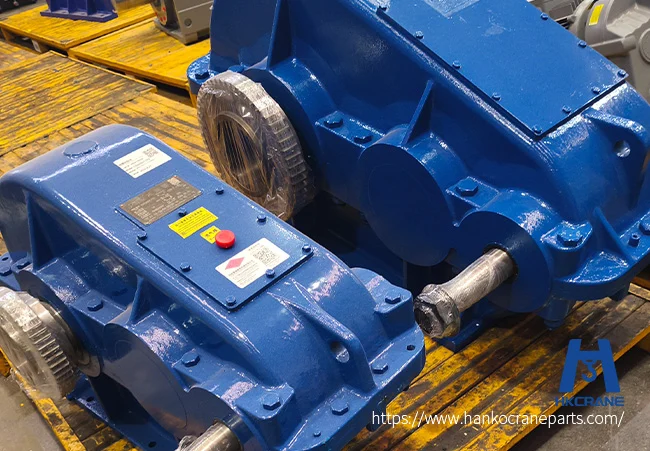
A crane gearbox specification sheet carries more than a model number. Read these seven specification groups in order and you will catch most mismatch errors before the reducer ships — not after it fails on your crane.
Quick Answer: The Specification Checklist
A complete speed reducer specification covers seven lines: nominal ratio, mechanical power or torque rating, thermal power, duty class, center distance and mounting style, input speed, and lubrication data. Two reducers with the same ratio can differ in every other line. The specification sheet — not the model name — decides the fit.
Ratio: Nominal Value vs Real Output
The ratio is the first number buyers compare. It is also the first place errors hide. Reducer makers list nominal ratios in a standard series (for example 8, 10, 12.5, 16, 20, 25, 31.5, 40, 50 on classic crane units). The actual ratio inside the gearbox often differs slightly from the nominal figure. Your wheel or drum speed should follow the actual ratio the manufacturer confirms. Do not use the rounded catalogue value.
Check the ratio against your motor speed and required line speed in both directions:
- Required output speed = drum or wheel speed your crane design calls for.
- Actual output speed = motor speed divided by the confirmed actual ratio.
- If the two diverge by more than a few percent, the hoisting or travel speed will drift out of tolerance.
Mechanical Power and Torque Rating
The mechanical rating states the torque the gear teeth and shafts can carry. On crane duty units this rating is tied to a duty class. The same housing delivers different allowable torque at M3 than at M6, because the class assumes different load spectra and cycle counts. Match the rating to the driven mechanism — hoisting, long travel, or cross travel. Keep a margin over peak load, including starts and stalls.
When you compare offers between suppliers, align the duty basis first. A gear reducer quoted at a lighter class looks cheaper on paper and fails earlier in service, a pattern seen often in crane gearbox problem diagnosis.
Thermal Power: The Overlooked Limit
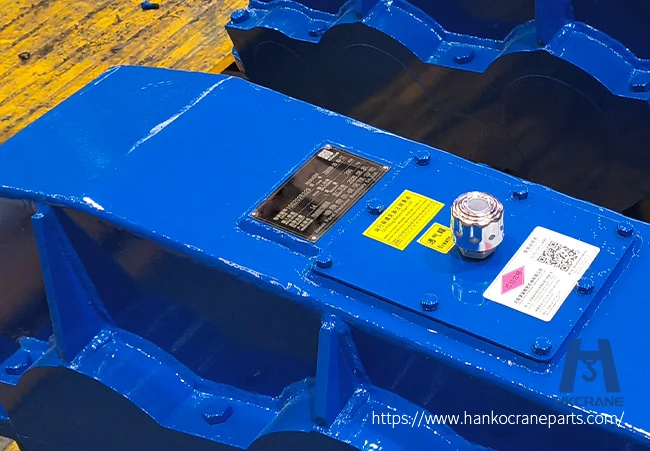
Mechanical power is not the whole story. Every gear reducer also has a thermal power rating: the load it can run continuously without overheating. In duty with high ambient temperature, poor ventilation, or long non-stop runs, thermal power can govern the selection. That can hold even when the mechanical rating looks comfortable.
If the thermal check fails, the standard fixes are a larger housing, a cooling fan, or a cooling coil. Decide at ordering, not after the oil runs hot. Oil choice interacts with this directly, as the crane gearbox oil guide explains.
Duty Class: M-Ratings and FEM Equivalents
Cranes classify mechanisms from M1 to M8 by use intensity and load state. European FEM terms such as 1Am and 2m map onto the same idea. The duty class you state on the enquiry drives the crane duty speed reducer sizing more than any other single line. Hoisting mechanisms on process cranes often sit higher in the M-range than travel mechanisms on the same crane. So confirm each mechanism separately instead of copying one class across the order.
Center Distance, Mounting, and Shaft Ends
The housing dimensions decide whether the replacement bolts on without rework. Check the nominal center distance series, base or three-support mounting, output shaft end (solid, hollow, or spline), and the bolt pattern on the feet or flange. ZQ-family replacements, for instance, keep ZQ mounting dimensions across ZQA and ZQD variants. That is exactly why they are popular for retrofit. Measure the old unit before ordering. Do not scale from the catalogue drawing.
Input Speed and Configuration Data
State the input speed of your motor (standard crane motors commonly run up to 1000 r/min input on medium-hard QJ-type units). State the motor mounting interface if the gearbox carries the motor, and the rotation directions the mechanism needs. A reducer rated for one input speed cannot simply absorb a higher one. Torque capacity, bearing life, and oil churning losses all shift with speed.
Lubrication and Running Data
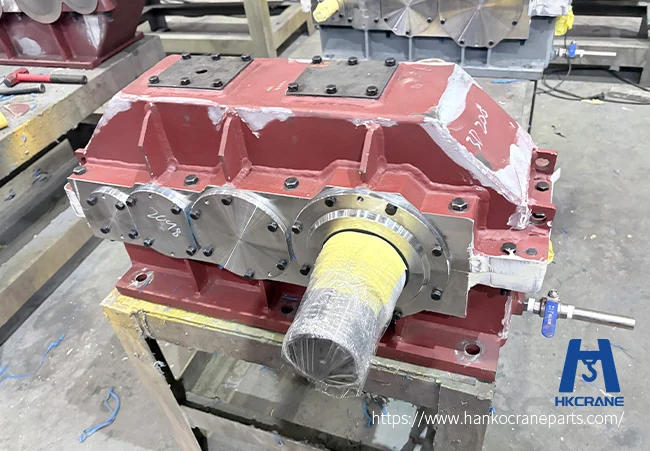
The specification closes with lubrication: oil grade, fill quantity, and the change interval. Hardened gear units typically run lighter synthetic oils. Medium-hard units often specify industrial gear oils changed on a fixed schedule. Confirm the breather position for your mounting orientation and the planned oil change schedule against your maintenance calendar. The same discipline applies in how to choose the right crane gearbox.
FAQ
What specifications matter most when ordering a crane gearbox?
Why does the actual ratio differ from the nominal ratio?
What is thermal power on a crane gearbox?
Which duty class should I state on the enquiry?
How do I avoid mounting errors on a replacement gearbox?
Order Against the Sheet, Not the Name
A crane gearbox is easy to buy and hard to return. Fix the ratio from actual values. Size the torque at the true duty class. Pass the thermal check. Verify the mounting on your measured drawing. Then send the specification sheet to the supplier for written confirmation. The nameplate of the delivered unit should match it line by line. When you are ready to source, browse the crane gearboxes supply range, and Hanko engineers can review your crane data sheet and confirm the right configuration before you commit.

 English
  Korean
  Russian
  Spanish
  Malay
Malay  Afrikaans
  Bulgarian
  French
  Bengali
  Italian
  Hungarian
  Vietnamese
  Thai
Thai  Indonesian
  German
  Arabic
  Japanese