
Forged vs Cast Crane Wheels: Which Is Better?
In industrial lifting systems, crane wheels directly affect equipment stability, safety, and service life. Whether you operate an overhead crane, gantry crane, port crane, or steel mill crane, choosing the right wheel manufacturing method is critical.
One of the most common questions buyers ask is:
Should you choose forged crane wheels or cast crane wheels?
The answer depends on your working conditions, wheel loads, operating frequency, and maintenance expectations.
In this guide, Hanko explains the real differences between forged crane wheel and cast crane wheels, including strength, durability, cost, and ideal applications.
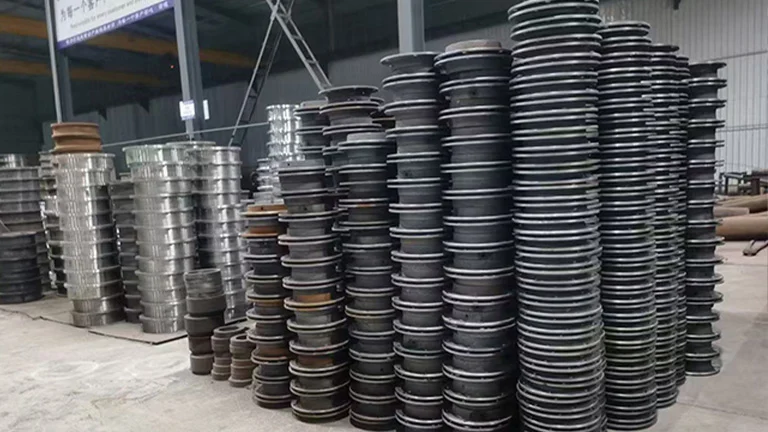
Featured Snippet: Forged vs Cast Crane Wheels
What is the difference between forged and cast crane wheels?
Forged crane wheels are manufactured by compressing heated steel under high pressure, creating a dense internal grain structure with superior strength and impact resistance.
Cast crane wheels are produced by pouring molten metal into molds, making them more economical and easier to manufacture in large sizes, but generally less durable under heavy-duty conditions.
Quick Comparison
| Feature | Forged Crane Wheel | Cast Crane Wheel |
|---|---|---|
| Strength | Very High | Moderate |
| Toughness | Excellent | Lower |
| Wear Resistance | Superior | Good |
| Impact Resistance | Excellent | Moderate |
| Production Cost | Higher | Lower |
| Service Life | Longer | Shorter |
| Best For | Heavy-duty cranes | Light/medium-duty cranes |
Why Crane Wheel Manufacturing Matters
Crane wheels continuously support:
- Heavy vertical loads
- Repeated starting and braking
- Rail friction
- Shock loading
- High operating temperatures
- Side thrust caused by misalignment
If wheel quality is poor, operators may experience:
- Crane wheel wear
- Crane rail wear
- Flange cracking
- Wheel deformation
- Excessive vibration
- Costly downtime
Therefore, selecting the correct wheel type directly impacts operational reliability.
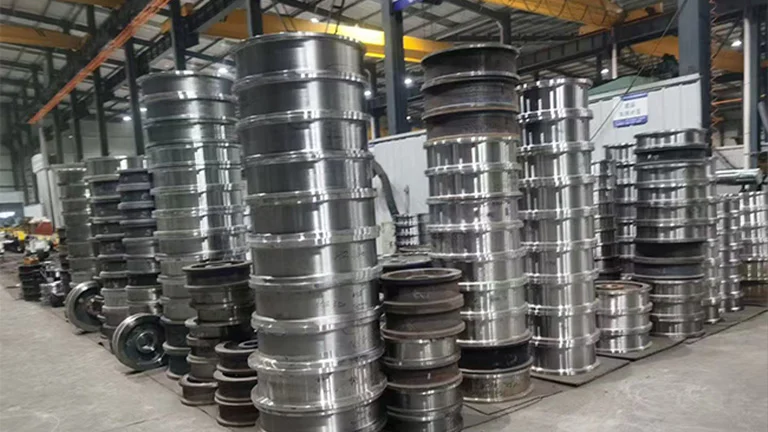
What Is a Forged Crane Wheel?
A forged crane wheel is manufactured by heating alloy steel and shaping it under extreme pressure using forging equipment.
This process compresses the internal metal grain structure and eliminates internal voids.
Key Advantages of Forged Crane Wheels
1. Higher Strength
Forging significantly improves:
- Tensile strength
- Yield strength
- Fatigue resistance
As a result, forged wheels can handle extremely high wheel loads.
2. Better Toughness
Forged wheels absorb impact energy more effectively. Therefore, they are less likely to crack under shock loads or emergency braking.
3. Longer Service Life
Because forged wheels have denser structures and better hardness consistency, they usually provide:
- Lower wear rates
- Better rail compatibility
- Longer maintenance intervals
4. Better Heat Treatment Performance
Forged alloy steel responds well to:
- Rim quenching
- Surface hardening
- Induction hardening
This improves crane wheel hardness while maintaining core toughness.
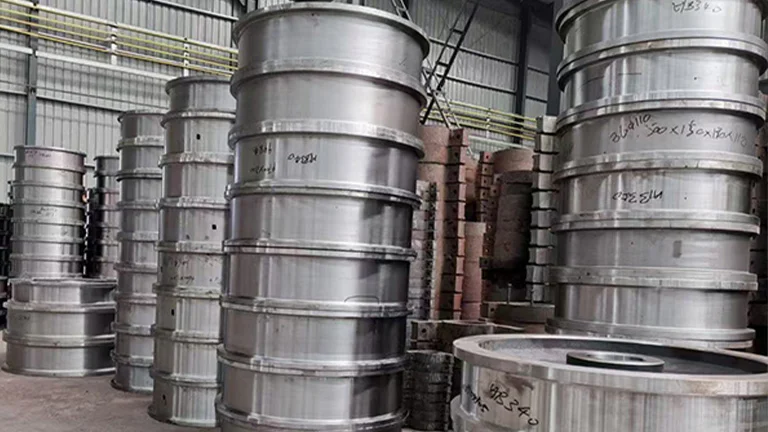
Common Materials for Forged Crane Wheels
42CrMo Alloy Steel
Widely used for:
- Steel mills
- Port cranes
- Heavy-duty overhead cranes
Advantages:
- Excellent hardenability
- High fatigue strength
- Superior crack resistance
65Mn Steel
Commonly used for:
- Medium-duty cranes
- Workshop cranes
- Poutres roulantes
Advantages:
- Good wear resistance
- Cost-effective
- Reliable for moderate duty cycles
What Are Cast Crane Wheels?
Cast crane wheels are produced by pouring molten steel or iron into molds and allowing the material to solidify.
Manufacturers often use cast wheels for large-diameter or lower-cost applications.
Advantages of Cast Crane Wheels
1. Lower Manufacturing Cost
Casting requires fewer machining and forging steps, which reduces production costs.
2. Easier Large-Scale Production
Large wheel sizes are often easier to manufacture through casting.
3. Suitable for Light-Duty Applications
For cranes operating under lighter loads and lower duty cycles, cast wheels can provide acceptable performance at lower cost.
Limitations of Cast Crane Wheels
Although cast wheels offer economic advantages, they also have important limitations.
Lower Internal Density
Cast materials naturally contain:
- Porosity
- Shrinkage cavities
- Larger grain structures
Therefore, cast wheels typically have lower fatigue resistance.
Reduced Impact Resistance
Under severe shock loads or repeated braking, cast wheels may develop:
- Surface cracks
- Edge chipping
- Structural fractures
Shorter Lifespan in Heavy-Duty Conditions
In steel plants, ports, or high-frequency lifting environments, cast wheels generally wear faster than forged alternatives.
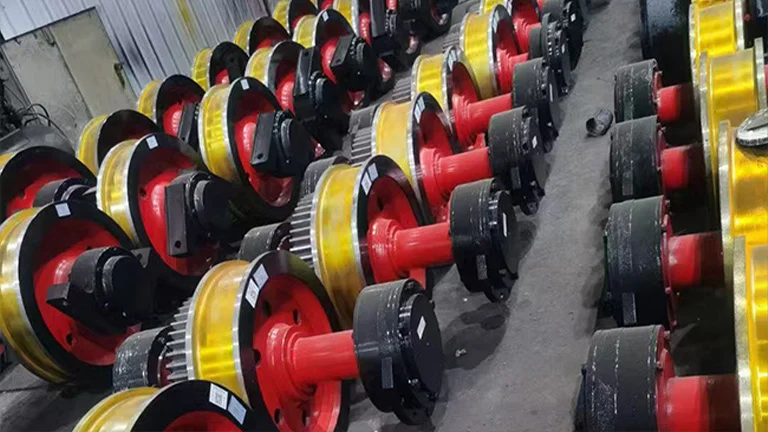
Forged vs Cast Crane Wheels: Detailed Comparison
Mechanical Performance
| Property | Forged Crane Wheel | Cast Crane Wheel |
|---|---|---|
| Fatigue Resistance | Excellent | Moderate |
| Shock Resistance | Excellent | Lower |
| Structural Density | High | Lower |
| Crack Resistance | Strong | Moderate |
| Load Capacity | Heavy-duty | Medium-duty |
Wear Resistance
Forged wheels usually achieve better wear performance because:
- Heat treatment is more effective
- Material density is higher
- Surface hardness remains more consistent
This helps reduce both:
- Crane wheel wear
- Crane rail wear
Production Cost
| Cost Factor | Forged | Cast |
|---|---|---|
| Raw Material Usage | Higher | Lower |
| Manufacturing Complexity | Higher | Lower |
| Initial Price | Higher | Lower |
| Long-Term Maintenance | Lower | Higher |
Although forged wheels cost more initially, they often reduce long-term replacement and downtime expenses.
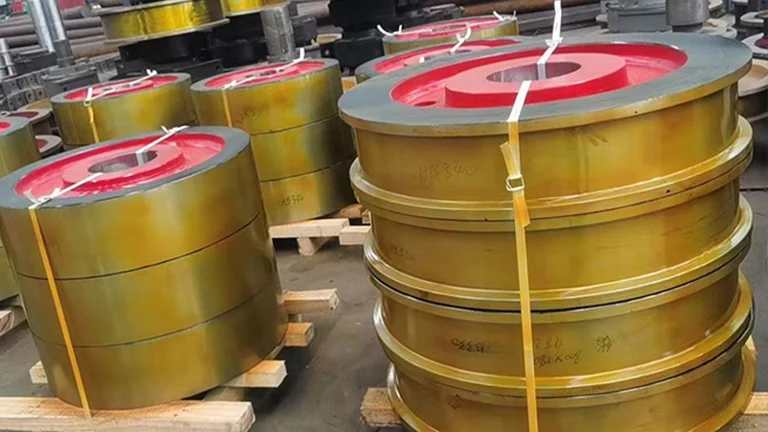
Which Crane Applications Need Forged Wheels?
Forged crane wheels are strongly recommended for:
- Steel mill cranes
- Port container cranes
- Metallurgical cranes
- Mining cranes
- Heavy gantry cranes
- High-frequency overhead cranes
These environments involve:
- Extreme wheel pressure
- High temperatures
- Continuous operation
- Severe impact loads
When Cast Crane Wheels Are Acceptable
Cast crane wheels remain suitable for:
- Light-duty cranes
- Warehouse cranes
- Intermittent lifting systems
- Low-speed workshop cranes
For these applications, the lower cost may justify using cast wheels.
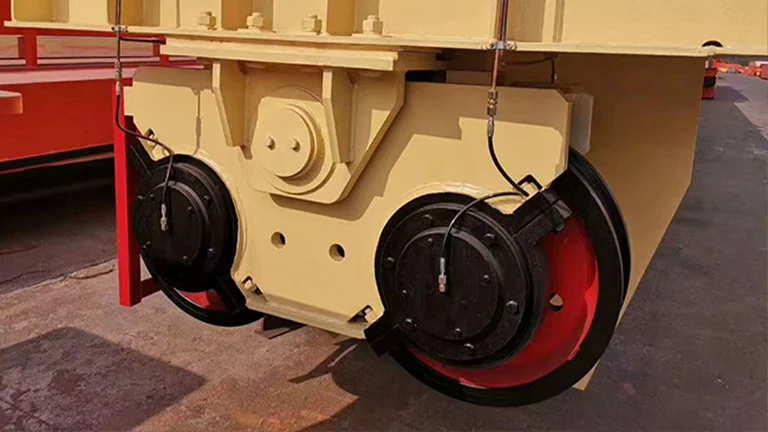
How Hanko Manufactures Reliable Crane Wheels
At Hanko, we manufacture industrial crane wheels for demanding operating conditions worldwide.
Our Manufacturing Advantages
Precision Forging
We use advanced forging processes to improve:
- Structural density
- Load-bearing capacity
- Fatigue resistance
CNC Machining
Our precision machining ensures:
- Accurate wheel diameter
- Proper flange geometry
- Better rail compatibility
Advanced Heat Treatment
We optimize crane wheel hardness through:
- Rim quenching
- Surface hardening
- Controlled tempering
Strict Quality Inspection
All wheels undergo:
- Ultrasonic testing
- Magnetic particle inspection
- Dimensional verification
- Hardness testing
How to Choose Between Forged and Cast Crane Wheels
Choose Forged Crane Wheels If:
✔ Your crane operates continuously
✔ Loads are heavy
✔ Safety requirements are high
✔ Downtime costs are expensive
✔ The environment is harsh
Choose Cast Crane Wheels If:
✔ Your crane is light-duty
✔ Budget is limited
✔ Operating frequency is low
✔ Shock loading is minimal
Need Help Choosing the Right Crane Wheels?
Selecting the wrong crane wheel can increase maintenance costs, accelerate rail wear, and reduce crane safety.
Hanko provides:
- Forged crane wheels
- Wheel assemblies
- Custom alloy steel wheels
- OEM crane wheel solutions
- Engineering support for heavy-duty cranes
Contact Hanko Today
Our engineering team can help you choose the correct:
- Material grade
- Heat treatment
- Wheel hardness
- Wheel dimensions
- Rail matching solution
Get a fast quotation and technical recommendation for your project.
FAQ
Are forged crane wheels stronger than cast crane wheels?
Yes. Forged crane wheels have denser grain structures and significantly better fatigue resistance, toughness, and impact strength.
Which crane wheel lasts longer?
Forged crane wheels generally provide a longer service life because they resist cracking and wear more effectively.
Are cast crane wheels cheaper?
Yes. Cast wheels usually cost less initially, but they may require more frequent replacement in heavy-duty applications.
What material is best for heavy-duty crane wheels?
42CrMo alloy steel is one of the best choices for heavy-duty forged crane wheels due to its excellent strength and toughness.
Can forged crane wheels reduce crane rail wear?
Yes. Properly machined and heat-treated forged wheels improve wheel-to-rail contact and reduce abnormal rail wear.
Related Articles
- How to Choose the Right Crane Wheel Alloy Steel Grade for Heavy-Duty Applications
- Crane Wheel vs Rail Wear: Common Causes and Solutions
- Crane Brake System Explained
- Industrial Crane Components List: Full Guide
- Crane Parts Cost Breakdown: What Affects the Price?
- Crane Maintenance Checklist: Daily, Weekly & Monthly Guide

 English
  Korean
  Russian
  Spanish
  Malay
Malay  Afrikaans
  Bulgarian
  French
  Bengali
  Italian
  Hungarian
  Vietnamese
  Thai
Thai  Indonesian
  German
  Arabic
  Japanese