
What Causes Crane Wheel and Rail Wear?
Crane wheel wear and crane rail wear are usually caused by rail misalignment, wheel installation errors, bridge deformation, transmission issues, and poor lubrication. Proper wheel alignment, rail adjustment, and routine maintenance help reduce friction, prevent crane wheel failure, and extend equipment service life.
Why Crane Wheel and Rail Wear Matter
Crane wheels and rails operate under constant heavy loads, friction, and impact. Over time, improper alignment or poor maintenance can lead to severe wear problems.
If operators ignore early wear signs, the crane may develop:
- Rail chewing
- Wheel flange cracking
- Abnormal vibration
- Increased power consumption
- Misalignment
- Unexpected downtime
- Safety risks
Therefore, understanding the causes of crane wheel wear is essential for maintaining safe and efficient crane operation.
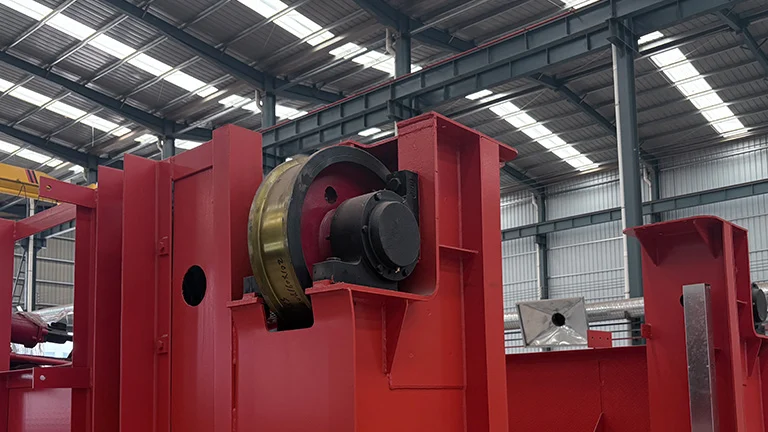
What Is Crane Wheel Wear?
Crane wheel wear refers to the gradual deterioration of:
- Wheel tread surfaces
- Wheel flanges
- Rail contact areas
Excessive wear affects crane travel accuracy and increases mechanical stress throughout the running system.
Common Types of Crane Wheel and Rail Wear
Wheel Flange Wear
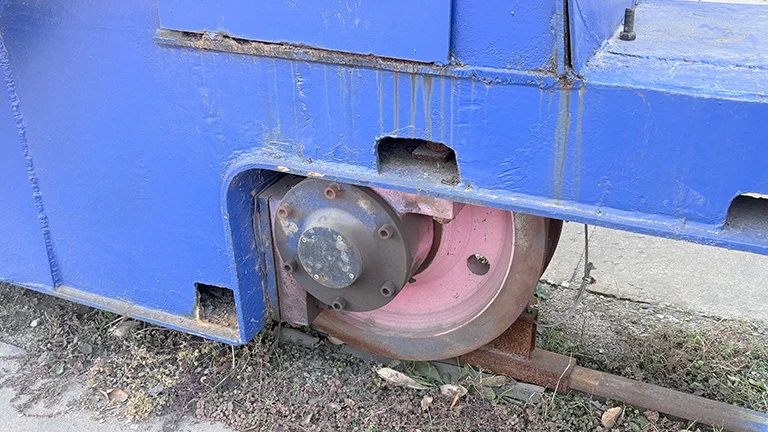
The wheel flange continuously rubs against the rail side surface due to misalignment or skewing.
Tread Wear
Continuous rolling friction gradually reduces wheel diameter and surface smoothness.
Rail Side Wear
Improper wheel tracking causes excessive side pressure on crane rails.
Surface Pitting and Cracking
Heavy loads and rolling fatigue create cracks and pitting on both wheels and rails.
Main Causes of Crane Wheel Wear and Rail Wear
1. Rail Installation Problems
Rail issues are among the most common causes of crane rail wear.
Typical Rail Problems
- Excessive rail horizontal bending
- Incorrect rail gauge
- Uneven rail elevation
- Rail surface contamination
- Loose rail fasteners
These problems create abnormal wheel contact and side friction.
Solutions
- Re-align crane rails
- Adjust rail gauge and elevation
- Clean oil and debris from rails
- Replace damaged rail sections
- Inspect rail fastening systems regularly
Proper rail installation significantly reduces crane wheel failure risk.
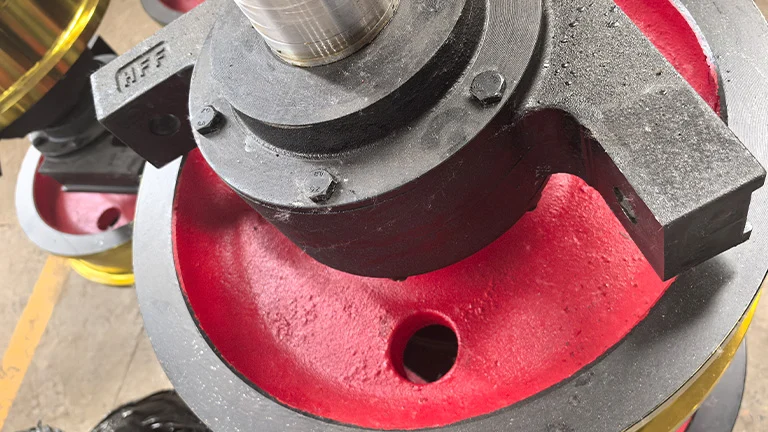
2. Crane Wheel Installation Errors
Improper wheel installation directly affects crane travel stability.
Common Wheel Problems
- Horizontal wheel misalignment
- Vertical wheel skewing
- Unequal wheel diameters
- Incorrect wheel spacing
- Diagonal deviation
These conditions force the wheel flange against the rail.
Solutions
- Adjust wheel alignment precisely
- Ensure equal wheel diameters
- Correct wheel spacing
- Verify diagonal dimensions
- Use precision measurement tools during installation
Proper wheel geometry improves wheel lifespan and reduces rail wear.
3. Crane Bridge Deformation
Bridge deformation changes wheel positioning and causes uneven wheel loading.
Common Structural Problems
- Main girder deflection
- End beam bending
- Structural twisting
These conditions disturb normal wheel-to-rail contact.
Solutions
- Inspect bridge geometry regularly
- Correct structural deformation
- Reinforce damaged sections
- Replace severely deformed components
Structural maintenance prevents long-term running problems.
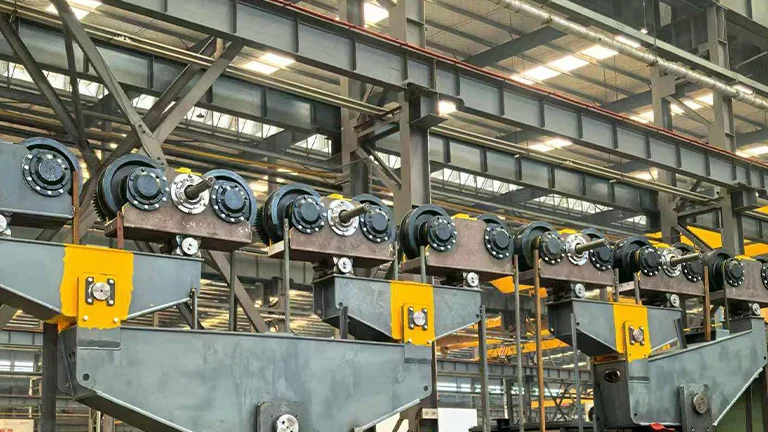
4. Transmission System Problems
Drive system imbalance often causes crane skewing.
Common Transmission Issues
- Unsynchronized motors
- Unequal brake torque
- Excessive coupling clearance
- Gear backlash problems
As a result, wheel speeds become inconsistent.
Solutions
- Synchronize drive motors
- Adjust brake torque evenly
- Inspect couplings
- Correct gear backlash
- Maintain stable transmission operation
Balanced drive systems improve crane travel accuracy.
5. Poor Lubrication
Insufficient lubrication increases friction between wheels and rails.
Common Lubrication Problems
- Dry wheel flanges
- Incorrect lubricant selection
- Inconsistent lubrication intervals
Solutions
- Lubricate wheel flanges regularly
- Use suitable industrial lubricants
- Apply automatic lubrication systems
- Consider oil-air lubrication for heavy-duty cranes
Advanced lubrication technology reduces wear significantly.
Signs of Crane Wheel Failure
Early detection helps prevent major damage.
Common Warning Signs
- Abnormal noise during travel
- Wheel flange thinning
- Uneven tread wear
- Rail side grinding
- Crane skewing
- Increased motor load
- Vibration during operation
Routine inspection allows operators to correct problems before failure occurs.
How to Reduce Crane Wheel Wear
Maintain Proper Rail Alignment
Accurate rail geometry minimizes side friction.
Use High-Quality Forged Wheels
Forged crane wheels provide:
- Better wear resistance
- Higher toughness
- Longer service life
Compared with cast wheels, forged wheels perform better under heavy-duty conditions.
Improve Lubrication Management
Consistent lubrication lowers friction and operating temperature.
Conduct Routine Inspections
Regular inspection helps identify:
- Misalignment
- Wear patterns
- Structural problems
- Transmission abnormalities
Monitor Wheel Hardness
Proper crane wheel hardness prevents both excessive wear and brittle cracking.
Recommended Materials for Heavy-Duty Crane Wheels
42CrMo Alloy Steel
Best for:
- Steel plants
- Ports
- Mining cranes
- High-duty cranes
Advantages:
- Excellent fatigue resistance
- High impact strength
- Superior wear resistance
65Mn Alloy Steel
Best for:
- Medium-duty cranes
- Manufacturing workshops
Advantages:
- Cost-effective
- Good wear resistance
- Reliable performance
Forged vs Cast Crane Wheels
| Feature | Forged Crane Wheel | Cast Crane Wheel |
|---|---|---|
| Strength | Higher | Lower |
| Fatigue Resistance | Excellent | Moderate |
| Crack Resistance | Better | Lower |
| Service Life | Longer | Shorter |
| Heavy-Duty Suitability | Excellent | Limited |
For demanding industrial applications, forged wheels remain the preferred option.
Why Choose Hanko for Crane Wheels and Rail Solutions
Hanko manufactures high-performance crane wheels and industrial crane components for heavy-duty applications worldwide.
Hanko Advantages
Premium Alloy Steel Materials
We use certified:
- 42CrMo
- 65Mn
- 40Cr
Advanced Forging Technology
Our forged crane wheels provide:
- Higher load capacity
- Better fatigue performance
- Improved service life
Precision CNC Machining
Accurate machining improves:
- Rail compatibility
- Wheel balance
- Running stability
Strict Quality Inspection
Every wheel undergoes:
- Ultrasonic testing
- Hardness testing
- Dimensional inspection
- Surface defect detection
Need Reliable Crane Wheel Solutions?
Hanko Provides Professional Crane Wheel and Rail Components
We supply:
- Forged crane wheels
- Crane wheel assemblies
- Rail wheels
- Heavy-duty trolley wheels
- Custom crane wheel solutions
Our engineering team can help you reduce:
- Crane wheel wear
- Rail damage
- Maintenance costs
- Unexpected downtime
Contact Hanko Today For:
- Free technical consultation
- Wheel material recommendations
- OEM customization
- Fast quotation support
Email: info@hankocrane.com
FAQ
What causes crane wheel wear?
Crane wheel wear is usually caused by rail misalignment, wheel installation errors, bridge deformation, poor lubrication, and transmission system problems.
How can crane rail wear be reduced?
You can reduce crane rail wear by:
- Maintaining rail alignment
- Lubricating wheel flanges
- Using forged wheels
- Performing routine inspections
- Correcting crane skewing
Why do crane wheels chew rails?
Rail chewing occurs when wheels do not run parallel with the rails, causing excessive side friction between wheel flanges and rail sides.
Are forged crane wheels better than cast wheels?
Yes. Forged crane wheels provide better strength, fatigue resistance, and impact toughness for heavy-duty applications.
What material is best for crane wheels?
42CrMo alloy steel is widely used for heavy-duty crane wheels because of its excellent wear resistance and fatigue strength.
How often should crane wheels be inspected?
Industrial cranes should undergo regular wheel inspections based on working frequency and duty class. Heavy-duty cranes often require weekly or monthly inspection schedules.
Related Articles
- Heavy Duty Crane Wheel Guide for Industrial Applications
- Forged vs Cast Crane Wheels: Which Is Better?
- Crane Brake System Explained
- Crane Maintenance Checklist: Daily, Weekly & Monthly Guide
- How to Extend Crane Service Life: Practical Tips
- Crane Parts Cost Breakdown: What Affects the Price?
- Industrial Crane Components List: Full Guide
Product Pages

 English
  Korean
  Russian
  Spanish
  Malay
Malay  Afrikaans
  Bulgarian
  French
  Bengali
  Italian
  Hungarian
  Vietnamese
  Thai
Thai  Indonesian
  German
  Arabic
  Japanese