
Industrial cranes rely on multiple mechanical, electrical, and structural components to lift, move, and position heavy loads safely. From wire ropes and crane hooks to brakes and gearboxes, every crane component directly affects operational safety, efficiency, and service life.
Therefore, understanding industrial crane components is essential for equipment selection, maintenance planning, troubleshooting, and cost control.
In this guide, Hanko explains the major industrial crane components, their functions, common inspection points, and how they work together in lifting systems.
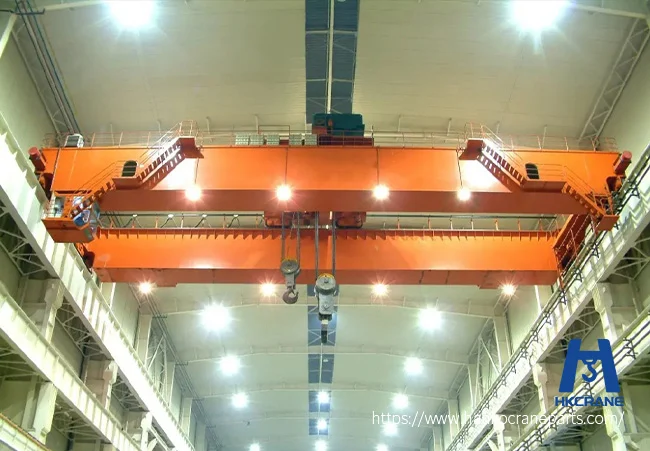
What Are Industrial Crane Components?
Industrial crane components are the mechanical, electrical, and structural parts that enable a crane to lift and transport loads safely. Common crane components include wire ropes, crane hooks, wheels, drums, brakes, gearboxes, motors, pulleys, couplings, and electrical control systems.
These components work together to support lifting, traveling, braking, rotating, and load positioning operations in industrial environments.
1. Main Categories of Industrial Crane Components
Industrial crane components are generally divided into four categories:
| Category | Main Components | Primary Function |
|---|---|---|
| Mechanical Components | Wire rope, hook, drum, pulley, gearbox | Lifting and power transmission |
| Electrical Components | Motor, inverter, control panel, limit switch | Power supply and motion control |
| Structural Components | Main girder, end beam, trolley frame | Load-bearing support |
| Safety Components | Brake, overload limiter, rail clamp | Operational safety protection |
Each category plays a critical role in crane performance and reliability.
2. Common Industrial Crane Components Explained
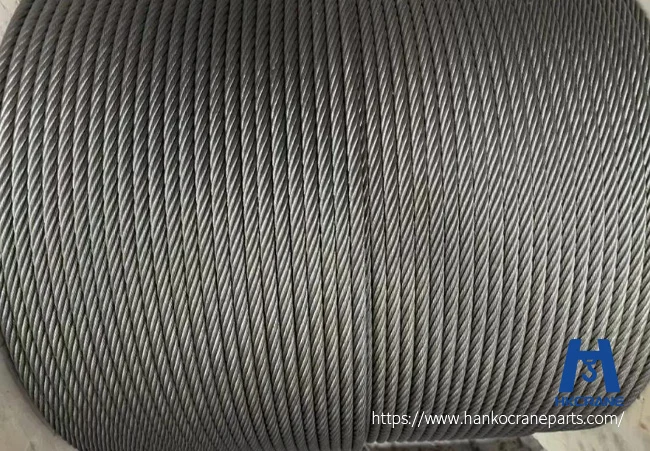
2.1 Wire Rope
The wire rope is one of the most important crane lifting components. It transfers lifting force between the drum and hook assembly.
Main Functions
- Lift and lower loads
- Absorb dynamic stress
- Provide flexibility during operation
Common Inspection Points
- Broken wires
- Corrosion
- Diameter reduction
- Twisting or kinks
- Lubrication condition
Discard Criteria
Most standards recommend replacement when:
- Broken wires exceed allowable limits
- Rope diameter decreases significantly
- Severe corrosion or deformation appears
👉 Proper wire rope inspection directly improves crane safety.
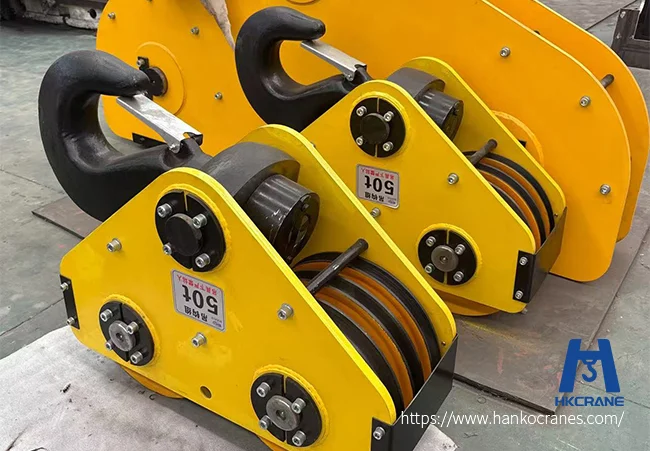
2.2 Crochet de grue
The crane hook connects the load to the lifting system.
Common Hook Types
- Single hook
- Double hook
- Forged hook
- Laminated hook
Inspection Focus
- Surface cracks
- Opening deformation
- Neck wear
- Safety latch condition
Important Rule
If hook opening increases more than 10% from the original size, replacement is necessary.
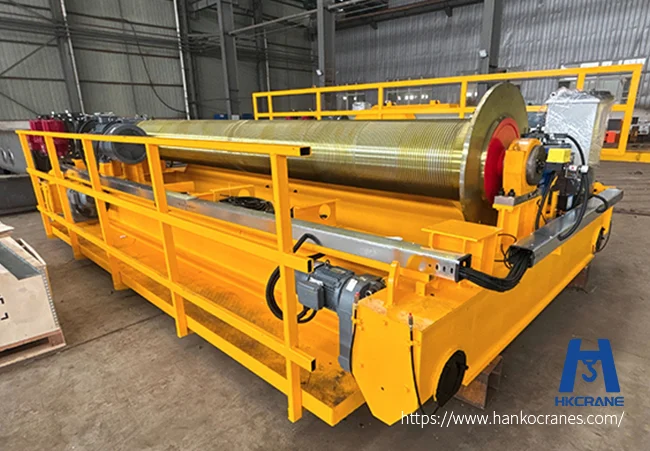
2.3 Tambour grue
The crane drum winds and stores the wire rope during lifting operations.
Key Functions
- Maintain rope alignment
- Transfer torque
- Control lifting motion
Common Problems
- Groove wear
- Drum cracking
- Uneven rope winding
- Surface fatigue
Maintenance Tips
- Inspect groove condition regularly
- Maintain proper lubrication
- Ensure rope alignment
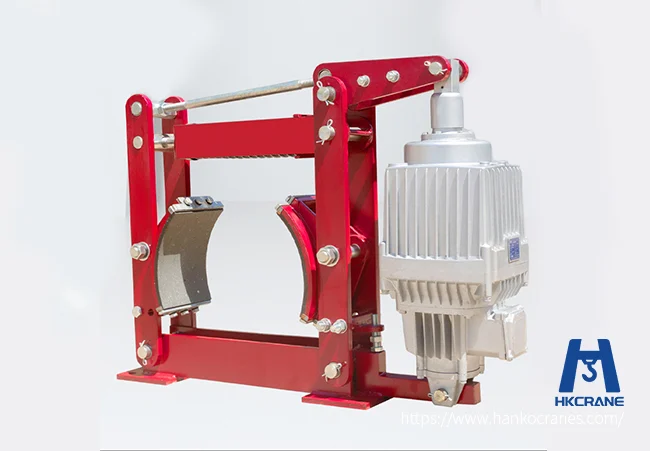
2.4 Système de freinage de grue
The crane brake system controls stopping, holding, and emergency braking.
Common Crane Brake Types
- Drum brakes
- Disc brakes
- Hydraulic brakes
- Electromagnetic brakes
Main Functions
- Prevent load dropping
- Hold suspended loads
- Stop crane motion safely
Common Brake Problems
- Brake slipping
- Overheating
- Uneven braking
- Hydraulic leakage
👉 Reliable braking systems are essential for lifting safety.
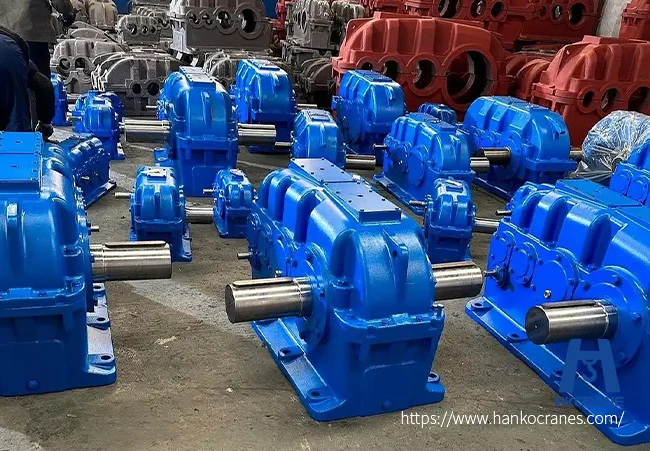
2.5 Crane Gearbox
The crane gearbox reduces motor speed and increases output torque.
Common Gearbox Types
- Helical gearbox
- Planetary gearbox
- Worm gearbox
- Cycloidal gearbox
Inspection Items
- Oil leakage
- Gear wear
- Bearing noise
- Excessive vibration
Why Gearboxes Matter
A properly selected gearbox improves transmission efficiency and extends crane service life.
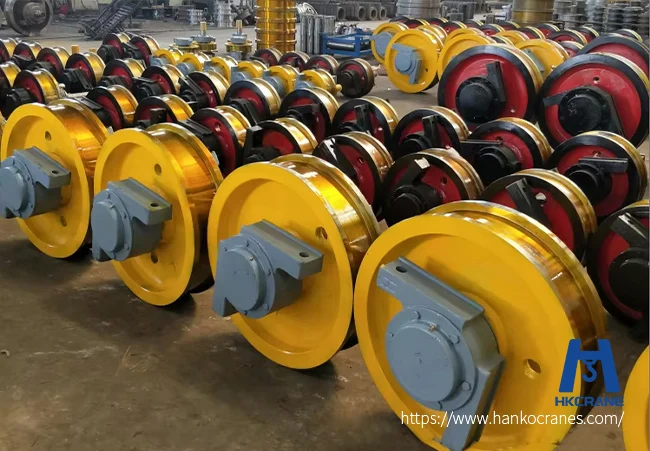
2.6 Roues de grue
Crane wheels support crane movement on rails.
Common Wheel Types
- Double flange wheels
- Single flange wheels
- Flangeless wheels
Common Problems
- Rail climbing
- Tread wear
- Wheel cracking
- Misalignment
Maintenance Recommendations
- Monitor wheel wear regularly
- Ensure rail alignment
- Lubricate bearings properly
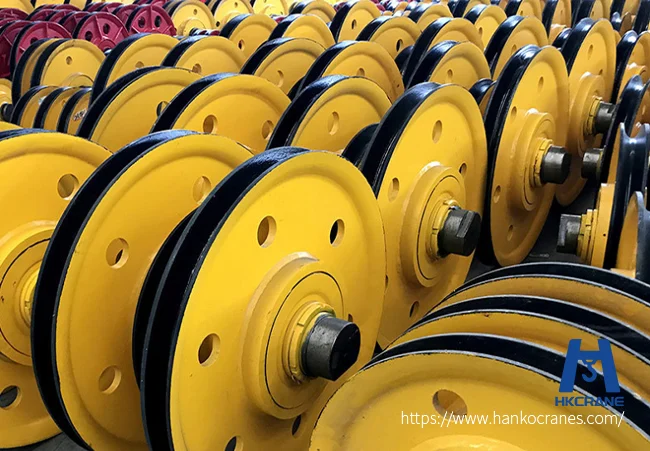
2.7 Pulley Block
Pulleys guide the wire rope and reduce lifting force requirements.
Key Inspection Areas
- Groove wear
- Pulley rotation
- Cracks
- Rope derailment protection
Poor pulley condition accelerates wire rope wear.
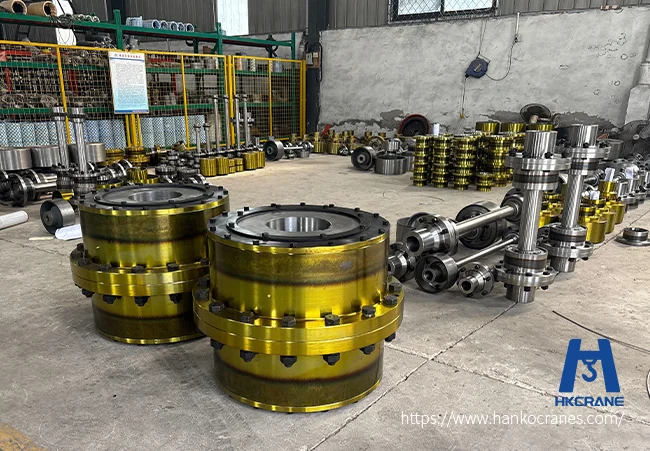
2.8 Couplings
Couplings connect motors, gearboxes, and transmission shafts.
Common Types
- Gear couplings
- Flexible couplings
- Pin couplings
Typical Failures
- Misalignment
- Rubber wear
- Bolt looseness
- Vibration
3. Electrical Crane Components
Modern cranes rely heavily on electrical systems for automation and safety.
Key Electrical Components
Motors
Provide driving power for lifting and traveling motions.
Inverters (VFD)
Control motor speed smoothly and improve energy efficiency.
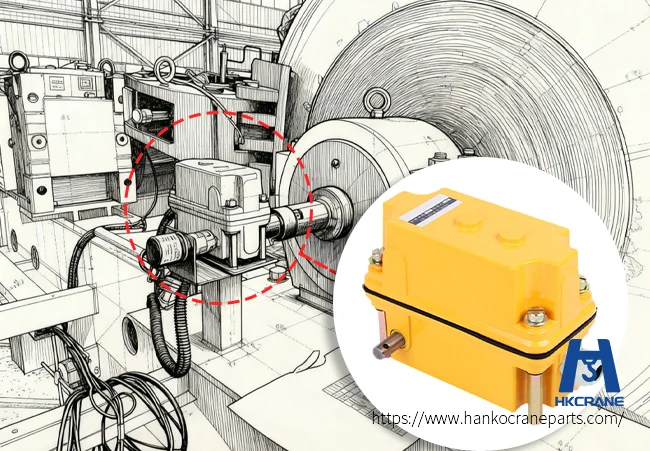
Limit Switches
Prevent overtravel and over-lifting.
Control Panels
Manage crane operations and electrical protection.
Remote Control Systems
Improve operational flexibility and safety.
4. Crane Safety Components
Safety components reduce operational risk and protect personnel.
Common Crane Safety Devices
- Overload limiter
- Emergency stop system
- Rail clamp
- Anti-collision system
- Height limiter
- Wind speed monitor
👉 Safety systems are mandatory in most industrial crane applications.
5. Crane Supporting Equipment
Besides core crane parts, many auxiliary lifting products are widely used.
Common Supporting Equipment
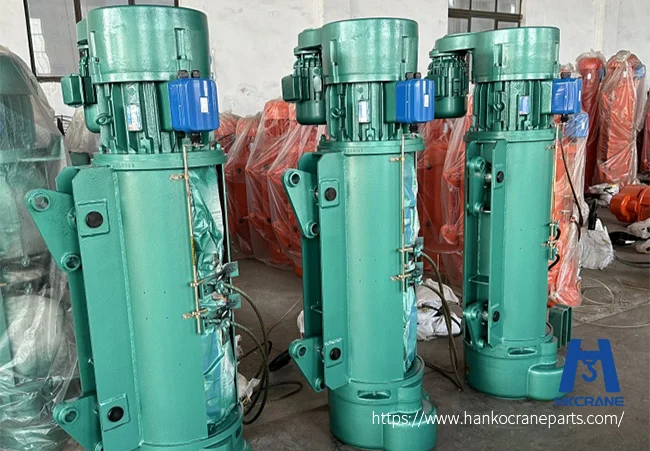
- Treuils électriques
- Chain hoists
- Grab buckets
- Electromagnets
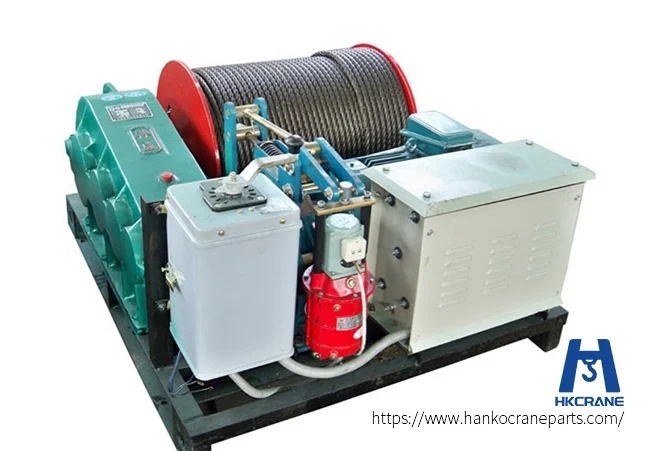
- Winches
- Slings
- Hydraulic jacks
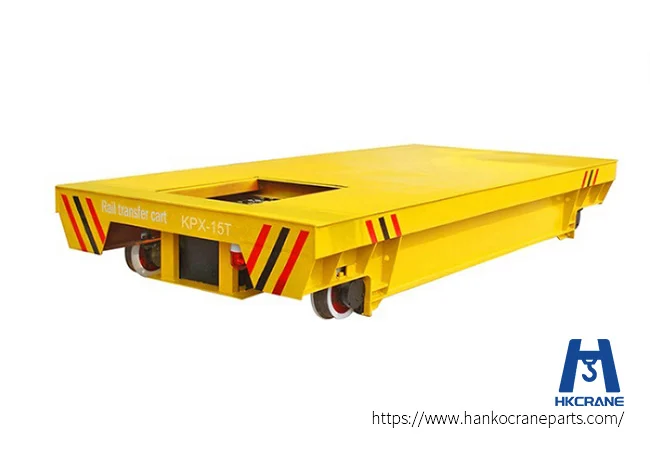
- Transfer carts
These products improve crane versatility across industries.
6. How to Choose the Right Crane Components
Selecting suitable industrial crane components depends on several factors.
Important Selection Criteria
Load Capacity
Choose components based on rated lifting requirements.
Working Environment
Consider:
- High temperature
- Dust
- Corrosion
- Explosion risk
- Outdoor operation
Duty Cycle
Heavy-duty cranes require higher-strength components.
Compatibility
Ensure all components match:
- Rail systems
- Drum sizes
- Wire rope specifications
- Motor output
Compliance Standards
Use components that comply with:
- ISO
- FEM
- DIN
- GB standards
7. Crane Component Maintenance Best Practices
Preventive maintenance significantly reduces downtime and repair costs.
Recommended Maintenance Actions
Daily Inspection
- Check brakes
- Inspect wire ropes
- Observe unusual noise
- Verify safety devices
Weekly Inspection
- Lubricate moving parts
- Check bolts and couplings
- Inspect wheel alignment
Monthly Inspection
- Examine gearbox oil
- Inspect drum wear
- Test overload systems
Scheduled Replacement
Replace wear components before failure occurs.
👉 Preventive maintenance always costs less than emergency repairs.
Why Choose Hanko Crane Components?
Hanko supplies reliable industrial crane components for overhead cranes, gantry cranes, hoists, and heavy lifting systems.
Hanko Product Advantages
- Stable quality control
- OEM and custom solutions
- Heavy-duty industrial applications
- Fast spare parts support
- Technical engineering assistance
Main Products
- Crane wheels
- Wire ropes
- Hooks
- Drums
- Gearboxes
- Brakes
- Couplings
- Treuils électriques
- Pulley blocks
Whether you need replacement parts or complete crane system support, Hanko provides practical solutions for industrial lifting applications.
Get Professional Crane Parts Support
Looking for reliable industrial crane components for your project or maintenance plan?
Hanko can help you:
- Select the correct crane parts
- Reduce downtime
- Improve crane safety
- Extend equipment service life
- Optimize maintenance costs
👉 Contact Hanko today for technical support, pricing, or customized crane component solutions.
FAQ: Industrial Crane Components
What are the most important crane components?
The most critical crane components include wire ropes, hooks, brakes, drums, gearboxes, motors, and safety systems because they directly affect lifting safety and operational reliability.
How often should crane components be inspected?
Daily visual inspections are recommended, while detailed inspections should follow weekly, monthly, and annual maintenance schedules.
Which crane component wears out fastest?
Wire ropes, brake linings, wheels, and hooks typically experience the fastest wear due to friction and repeated load cycles.
What causes crane component failure?
Common causes include:
- Overloading
- Poor lubrication
- Misalignment
- Corrosion
- Fatigue
- Inadequate maintenance
Can crane components be customized?
Yes. Many industrial crane components can be customized based on:
- Load capacity
- Working environment
- Rail type
- Crane structure
- Duty classification
Related Articles
- Crane Brake System Explained
- Heavy Duty Crane Wheel Guide for Industrial Applications
- What Is a Crane Hoist
- How to Choose the Right Crane Gearbox
- Wire Rope Failure Analysis in Crane Systems
- Crane Maintenance Checklist: Daily, Weekly & Monthly Guide
- How to Extend Crane Service Life
- Crane Upgrade vs Replacement: Which Is More Cost-Effective?
Conclusion
Industrial crane components determine the safety, efficiency, and lifespan of lifting equipment. From wire ropes and hooks to brakes and gearboxes, every part must operate reliably under demanding conditions.
Therefore, selecting high-quality components, performing regular inspections, and following preventive maintenance procedures are essential for reducing downtime and ensuring safe crane operation.
With professional support from Hanko, businesses can improve crane reliability, reduce operating costs, and maintain long-term lifting performance.

 English
  Korean
  Russian
  Spanish
  Malay
Malay  Afrikaans
  Bulgarian
  French
  Bengali
  Italian
  Hungarian
  Vietnamese
  Thai
Thai  Indonesian
  German
  Arabic
  Japanese