
Unexpected crane failures often result in production delays, expensive repairs, and safety risks. A well-planned crane preventive maintenance program helps businesses identify wear before failures occur, minimize downtime, and extend the service life of critical crane components.
Whether you operate an overhead crane, gantry crane, electric hoist, or lifting trolley, preventive maintenance is far more cost-effective than emergency repairs. This guide explains how to build an effective maintenance program and what should be inspected throughout the equipment lifecycle.
Fragmento destacado
What is crane preventive maintenance?
Crane preventive maintenance is a scheduled maintenance program that includes routine inspections, lubrication, adjustment, cleaning, testing, and replacement of worn components before failures occur. Proper preventive maintenance improves safety, reduces downtime, extends equipment life, and lowers overall operating costs.
Why Crane Preventive Maintenance Matters
Many crane failures begin as small issues that are difficult to notice during normal operation. Loose fasteners, worn brake linings, insufficient lubrication, or damaged wire ropes can gradually develop into serious mechanical failures.
An effective maintenance program helps operators:
- Reduce unexpected equipment downtime
- Improve workplace safety
- Extend crane service life
- Lower repair and replacement costs
- Maintain lifting performance
- Meet safety regulations and inspection requirements
As one senior lifting equipment engineer explains:
“Most crane failures don’t happen overnight. They develop gradually, which is why scheduled preventive maintenance is one of the most valuable investments any facility can make.”
Build a Preventive Maintenance Schedule
Different inspections should be performed at different intervals depending on crane usage, duty cycle, and working environment.
| Maintenance Interval | Primary Tasks |
| Daily | Visual inspection and functional testing |
| Weekly | Lubrication and mechanical inspection |
| Monthly | Electrical system and structural inspection |
| Quarterly | Safety device calibration and wear inspection |
| Annually | Comprehensive inspection and performance evaluation |
Facilities operating cranes continuously or in harsh environments may require shorter maintenance intervals.
Daily Crane Preventive Maintenance
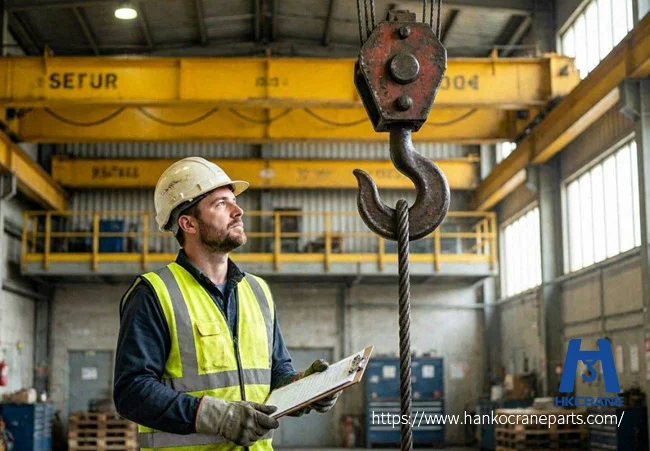
Operators should complete a quick inspection before every shift.
Check the Working Environment
- Remove obstacles around crane travel paths
- Inspect rails for debris
- Verify adequate lighting
- Check warning signs and safety markings
Inspect the Lifting Components
Examine:
- Hooks
- Wire ropes or load chains
- Sheaves
- Drums
- Load blocks
Look for:
- Cracks
- Excessive wear
- Broken wire strands
- Chain deformation
- Loose fasteners
Any abnormal condition should be reported before operation begins.
Weekly Maintenance Tasks
Weekly maintenance focuses on lubrication and moving components.
Inspect:
- Gearboxes
- Bearings
- Couplings
- Wheels
- Drive shafts
- Travel mechanisms
Maintenance should include:
- Lubricating moving parts
- Tightening loose bolts
- Checking gearbox oil levels
- Listening for abnormal vibration or noise
Early detection prevents minor wear from becoming expensive failures.
Monthly Preventive Maintenance
Monthly inspections are more comprehensive and should include both mechanical and electrical systems.
Mechanical Inspection
Check:
- Bridge girders
- End trucks
- Structural bolts
- Welds
- Brake assemblies
- Gear reducers
Look for:
- Corrosion
- Fatigue cracks
- Oil leakage
- Loose structural connections
Electrical Inspection
Inspect:
- Control panels
- Contactors
- Power cables
- Limit switches
- Emergency stop circuits
- Grounding connections
Electrical components should operate smoothly without overheating or abnormal arcing.
Quarterly Maintenance
Quarterly inspections verify the accuracy of safety systems and evaluate component wear.
Inspect and test:
- Overload limiters
- Upper and lower limit switches
- Travel limit switches
- Brake performance
- Wire rope wear
- Load chain elongation
- Wheel alignment
- Rail condition
Replace components approaching their wear limits instead of waiting for failure.
Annual Comprehensive Inspection
Annual maintenance should include a complete assessment of crane performance.
Recommended inspections include:
- Structural integrity evaluation
- Weld inspection
- Alignment measurement
- Complete brake inspection
- Gearbox servicing
- Electrical testing
- Functional load testing
- Safety device calibration
Many companies also schedule third-party inspections during annual maintenance to verify compliance with local regulations.
Key Components That Require Regular Maintenance
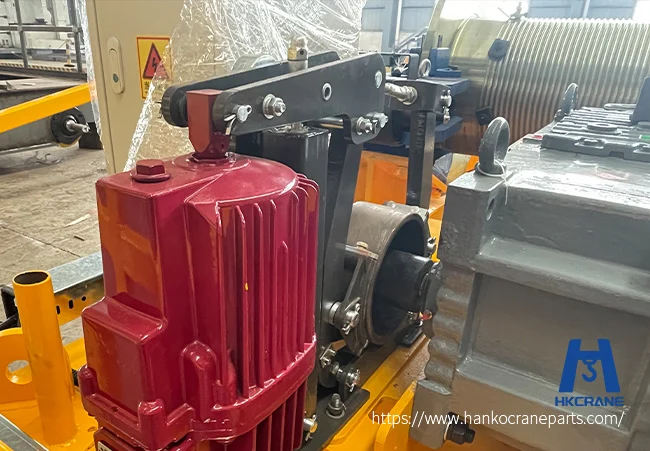
Brake System
Brakes are one of the most important crane safety components.
Inspect for:
- Brake lining wear
- Oil contamination
- Spring fatigue
- Brake shoe alignment
- Braking response
Poor braking performance can result in load drift and unsafe lifting conditions.
Wire Rope or Load Chain
Regularly inspect for:
- Broken strands
- Corrosion
- Flattening
- Kinks
- Excessive elongation
Apply the correct lubricant to reduce wear and extend service life.
Gear Reducer
Monitor:
- Oil level
- Oil leakage
- Gear wear
- Bearing condition
- Operating temperature
Replace lubricant according to the manufacturer’s maintenance schedule.
Hook Assembly
Inspect the hook for:
- Cracks
- Opening deformation
- Excessive wear
- Safety latch condition
Never repair a cracked hook. Replace it immediately.
Electrical System
Verify:
- Control buttons
- Pendant controls
- Remote controls
- Cable insulation
- Contactors
- Motor connections
Reliable electrical systems ensure safe crane operation.
Perform Special Inspections When Necessary
Routine maintenance alone is not always sufficient.
Additional inspections should be performed after:
- Extreme weather
- Earthquakes
- Flooding
- Fire exposure
- Major repairs
- Equipment modifications
- Long-term shutdown
- Accidents or overload events
These inspections help identify hidden structural or mechanical damage before the crane returns to service.
Maintenance Safety Best Practices
Before performing any maintenance:
- Disconnect and lock out the power supply
- Remove suspended loads
- Install warning signs
- Wear appropriate PPE
- Use approved lifting tools
- Secure moving components
- Prevent unauthorized access
If maintenance involves working at height, use certified fall protection equipment.
Keep Accurate Maintenance Records
Every inspection should be documented.
Maintenance records should include:
- Inspection date
- Equipment identification
- Maintenance personnel
- Inspection items
- Findings
- Corrective actions
- Replaced components
- Follow-up verification
Detailed records help predict component life and improve long-term maintenance planning.
Why Choose Hanko Crane Components?
A successful crane preventive maintenance program depends on reliable replacement parts.
Hanko supplies high-quality crane components including:
- Electric hoists
- Wire rope hoists
- Chain hoists
- Industrial brake systems
- Crane wheels
- Wire rope drums
- Hook blocks
- Rail clamps
- Storm brakes
- Limit switches
- Gear reducers
Every component is manufactured under strict quality control to support safe and reliable crane operation in ports, factories, warehouses, steel plants, and heavy industrial facilities.
Frequently Asked Questions
How often should crane preventive maintenance be performed?
Daily visual inspections should be completed before every shift, while weekly, monthly, quarterly, and annual maintenance should follow a planned maintenance schedule based on crane usage.
What is included in crane preventive maintenance?
Typical maintenance includes inspections, lubrication, bolt tightening, brake adjustment, electrical testing, wire rope inspection, gearbox servicing, safety device testing, and replacement of worn components.
What are the most common crane maintenance issues?
The most common issues include worn brake linings, damaged wire ropes, insufficient lubrication, loose fasteners, gearbox oil leaks, electrical faults, and malfunctioning limit switches.
Why are maintenance records important?
Maintenance records help track equipment condition, identify recurring problems, improve maintenance planning, and demonstrate compliance with safety requirements.
Can preventive maintenance reduce repair costs?
Yes. Preventive maintenance detects wear before major failures occur, reducing emergency repairs, minimizing downtime, and extending the service life of expensive crane components.
Related Articles
- Overhead Crane Inspection Checklist
- Daily Crane Safety Checklist
- Common Overhead Crane Problems
- Common Electric Hoist Failures and Fixes
- How to Maintain an Electric Hoist
- Chain Hoist vs Wire Rope Hoist: Pros and Cons
- Explosion-Proof Electric Hoist Guide
Conclusión
Preventive maintenance is one of the most effective ways to improve crane reliability, increase workplace safety, and reduce operating costs. By following a structured inspection schedule, replacing worn components before failure, and maintaining detailed service records, companies can maximize equipment performance and minimize costly downtime.
Whether you manage a single overhead crane or an entire lifting fleet, a proactive maintenance strategy delivers long-term value.
Request a Quote from Hanko
Looking for reliable crane components to support your crane preventive maintenance program?
Visado supplies premium crane spare parts and lifting equipment for industrial applications worldwide, including overhead cranes, gantry cranes, ports, steel plants, manufacturing facilities, and warehouses.
Contact Hanko today for technical support, product recommendations, or a customized quotation from our engineering team.

 English
  Korean
  Russian
  Spanish
  Malay
Malay  Afrikaans
  Bulgarian
  French
  Bengali
  Italian
  Hungarian
  Vietnamese
  Thai
Thai  Indonesian
  German
  Arabic
  Japanese