A crane’s drivetrain depends on many critical components, but few are as important as the crane coupling. Couplings connect motors, gearboxes, drums, wheels, and drive shafts while transmitting torque safely and efficiently.
Selecting the wrong coupling can lead to vibration, premature wear, misalignment issues, gearbox damage, and unexpected downtime.
In this guide, we’ll explain the most common crane coupling types, their applications, and how to choose the right solution for your lifting system.
What Is a Crane Coupling?
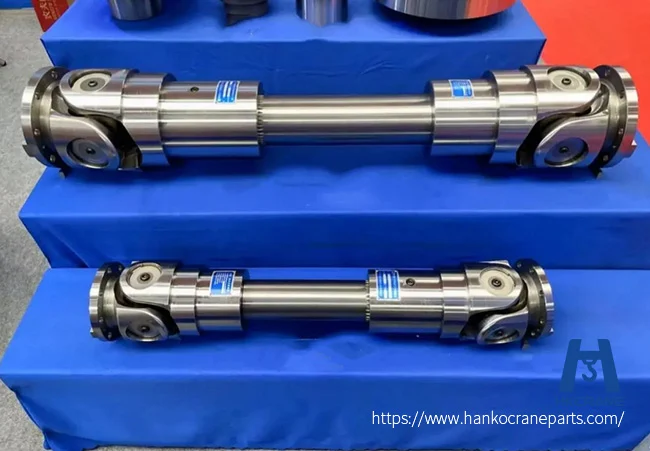
A crane coupling is a mechanical component that connects two rotating shafts and transfers torque between them. Depending on the design, crane couplings can compensate for shaft misalignment, absorb shock loads, reduce vibration, and provide overload protection in lifting systems.
Why Crane Couplings Matter
Crane systems operate under:
- Frequent starts and stops
- Heavy shock loads
- High torque transmission
- Shaft misalignment
- Continuous vibration
Without a properly selected coupling, these operating conditions can cause:
- Gearbox failures
- Motor shaft damage
- Bearing wear
- Excessive vibration
- Increased maintenance costs
Therefore, coupling selection directly affects crane reliability and service life.
Main Types of Crane Couplings
Crane couplings generally fall into three categories:
- Rigid Couplings
- Flexible Couplings
- Safety Couplings
Let’s examine each type in detail.
1. Rigid Couplings
Rigid couplings provide a direct mechanical connection between two shafts.
Because they offer no flexibility, both shafts must remain precisely aligned.
Advantages
- High torque capacity
- Simple structure
- Low maintenance
- Cost-effective
Limitations
- No vibration damping
- No misalignment compensation
Flange Coupling
A flange coupling uses bolts to connect two flanged hubs.
Applications
- Hoist low-speed shafts
- Winch systems
- Stable operating conditions
Benefits
- Strong torque transmission
- Simple installation
- Long service life
Sleeve Coupling
A sleeve coupling connects shafts through a common sleeve.
Applications
- Light-duty cranes
- Low-speed transmission systems
Benefits
- Compact design
- Low manufacturing cost
Clamp Coupling
Clamp couplings use split housings and bolts to secure shafts.
Applications
- Long drive shafts
- Light-duty crane systems
Benefits
- Easy installation
- No shaft machining required
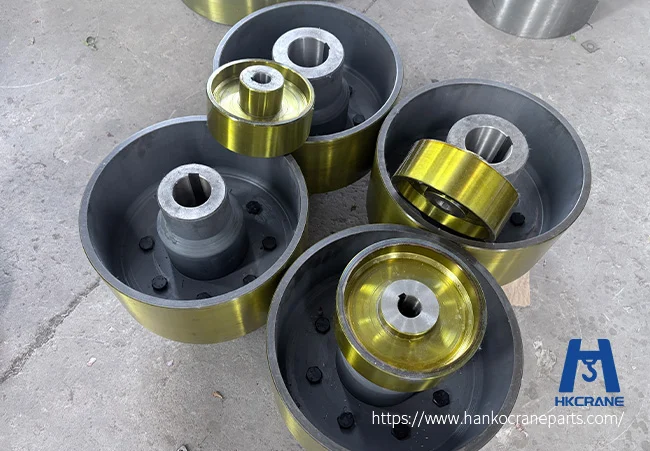
2. Flexible Crane Couplings
Flexible couplings compensate for shaft misalignment and reduce vibration.
For most modern cranes, flexible couplings are preferred because perfect alignment is difficult to maintain over time.
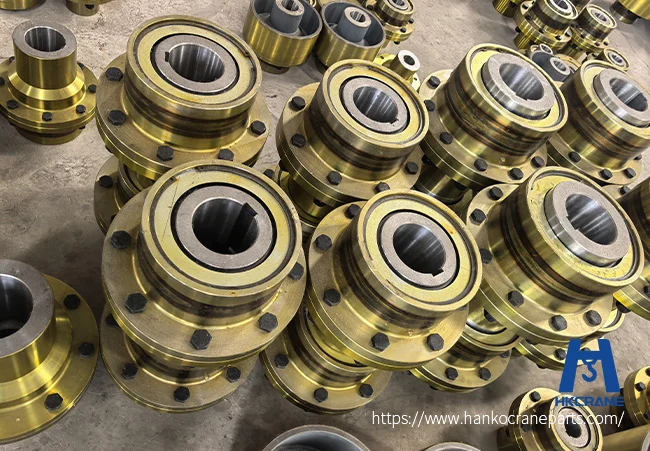
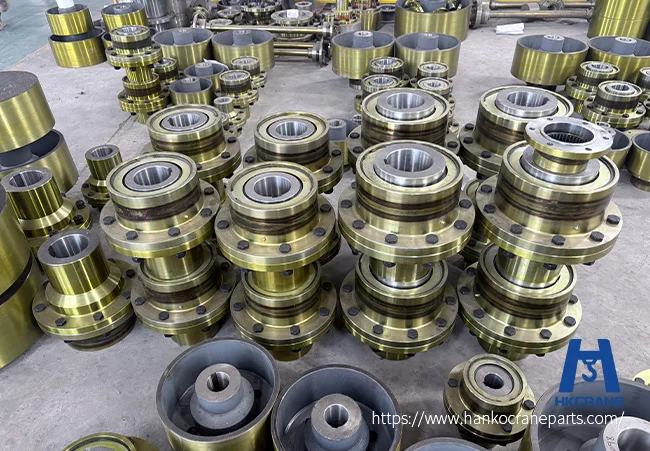
Gear Coupling
Gear couplings are among the most common crane coupling types.
They consist of:
- External gear hubs
- Internal gear sleeves
The gear teeth allow angular and radial movement while transmitting high torque.
Advantages
✔ High torque capacity
✔ Excellent misalignment compensation
✔ Long service life
✔ Suitable for heavy-duty cranes
Typical Applications
- Gearbox-to-drum connections
- Hoisting mechanisms
- Steel mill cranes
- Port cranes
Engineer Insight
“Gear couplings remain the industry standard for heavy-duty lifting because they combine high torque transmission with excellent alignment tolerance.”
— Senior Mechanical Engineer, Crane Drive Systems
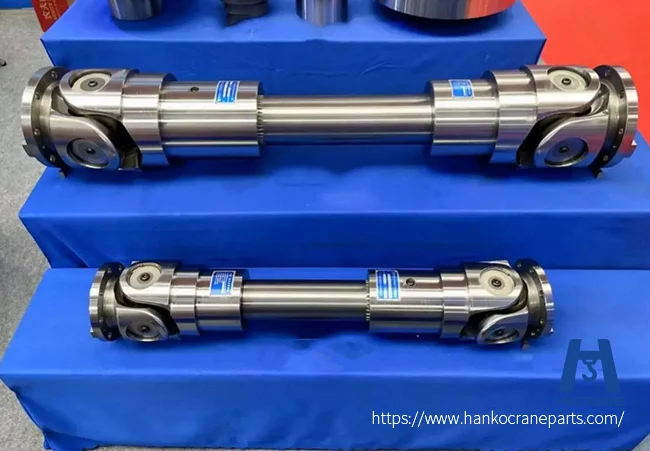
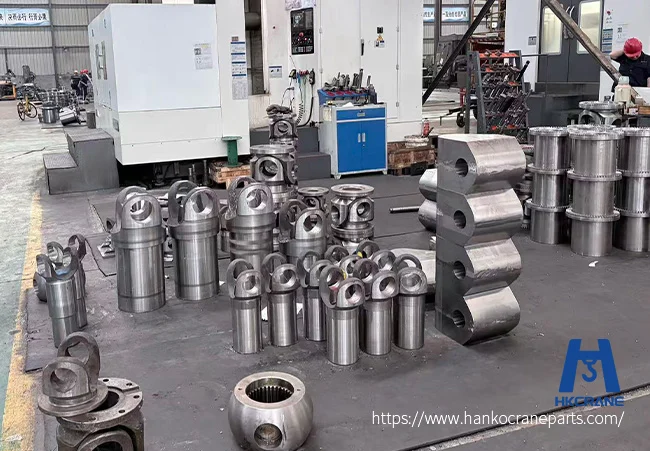
Universal Joint Coupling
Universal couplings transmit power between shafts operating at an angle.
Advantages
- Large angular compensation
- Smooth torque transmission
- Flexible installation
Applications
- Slewing mechanisms
- Offset shaft systems
- Mobile cranes
Typical operating angles range from 5° to 45°.
Slider Coupling
Slider couplings use a central sliding element to accommodate radial displacement.
Advantages
- Compact structure
- Easy maintenance
Applications
- Medium-duty crane drives
- Low-speed systems
Elastic Flexible Couplings
These couplings use elastic elements to absorb vibration and shock loads.
Jaw Coupling (Spider Coupling)
Jaw couplings consist of:
- Two metal hubs
- Elastomer spider insert
Advantages
- Good vibration damping
- Low noise
- Simple maintenance
Applications
- Crane travel drives
- Trolley systems
- Electric motor drives
Diaphragm Coupling
Diaphragm couplings use thin stainless steel membranes to transmit torque.
Advantages
- Zero backlash
- High precision
- Maintenance-free operation
Applications
- High-speed crane drives
- Precision positioning systems
- Harsh industrial environments
Tire Coupling
Tire couplings use a reinforced rubber tire element.
Advantages
- Excellent shock absorption
- Large displacement compensation
- Strong vibration isolation
Applications
- Crane travel mechanisms
- Impact-prone environments
Limitation
Lower torque capacity than gear couplings.
3. Safety Couplings
Safety couplings protect crane components from overload conditions.
They disconnect or slip when torque exceeds a preset value.
Shear Pin Safety Coupling
These couplings use sacrificial pins.
When overload occurs:
- The pin breaks
- Torque transmission stops
- Equipment remains protected
Applications
- Low-speed drives
- Occasional overload conditions
Friction Safety Coupling
Friction couplings slip when excessive torque occurs.
Advantages
- Automatic reset
- Continuous protection
- No pin replacement required
Applications
- Hoisting mechanisms
- Variable load conditions
- Frequent start-stop operations
How to Select the Right Crane Coupling
Choosing the correct coupling depends on several factors.
Crane Coupling Selection Chart by Crane Application
Different crane systems require different coupling solutions. Selecting the correct coupling helps reduce maintenance costs and improve drivetrain reliability.
| Crane Application | Recommended Coupling Type | Main Advantage |
|---|---|---|
| Overhead Crane Hoist | Gear Coupling | High torque capacity |
| Gantry Crane Travel Drive | Tire Coupling | Shock absorption |
| Crane Trolley Drive | Jaw Coupling | Vibration damping |
| Metallurgical Crane | Gear Coupling | Heavy-duty performance |
| Container Crane | Diaphragm Coupling | High precision |
| Slewing Mechanism | Universal Coupling | Large angular compensation |
| Mining Crane | Gear Coupling + Safety Coupling | Overload protection |
| Automated Crane System | Diaphragm Coupling | Zero backlash accuracy |
Gear Coupling vs Diaphragm Coupling
One of the most common questions engineers ask is whether to choose a gear coupling or a diaphragm coupling.
The answer depends on the operating conditions.
| Feature | Gear Coupling | Diaphragm Coupling |
|---|---|---|
| Torque Capacity | Very High | Alto |
| Misalignment Compensation | Excellent | Good |
| Lubrication Required | Yes | No |
| Maintenance | Moderate | Low |
| Shock Load Resistance | Excellent | Moderate |
| Precision Positioning | Moderate | Excellent |
| Service Life | Long | Long |
| Suitable for Heavy Cranes | Yes | Yes |
| Suitable for Automation Systems | Limited | Excellent |
When to Choose a Gear Coupling
Choose a gear coupling when:
- Shock loads are frequent
- Crane capacity exceeds 20 tons
- Metallurgical or steel mill applications are involved
- Heavy-duty operation runs continuously
When to Choose a Diaphragm Coupling
Choose a diaphragm coupling when:
- Precise positioning is critical
- Maintenance access is limited
- Lubrication-free operation is preferred
- Automated cranes require higher accuracy
Common Crane Coupling Failure Symptoms
Early detection can prevent expensive downtime.
Watch for these warning signs:
Excessive Vibration
Possible causes:
- Shaft misalignment
- Worn flexible elements
- Coupling imbalance
Abnormal Noise
Possible causes:
- Gear tooth wear
- Lack of lubrication
- Loose fasteners
Rising Bearing Temperature
Possible causes:
- Coupling misalignment
- Excessive axial load
- Improper installation
Visible Wear or Cracks
Possible causes:
- Fatigue loading
- Shock impacts
- Overloading
Replace damaged couplings immediately to avoid secondary damage to motors and gearboxes.
Crane Coupling Inspection Checklist
Routine inspection significantly extends coupling service life.
Daily Inspection
✓ Listen for abnormal noise
✓ Observe vibration levels
✓ Check visible damage
✓ Verify bolt tightness
Monthly Inspection
✓ Check shaft alignment
✓ Measure coupling wear
✓ Inspect elastomer elements
✓ Examine lubrication condition
Annual Inspection
✓ Perform detailed dimensional checks
✓ Conduct non-destructive testing (NDT)
✓ Replace worn components
✓ Verify torque ratings
How Long Does a Crane Coupling Last?
Coupling service life depends on:
- Load conditions
- Duty cycle
- Alignment accuracy
- Lubrication quality
- Environmental conditions
Typical lifespan ranges:
| Coupling Type | Average Service Life |
|---|---|
| Jaw Coupling | 3–5 Years |
| Tire Coupling | 3–6 Years |
| Gear Coupling | 5–10 Years |
| Diaphragm Coupling | 8–15 Years |
| Universal Coupling | 5–8 Years |
Proper maintenance can significantly extend these values.
Expert Advice: Never Ignore Shaft Alignment
Many coupling failures originate from installation issues rather than product defects.
According to experienced crane maintenance engineers:
“More than half of coupling failures can be traced to shaft misalignment. Even a high-quality coupling will fail prematurely if alignment tolerances are ignored.”
Therefore, laser alignment should always be performed during installation and major maintenance work.
Why OEM-Quality Couplings Reduce Total Operating Costs
Some buyers focus only on purchase price. However, coupling failure often causes:
- Crane downtime
- Production interruptions
- Gearbox damage
- Motor replacement costs
- Emergency maintenance expenses
High-quality couplings from Visado help reduce total ownership costs by improving reliability and extending equipment life.
Additional FAQ
What is the best coupling for heavy-duty cranes?
Gear couplings are generally considered the best option for heavy-duty cranes because they offer high torque capacity and excellent shock-load resistance.
Do crane couplings require lubrication?
Some coupling types, such as gear couplings, require regular lubrication. Others, such as diaphragm couplings, operate without lubrication.
How do I know if my crane coupling is worn out?
Common signs include excessive vibration, unusual noise, rising bearing temperatures, visible cracks, and increased drivetrain backlash.
Can coupling misalignment damage a gearbox?
Yes. Misalignment increases bearing loads and vibration, which can significantly shorten gearbox service life.
Should I replace or repair a damaged crane coupling?
Minor wear components may be replaced. However, cracked hubs, damaged gear teeth, or severely worn coupling assemblies should generally be replaced for safety reasons.
Related Articles
- Forged vs Cast Crane Wheels: Which Is Better?
- Crane Brake Failure Analysis and Prevention
- How to Extend Crane Brake Service Life
- Crane Gearbox Common Problems and Solutions
- How to Reduce Crane Gearbox Noise
- Crane Motor Selection Guide
- How to Inspect Crane Wheels Properly

 English
  Korean
  Russian
  Spanish
  Malay
Malay  Afrikaans
  Bulgarian
  French
  Bengali
  Italian
  Hungarian
  Vietnamese
  Thai
Thai  Indonesian
  German
  Arabic
  Japanese