
🔹 Quick Answer (Featured Snippet)
Crane gearbox selection requires evaluating torque, gear ratio, working conditions, and gearbox type.
Key steps include:
- Calculate required torque with safety factor (1.5–2.0)
- Determine correct gear ratio (input/output speed)
- Select suitable gearbox type (planetary, helical, worm, cycloidal)
- Consider environment (temperature, dust, humidity)
- Verify load capacity, thermal limits, and backlash
👉 Proper selection ensures safe operation, longer service life, and lower maintenance costs.
Introducción
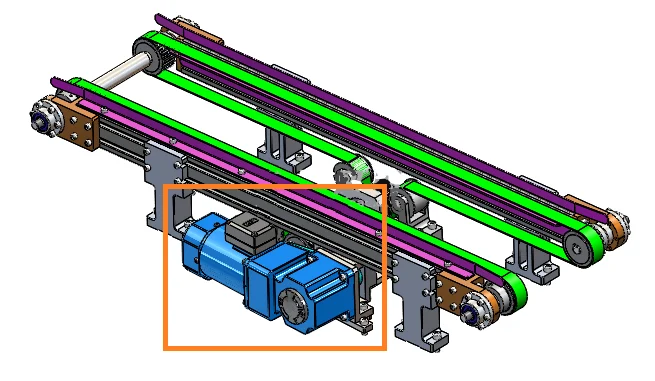
In crane systems, the gearbox directly determines motion control, lifting stability, and mechanical efficiency. However, many failures originate from incorrect gearbox selection rather than product defects.
Therefore, a structured approach to crane gearbox selection is essential.
This guide provides a complete engineering-based selection method to help you avoid costly mistakes and improve system reliability.
1. Determine Torque Requirements
Accurate torque calculation is the foundation of gearbox selection.
Formula
T = 9550 × P / n
However, in real crane applications:
- Apply 5–2.0 safety factor
- Include shock load conditions
👉 Underestimating torque is a primary cause of gearbox failure.
2. Calculate Gear Ratio
Formula
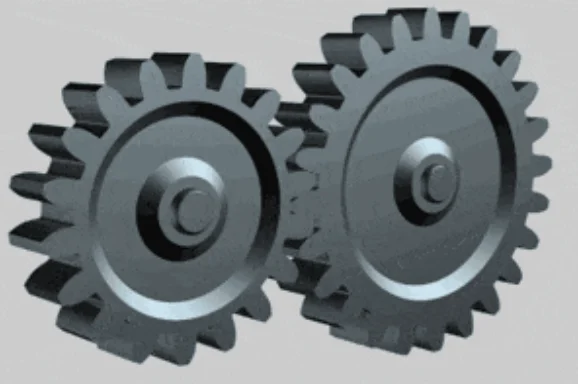
i = n₁ / n₂
Where:
- n₁ = motor speed
- n₂ = required output speed
Key Rule
- Keep deviation within ±5%
👉 Incorrect ratio leads to inefficiency and overheating.
3. Choose the Right Gearbox Type
Selecting the correct type is critical for performance.
|
Gearbox Type |
Key Advantage |
Application |
|
Planetary |
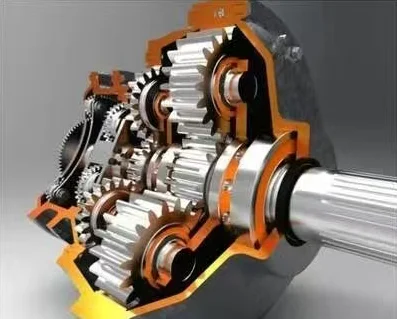
High torque & precision | Hoisting, slewing |
|
Helical |
Stable & cost-effective | Travel mechanism |
|
Worm |
Self-locking | Lifting systems |
|
Cycloidal |
Shock resistant | Heavy-duty cranes |
👉 Match gearbox type with working conditions, not just price.
4. Consider Working Environment
Environmental mismatch often causes early failure.
Key Factors
- High temperature → heat-resistant design
- Low temperature → special lubricants
- Dust & humidity → IP65/IP66 protection
- Limited space → compact or right-angle design
👉 Environment directly affects lifespan and reliability.
5. Check Backlash and Precision
- High precision: ≤10 arcmin
- Standard: ≤30 arcmin
👉 Lower backlash improves positioning accuracy and reduces vibration.
6. Engineering Verification (Critical Step)
Before final selection, always verify:
- Torque capacity
- Thermal power
- Axial load limits
- Service factor
👉 This step separates professional selection from guesswork.
7. Installation and Maintenance
Even the best gearbox fails with poor installation.
- Ensure alignment ≤0.1 mm
- Match mounting type
- Maintain lubrication system
- Schedule inspections
👉 Proper installation extends service life significantly.
🚀 Product Recommendation
For reliable crane gearbox solutions, explore:
- 👉 https://www.hankocraneparts.com/crane-gearboxes/
crane gearbox supplier
You may also need:
- 👉 https://www.hankocraneparts.com/crane-drums/
- 👉 https://www.hankocraneparts.com/crane-brakes/
- 👉 https://www.hankocraneparts.com/crane-wheels/
👉 These components work together with the gearbox in crane systems.
📚 Related Articles
To better understand crane system design and selection:
- Crane Brake Troubleshooting
- Wire Rope Failure Analysis
- Crane Sheave vs Pulley
- Crane Wheel Assembly Guide
- Crane Spare Parts List
- Overhead Crane Components
📩 CTA — Contact Hanko
If you are selecting a gearbox for a crane project, choosing the wrong specification can lead to costly downtime and safety risks.
Hanko provides:
- Customized crane gearbox solutions
- Engineering calculation support
- Fast response for OEM & replacement parts
👉 Contact us today to get a professional gearbox selection solution tailored to your application.
FAQ: Crane Gearbox Selection
What is the most important factor in crane gearbox selection?
Torque capacity is the most critical factor, followed by gear ratio and working conditions.
Which gearbox is best for heavy-duty cranes?
Planetary and cycloidal gearboxes are preferred due to high load capacity and durability.
How do I calculate the correct gear ratio?
Divide motor speed by required output speed (i = n₁ / n₂).
Why is backlash important?
Backlash affects positioning accuracy and operational stability.
Can I use a standard gearbox for cranes?
Not recommended. Crane applications require heavy-duty, high-reliability gearboxes.
Conclusión
Effective crane gearbox selection requires a combination of engineering calculation, environmental analysis, and practical experience.
By selecting the right gearbox, you can:
- Improve efficiency
- Extend service life
- Reduce maintenance costs
- Ensure operational safety
👉 In industrial crane systems, gearbox selection is not optional—it is critical.

 English
  Korean
  Russian
  Spanish
  Malay
Malay  Afrikaans
  Bulgarian
  French
  Bengali
  Italian
  Hungarian
  Vietnamese
  Thai
Thai  Indonesian
  German
  Arabic
  Japanese