Crane hooks play a critical role in every lifting system. As the primary load-connecting component, they directly link the lifting mechanism to the load. Because of this responsibility, selecting the correct crane hook types significantly affects lifting safety, efficiency, and operational stability.
In this guide, we explain the most common crane hook types, their structural characteristics, and their typical applications in industrial lifting systems.
What Is a Gancho de grúa?
A crane hook is the load-handling device that attaches the load to the crane’s hoisting system. In most cranes, the hook connects to the wire rope through a hook block and pulley system.
During lifting operations, the crane hook bears the entire load. Therefore, manufacturers design crane hooks using high-strength steel and strict safety standards to prevent deformation, cracking, or accidental load release.
Moreover, different industries require different crane hook types depending on lifting capacity, operating environment, and safety requirements.
Main Crane Hook Types
1. Single Crane Hook
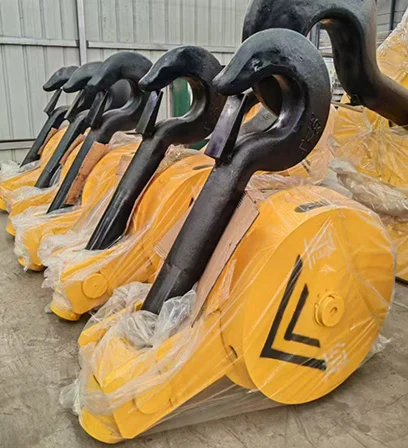
A single hook is the most widely used crane hook type in small and medium lifting equipment.
This hook features a simple structure, lightweight design, and easy manufacturing process. Because of these advantages, many overhead cranes and hoists use single hooks for general lifting operations.
There are two common subtypes:
- Shank single hook– directly connected to the wire rope or hook block
- Eye single hook– connected through shackles or lifting accessories
Single hooks work best in lifting operations where loads are moderate and lifting frequency is relatively stable.
2. Double Crane Hook
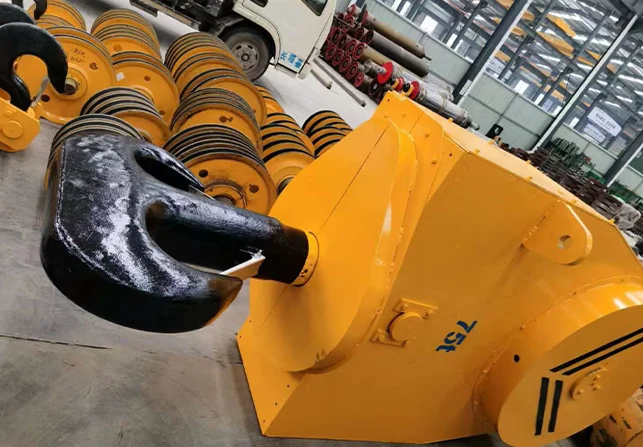
A double crane hook, also known as a ramshorn hook, includes two symmetrical hook arms.
This design distributes the load evenly across both sides of the hook. As a result, the stress on the hook body becomes more balanced, improving structural strength and stability.
Therefore, double hooks are commonly used in heavy-duty cranes, especially for lifting large or high-capacity loads.
Typical applications include:
- Large overhead cranes
- Steel plant cranes
- Heavy manufacturing lifting equipment
3. Forged Crane Hook
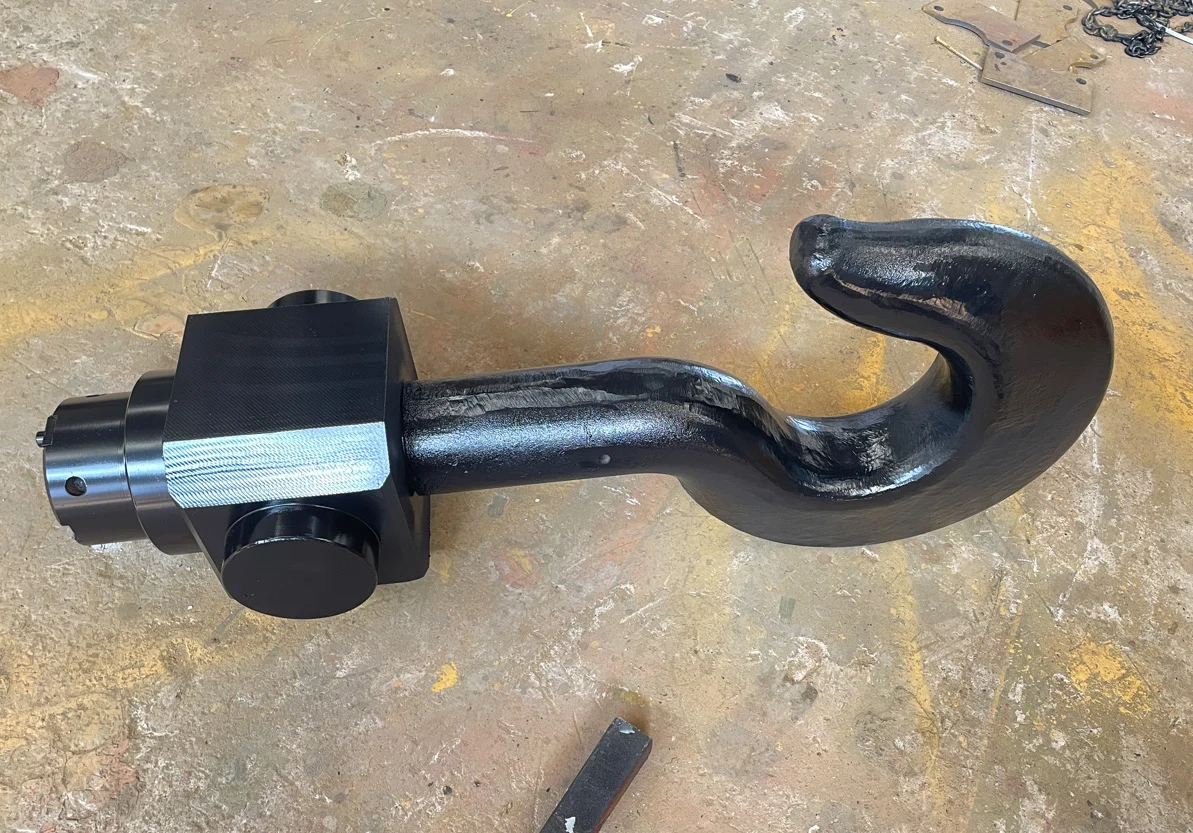
A forged crane hook is produced using a hot forging process that forms the hook from a single piece of steel.
Because forging refines the metal grain structure, these hooks offer excellent toughness, strength, and fatigue resistance. As a result, forged hooks perform well in demanding industrial environments.
They are widely used in:
- Metallurgical plants
- Ports and shipyards
- Heavy industrial cranes
In addition, forged hooks often appear in both single and double hook configurations.
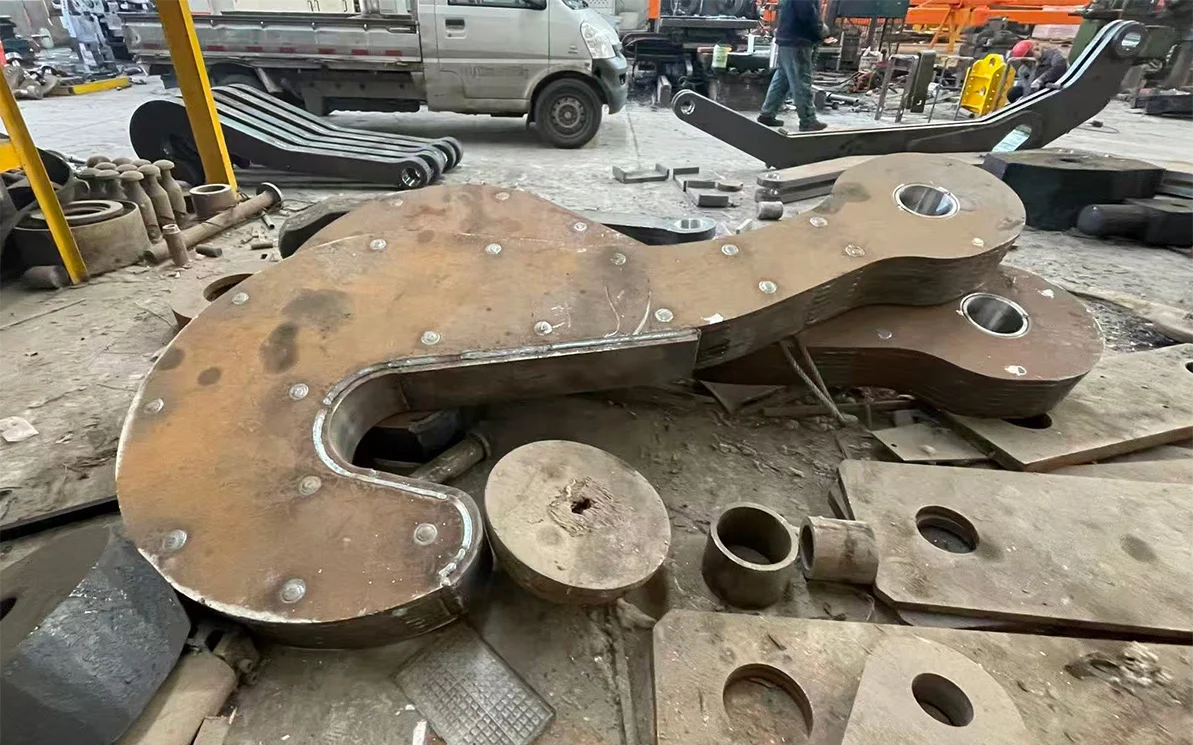
4. Laminated (Plate) Crane Hook
A laminated crane hook, also called a plate hook, consists of multiple steel plates stacked together and connected using rivets or bolts.
This design offers an important maintenance advantage. If one plate becomes damaged, technicians can replace only the affected plate rather than replacing the entire hook assembly.
Because of this feature, laminated hooks are commonly used in:
- Large tonnage cranes
- Metallurgical cranes
- High-duty cycle lifting equipment
Furthermore, laminated hooks provide improved safety for extremely heavy lifting tasks.
5. Special Crane Hooks
In addition to standard hooks, manufacturers design special crane hook types for unique lifting environments.
Some common examples include:
Rotating Hooks
Rotating hooks can rotate 360 degrees, allowing the load to adjust orientation during lifting. This design helps reduce wire rope twisting and improves operational flexibility.
Safety Hooks (Latch Hooks)
Safety hooks include a locking latch mechanism that prevents the load from slipping out of the hook opening. Therefore, they significantly improve lifting safety.
Electromagnetic Hooks
Electromagnetic hooks are used when lifting magnetic materials such as steel plates or scrap metal.
High-Temperature Hooks
These hooks use heat-resistant materials and coatings. As a result, they can operate safely in high-temperature environments such as steel mills or foundries.
How to Choose the Right Crane Hook Type
Selecting the correct crane hook requires evaluating several operational factors.
First, you must consider the lifting capacity. Heavy loads typically require double hooks or laminated hooks to ensure safe load distribution.
Second, evaluate the working environment. For example, metallurgical industries often require forged or heat-resistant hooks.
Third, analyze the lifting frequency and maintenance requirements. Laminated hooks are easier to repair in high-duty applications.
Finally, always verify that the hook meets the required safety factor and industry standards.
Importance of Crane Hook Safety Inspection
Because crane hooks directly carry the load, regular inspection is essential.
Operators should routinely check:
- Hook opening deformation
- Wear at the critical section
- Cracks or surface damage
- Latch mechanism condition
- Smooth rotation of the hook assembly
If any structural damage appears, technicians must replace the hook immediately. Repair welding is generally not recommended because it may weaken the metal structure.
Consistent inspection significantly reduces lifting risks and improves equipment reliability.
Conclusión
Crane hooks are one of the most important components in lifting equipment. Different crane hook types—including single hooks, double hooks, forged hooks, laminated hooks, and specialized hooks—serve different industrial lifting needs.
By understanding the structural features and applications of each hook type, operators can choose safer and more efficient lifting solutions.
Ultimately, selecting high-quality crane hooks and performing regular inspections ensures safe lifting operations and long-term crane performance.
FAQ
1. What are the most common crane hook types?
The most common crane hook types include single hooks, double hooks, forged hooks, laminated hooks, and special hooks such as rotating hooks and safety latch hooks.
2. What is the difference between a single hook and a double hook?
A single hook is simpler and commonly used for small to medium lifting tasks. A double hook distributes the load more evenly and is typically used in heavy-duty cranes.
3. Why are forged crane hooks widely used?
Forged crane hooks offer higher strength, better toughness, and improved fatigue resistance. Therefore, they are suitable for heavy industrial lifting environments.
4. When should laminated crane hooks be used?
Laminated hooks are ideal for large tonnage cranes and high-duty lifting operations because damaged plates can be replaced individually, reducing maintenance costs.
5. How often should crane hooks be inspected?
Operators should inspect crane hooks regularly during routine crane maintenance. Immediate replacement is required if cracks, deformation, or excessive wear are detected.

 English
  Korean
  Russian
  Spanish
  Malay
Malay  Afrikaans
  Bulgarian
  French
  Bengali
  Italian
  Hungarian
  Vietnamese
  Thai
Thai  Indonesian
  German
  Arabic
  Japanese