Featured Snippet: What Is the Best Steel Grade for Crane Wheels?
The best alloy steel grade for crane wheel selection depends on crane load, duty cycle, and working environment. For heavy-duty industrial cranes, forged 42CrMo crane wheels offer superior hardness, fatigue resistance, and impact strength, while 65Mn is suitable for medium-duty applications with lower operating stress.
Why Crane Wheel Material Selection Matters
Crane wheels operate under continuous rolling pressure, impact loads, and rail friction. In heavy-duty industries such as steel manufacturing, mining, ports, and shipyards, crane wheels experience severe wear and stress every day.
Choosing the wrong wheel material may lead to:
- Premature wheel wear
- Rail damage
- Wheel flange cracking
- Unplanned downtime
- High maintenance costs
- Reduced operational safety
Therefore, proper crane wheel selection is critical for long-term crane reliability and cost control.
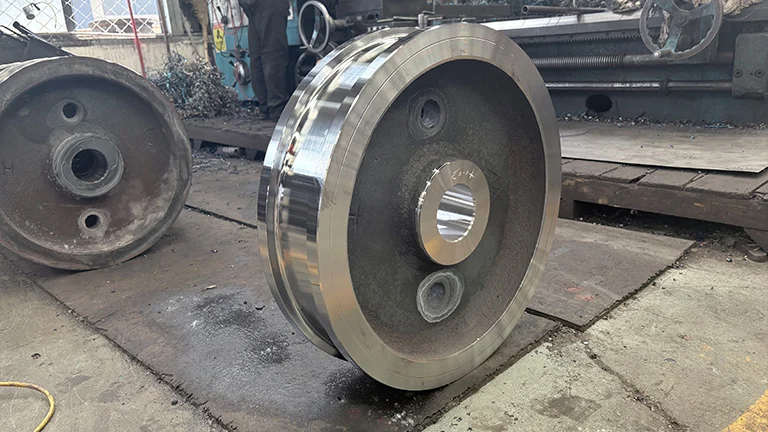
What Is a Crane Wheel?
A crane wheel is a key running component installed on:
- Overhead cranes
- Gantry cranes
- Rail-mounted cranes
- Trolley systems
- Transfer carts
The wheel supports the crane structure and load while moving along crane rails.
Because crane wheels directly contact the rails, they must provide:
- High wear resistance
- Excellent fatigue strength
- Impact toughness
- Stable dimensional accuracy
Why Alloy Steel Is Used for Crane Wheels
Standard carbon steel cannot withstand the harsh operating conditions of modern industrial cranes.
High-quality forged steel crane wheels use alloy steel combined with heat treatment technologies to achieve both hardness and toughness.
Key Performance Requirements
High Surface Hardness
High hardness helps:
- Reduce tread wear
- Prevent rail chewing
- Improve wheel lifespan
Strong Core Toughness
A tough internal structure helps absorb:
- Heavy impacts
- Dynamic loading
- Shock stress
This reduces the risk of wheel cracking and catastrophic failure.
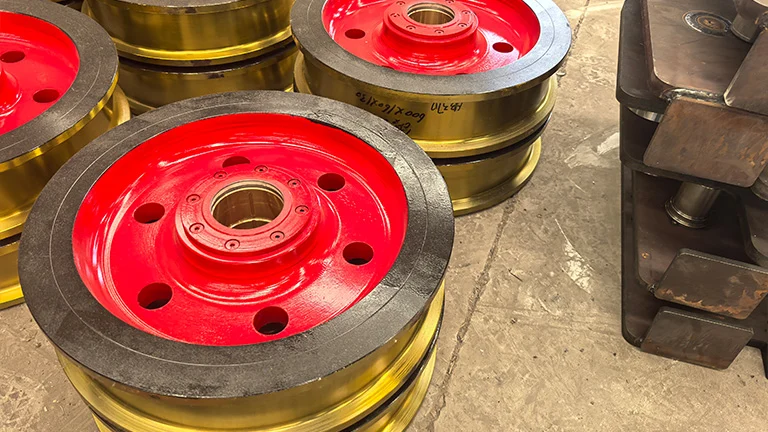
Common Alloy Steel Grades for Crane Wheel Selection
1. 65Mn Alloy Steel
Equivalent Standard
- AISI 1065
Material Type
High-carbon manganese steel
Best Applications
- Medium-duty overhead cranes
- Workshop cranes
- Standard gantry cranes
- Electric hoists
Advantages
- Cost-effective
- Good wear resistance
- Easy heat treatment
- Suitable for general industrial use
Limitations
65Mn performs well under moderate loading conditions but may not provide sufficient fatigue resistance for extremely heavy-duty operations.
2. 42CrMo Alloy Steel
Equivalent Standard
- AISI 4140
Material Type
Chromium-molybdenum alloy steel
Best Applications
- Steel mill cranes
- Port cranes
- Mining cranes
- Metallurgical cranes
- High-frequency lifting systems
Advantages
- Excellent hardenability
- Superior fatigue strength
- High impact resistance
- Outstanding crack resistance
- Long service life
42CrMo is widely regarded as the premium material for heavy-duty forged steel crane wheels.
3. 40Cr Alloy Steel
Material Characteristics
40Cr provides balanced mechanical performance and moderate cost.
Typical Applications
- Medium to heavy-duty cranes
- General manufacturing plants
- Material handling systems
It offers better strength than ordinary carbon steel while remaining more economical than 42CrMo.
4. Cast Steel Crane Wheels (ZG340-640 / ZG55)
Material Type
Medium carbon cast steel
Applications
- Large diameter wheels
- Low-speed applications
- Budget-sensitive projects
Advantages
- Easier to manufacture in large sizes
- Lower production cost
Limitations
Compared with forged wheels, cast wheels typically have:
- Lower fatigue resistance
- Higher internal defect risk
- Reduced impact strength
Therefore, forged wheels remain the preferred choice for critical heavy-duty applications.
Forged vs Cast Crane Wheels
Why Forged Steel Crane Wheels Perform Better
Forging improves the internal grain structure of steel, resulting in:
- Higher density
- Better toughness
- Stronger fatigue resistance
- Improved load-bearing capacity
For heavy-duty cranes, forged wheels significantly outperform cast alternatives.
Recommended Crane Wheel Hardness
Proper crane wheel hardness is essential for balancing wear resistance and crack prevention.
Typical Hardness Range
| Wheel Material | Recommended Hardness |
|---|---|
| 65Mn | 300–380 HB |
| 40Cr | 320–400 HB |
| 42CrMo | 350–450 HB |
Excessive hardness may cause brittle cracking, while insufficient hardness accelerates wear.
Therefore, professional heat treatment is critical.
Heat Treatment for Crane Wheels
Modern industrial crane wheels typically undergo:
- Rim quenching
- Surface hardening
- Deep hardening
- Tempering
These processes improve:
- Surface wear resistance
- Internal toughness
- Fatigue life
Proper heat treatment also reduces flange deformation and rail damage.
How to Match Steel Grades with Crane Duty Class
Crane wheel selection should always match the crane working class.
| Crane Application | FEM/ISO Class | Recommended Material |
|---|---|---|
| General Workshop Crane | M3–M5 | 65Mn |
| Heavy Manufacturing | M6–M7 | 40Cr / 42CrMo |
| Steel Mills & Ports | M8 | 42CrMo |
| Mining & Metallurgy | M7–M8 | Forged 42CrMo |
Higher duty cycles require stronger alloy materials and advanced heat treatment.
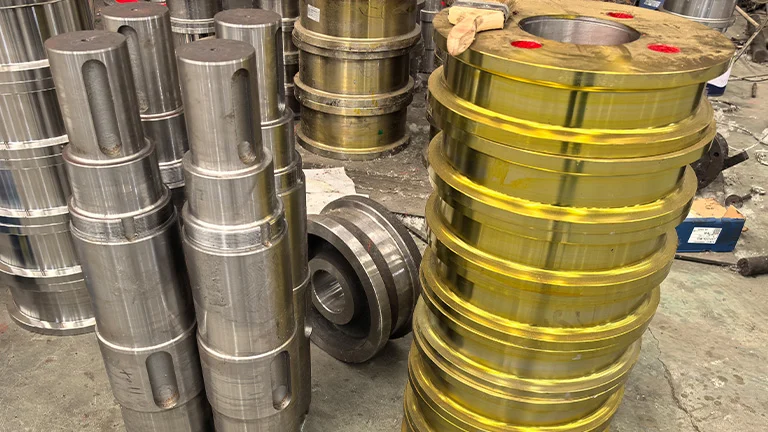
Key Factors in Crane Wheel Selection
1. Wheel Load
Higher wheel pressure requires stronger alloy steel with better fatigue performance.
2. Operating Frequency
Continuous operation generates more heat and wear.
High-frequency cranes generally require forged 42CrMo wheels.
3. Working Environment
Harsh environments such as:
- High temperature
- Corrosive atmosphere
- Dust exposure
- Outdoor operations
require enhanced wheel durability and protective treatments.
4. Rail Compatibility
Wheel hardness must properly match rail hardness to avoid excessive rail wear.
Improper matching may cause:
- Rail chewing
- Misalignment
- Flange damage
Common Crane Wheel Failures
Improper crane wheel selection often causes:
- Wheel tread wear
- Flange cracking
- Rail climbing
- Surface pitting
- Fatigue fractures
- Abnormal vibration
Routine inspection helps prevent costly failures.
Why Choose Hanko as Your Industrial Crane Parts Manufacturer
Hanko manufactures precision-forged crane wheels for demanding industrial applications worldwide.
Hanko Crane Wheel Advantages
Premium Alloy Steel Materials
We use certified materials including:
- 42CrMo
- 65Mn
- 40Cr
Advanced Forging Technology
Our forged steel crane wheels provide:
- Better grain structure
- Higher load capacity
- Superior fatigue resistance
Precision CNC Machining
Advanced CNC equipment ensures:
- Accurate dimensions
- Smooth tread surfaces
- Better rail compatibility
Strict Quality Inspection
Every wheel undergoes:
- Ultrasonic testing (UT)
- Magnetic particle testing (MT)
- Hardness inspection
- Dimensional verification
This ensures stable quality and reliable operation.
Need Expert Help with Crane Wheel Selection?
Hanko Provides High-Performance Crane Wheel Solutions
We manufacture:
- Forged crane wheels
- Crane wheel assemblies
- Heavy-duty trolley wheels
- Custom rail wheels
- OEM crane wheel components
Our engineering team can recommend the best alloy steel grade based on your:
- Crane duty class
- Wheel load
- Rail type
- Operating environment
- Service life requirements
Contact Hanko Today For:
- Free technical consultation
- Material selection support
- OEM customization
- Fast quotation
- Global shipping
Email: info@hankocrane.com
FAQ
What is the best material for heavy-duty crane wheels?
42CrMo alloy steel is one of the best materials for heavy-duty crane wheel applications because of its excellent fatigue strength and impact resistance.
Why are forged crane wheels better than cast wheels?
Forged wheels have a denser grain structure, which improves toughness, wear resistance, and crack resistance under heavy loads.
What hardness should crane wheels have?
Most industrial crane wheels require hardness between 300–450 HB depending on the steel grade and working conditions.
Is 65Mn suitable for heavy-duty cranes?
65Mn is suitable for medium-duty cranes, but extremely heavy-duty applications usually require 42CrMo forged wheels.
How long do crane wheels last?
Crane wheel lifespan depends on:
- Load conditions
- Rail alignment
- Material quality
- Heat treatment
- Maintenance practices
Properly manufactured forged wheels can operate for many years under heavy-duty conditions.
Can Hanko manufacture custom crane wheels?
Yes. Hanko provides OEM and custom crane wheel manufacturing according to customer drawings and technical requirements.
Related Articles
- Heavy Duty Crane Wheel Guide for Industrial Applications
- Crane Brake System Explained
- How to Extend Crane Service Life: Practical Tips
- Industrial Crane Components List: Full Guide
- Crane Parts Cost Breakdown: What Affects the Price?
- Crane Maintenance Checklist: Daily, Weekly & Monthly Guide
- How to Choose the Right Crane Gearbox

 English
  Korean
  Russian
  Spanish
  Malay
Malay  Afrikaans
  Bulgarian
  French
  Bengali
  Italian
  Hungarian
  Vietnamese
  Thai
Thai  Indonesian
  German
  Arabic
  Japanese