
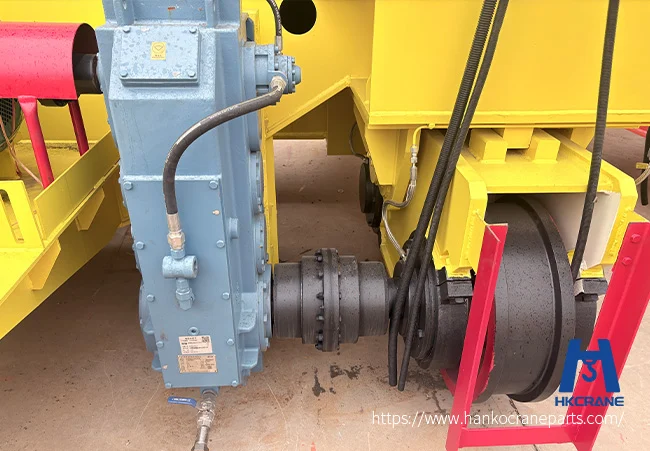
A crane gearbox running hot is telling you something is wrong inside — oil, load, or cooling. This guide lists the verified causes of gearbox overheating, the temperature limits you should apply, and the order for you to check them.
Quick Answer: Why Crane Gearboxes Overheat
Overheating in a crane gearbox traces back to six causes:
- Wrong oil level — too much oil churns and heats; too little starves the bearings and gears.
- Degraded or contaminated oil — friction rises as the oil film fails.
- Overload or duty mismatch — heat generation outpaces heat dissipation.
- Mechanical damage — pitting, broken teeth, or worn bearings convert power to heat.
- Blocked ventilation — dust-packed ribs or a failed fan stop the box shedding heat.
- High ambient temperature — the gearbox starts hot and stays hot.
Temperature limits you should apply: mineral gear oils are generally fit for use up to about 90 °C, and synthetic oils up to about 100 °C. Confirm the exact limit against the oil data sheet in your gearbox documentation.
How Hot Is Too Hot?
Two numbers decide whether you act. The oil temperature itself — against the limit above. And the temperature rise above ambient: a gearbox that climbs far hotter than its surroundings under normal duty is converting power to heat somewhere.
Measure at the same point every time — the housing near the bearing seats gives you a stable reading. Log the readings across your shifts. A slow creep over weeks points to oil degradation. A sudden spike points to mechanical damage, and the gearbox should come off duty for inspection.
The daily checks that catch this early are already scheduled in the crane gearbox oil guide.
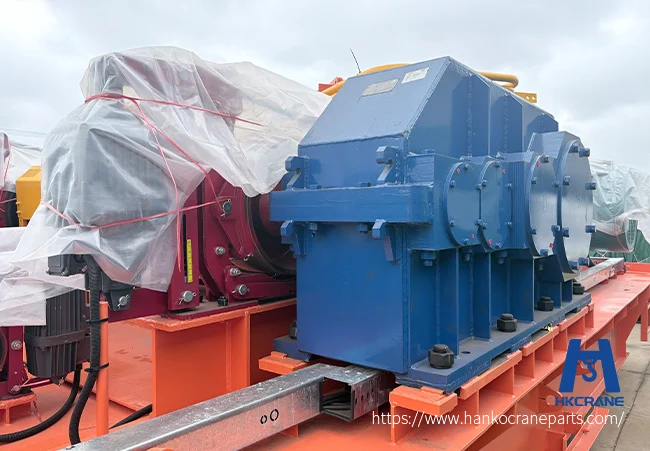
Six Causes in Detail
1. Wrong Oil Level
Overfilled: the gears churn deep oil, wasting power as heat and oxidizing the oil. Underfilled: the oil film breaks on gear meshes and bearing contacts, and dry friction heats the box fast.
Check the level with the gearbox stopped and level, against the dipstick or sight-glass marks. Do not top up “to be safe” past the upper mark.
2. Degraded or Contaminated Oil
Oil past its service life, contaminated with wear particles or water, loses viscosity and film strength. Friction rises, and the oil carries the heat nowhere. Dark, foaming, or emulsified oil is due for a change — the change-interval logic is covered in the oil guide linked above.
3. Overload and Duty Mismatch
A gear reducer running duty above its class generates more heat than its surfaces can shed. The thermal power rating exists for exactly this reason: continuous duty above thermal power overheats the box even when the mechanical torque looks acceptable. If the crane duty grew but the reducer stayed, this is the first suspect.
4. Mechanical Damage Inside the Box
Pitted tooth surfaces, broken teeth, and failing bearings convert input power to heat. Overheating with rising noise and vibration almost always means internal damage — the failure modes behind it are covered in crane gearbox bearing failure.
5. Blocked Ventilation
Dust-packed cooling ribs, an enclosure around the box, or a failed cooling fan all cut heat rejection. Clean the housing, restore airflow, and check that guards still let air pass. In high-ambient plants this cause stacks with cause six.
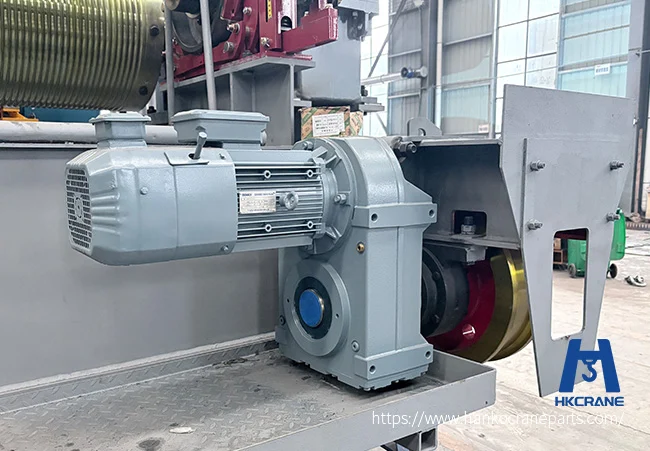
6. High Ambient Temperature
Steel mills and foundries push ambient temperatures toward the oil limit before the box even loads. Your options: derate the duty, improve ventilation, or switch to an oil grade suited to the temperature — the selection logic for duty and site data is covered in how to choose the right crane gearbox.
Diagnostic Order: Cheapest Checks First
- Feel the airflow and look at the housing — dust-packed ribs and enclosures cost nothing to check.
- Check the oil level and condition — level marks, color, foam, water.
- Review the duty history — added shifts, heavier loads, longer cycles since the temperature climbed.
- Listen and feel for vibration — noise plus heat points inside the box.
- Confirm the oil grade against the documentation — wrong viscosity heats as much as old oil.
- Open the inspection cover — last resort, with the reducer locked out. Look for spalls, broken teeth, and bearing debris.
Fixes That Hold
Set the level right and keep it there. Fill to the marks only. Record every top-up — rising consumption means a leak or a seal problem, covered in the oil guide.
Change oil on condition. Wear-metal and viscosity analysis beats the calendar. The oil analysis schedule in the maintenance plan tells you when the oil is done.
Match duty to rating. Where the duty grew, either the crane slows down or the reducer upgrades. Running above thermal power shortens oil life and gear life together — the duty-rating logic is covered in the crane gearbox selection notes.
Keep the box breathing and clean. Wipe the ribs, clear the fan, and leave airflow paths open around the installation.
Inspect after every overheat event. Heat ages oil and clears bearing clearances. An overheated speed reducer that “seems fine” deserves an oil change and a vibration check.
FAQ
Why is my crane gearbox overheating?
What temperature should a crane gearbox not exceed?
Can too much oil cause gearbox overheating?
How do you diagnose a hot crane gearbox?
What is thermal power on a crane gearbox?
Keep the Box Cool and the Crane Running
Overheating is a symptom with six treatable causes. Check airflow and oil first — the cheap fixes. Then duty and mechanics. When the cause is not obvious from the outside, Hanko engineers can review your temperature logs, oil condition, and duty data.

 English
  Korean
  Russian
  Spanish
  Malay
Malay  Afrikaans
  Bulgarian
  French
  Bengali
  Italian
  Hungarian
  Vietnamese
  Thai
Thai  Indonesian
  German
  Arabic
  Japanese