
Crane Safety Components List: 22 Essential Crane Safety Components Explained
Crane systems play a critical role in industrial lifting operations. However, because cranes handle heavy loads and operate in complex environments, safety protection systems are essential.
Modern lifting equipment integrates multiple crane safety components designed to prevent overload, collisions, mechanical failure, and operator injury. These safety devices work together to ensure reliable operation and compliance with safety standards.
This guide provides a complete crane safety components list and explains how each device improves crane safety and operational reliability.
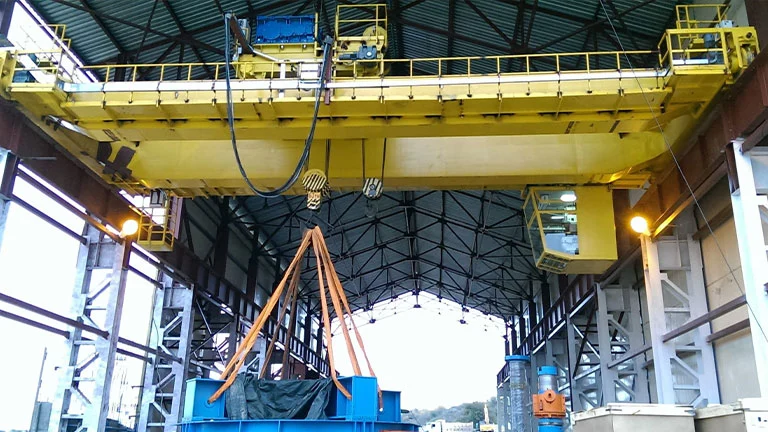
1. Overload Limiter
The overload limiter is one of the most fundamental crane safety components. It prevents the crane from lifting loads that exceed its rated capacity.
When the load surpasses the allowable limit, the device automatically stops the hoisting motion and cuts off power to the lifting mechanism. As a result, it prevents structural damage and potential accidents caused by overloading.
Overload limiters are widely used in overhead cranes, gantry cranes, and hoisting systems. They are generally divided into two types:
Mechanical overload limiters
These devices use mechanical components such as levers, springs, and cams. When overload occurs, the mechanism activates a switch that stops the lifting system.
Electronic overload limiters
Modern cranes often use electronic systems with sensors, signal amplifiers, and control units. These systems measure structural deformation and convert it into electrical signals, allowing accurate load monitoring and automatic safety control.
2. Load Moment Limiter
The load moment limiter (LML) is primarily used in boom-type cranes such as tower cranes and mobile cranes.
Unlike overhead cranes, boom cranes depend on lifting moment, which is determined by load weight and working radius. The load moment limiter continuously calculates these parameters using sensors that monitor load weight, boom angle, and boom length.
When the load moment approaches the rated limit, the system provides an early warning. If the limit is exceeded, it automatically stops dangerous movements such as hoisting, boom extension, or slewing.
3. Crane Buffers
Buffers are installed at the ends of crane runways or structures to absorb impact energy during collisions.
If a crane accidentally reaches the end of its travel or collides with another crane on the same track, the buffer absorbs kinetic energy and reduces structural damage.
Common buffer types include:
- Rubber buffers for low-speed cranes
- Spring buffers for medium-speed applications
- Hydraulic buffers for high-speed cranes
Each type converts impact energy into elastic or hydraulic resistance to reduce collision forces.
4. Wind Protection Devices
Outdoor cranes require wind protection devices to prevent uncontrolled movement during strong winds.
Common solutions include:
Rail clamps
Rail clamps grip both sides of the rail head and secure the crane using friction force.
Anchoring devices
Anchoring systems lock the crane to a fixed position during storms or extreme weather conditions.
Wheel chocks (rail shoes)
These wedge-shaped blocks prevent crane wheels from moving along the track.
Together, these systems protect cranes from sliding or tipping in high wind conditions.
5. Limit Switches
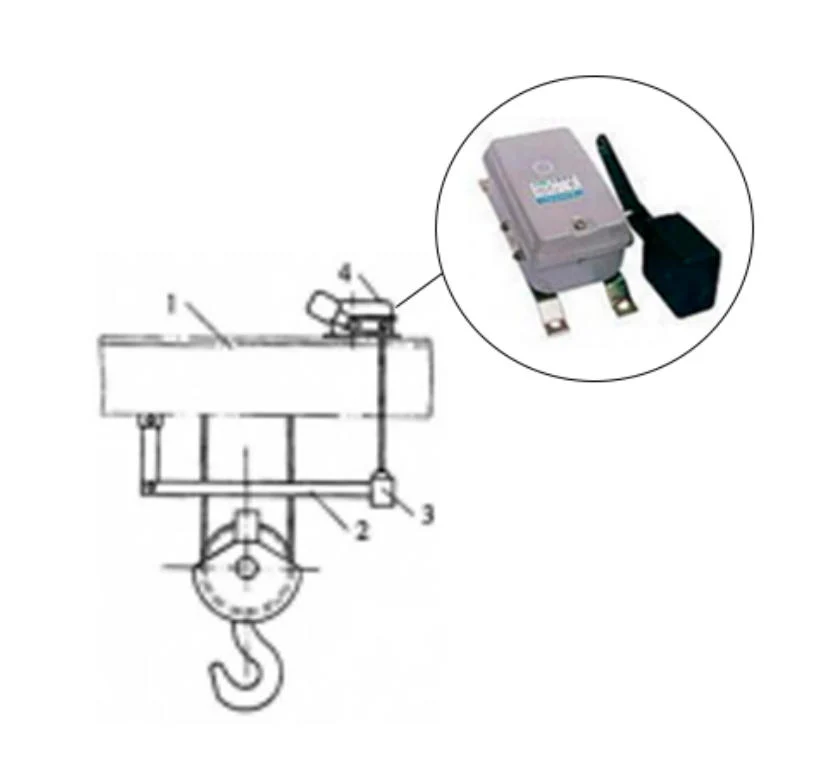
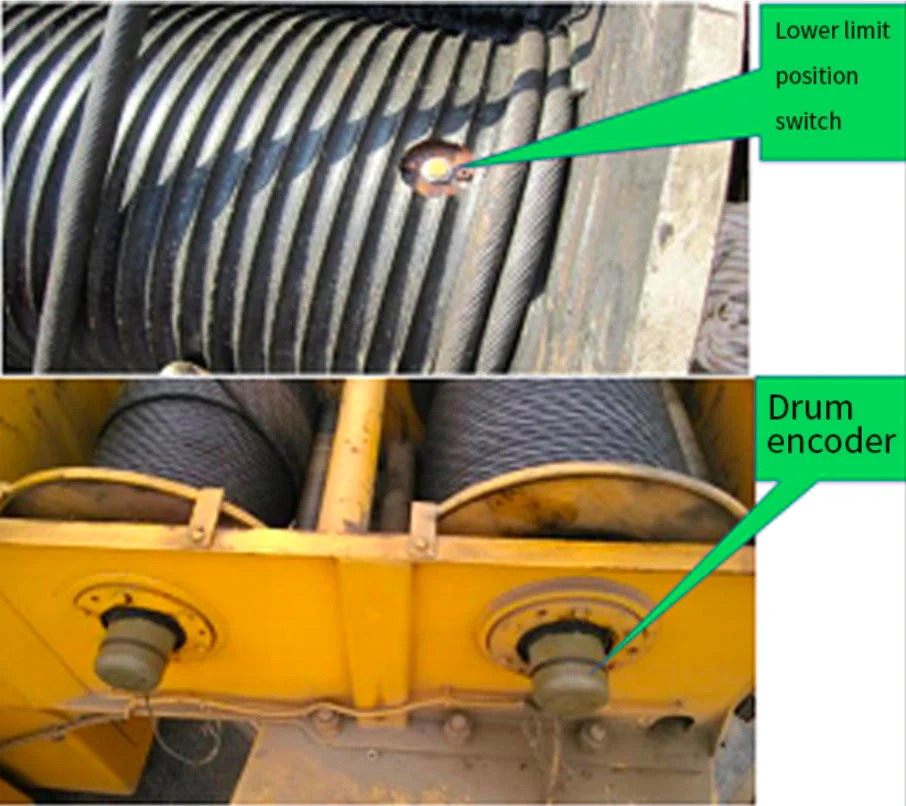
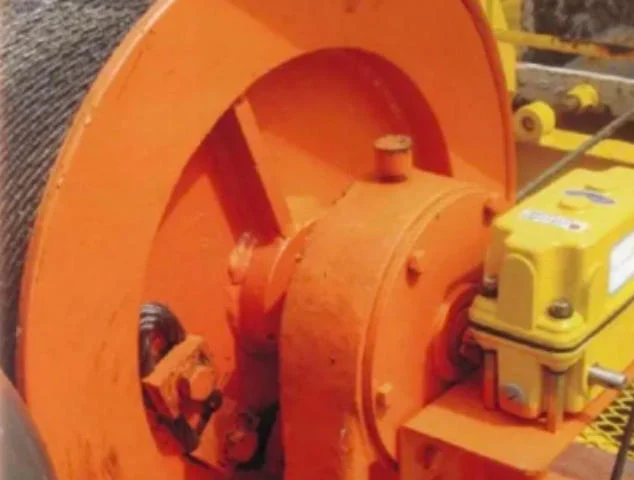
Limit switches, also called travel limiters, prevent crane mechanisms from moving beyond their safe operating range.
Typical limit switches include:
- Hoisting upper limit switch
- Lower limit switch
- Travel limit switch for trolley and bridge movement
When a moving component reaches its predefined limit, the switch cuts off power and stops the motion, preventing mechanical damage or accidents.
6. Interlock Protection Systems
Interlock protection prevents crane mechanisms from operating under unsafe conditions.
For example:
If the cab access door is open, the crane cannot start.
If maintenance personnel access the bridge walkway, trolley movement is disabled.
These safety interlocks protect workers during maintenance and inspection operations.
7. Zero Position Protection
Zero position protection ensures that all control handles return to the neutral position before the crane starts.
If any control lever remains active when power is restored, the system prevents the crane from starting. This feature avoids unexpected movement when the power supply resumes after an outage.
8. Emergency Stop Switch
Every crane must include an emergency stop switch located near the operator.
When activated, this switch immediately disconnects the crane’s main power supply and stops all operations. Emergency stop systems allow operators to quickly react during dangerous situations.
9. Anti-Sway or Skewing Detection System
Large gantry cranes and container cranes may experience structural skewing when the legs move at different speeds.
Skew detection devices monitor alignment and automatically adjust motion to maintain synchronization.
10. Radius Indicator
Boom cranes use radius indicators to display the current working radius of the hook.
This information helps operators maintain safe lifting conditions and avoid exceeding rated lifting capacity.
11. Level Indicator
Mobile cranes often include level indicators to monitor machine inclination.
If the crane tilts beyond safe limits, operators can adjust outriggers or reposition the crane before lifting operations begin.
12. Boom Anti-Backstop Device
Boom cranes equipped with flexible luffing systems require anti-backstop devices to prevent the boom from tilting backward if the luffing mechanism fails.
This safety system prevents structural damage and potential accidents.
13. Torque Limiting Device
Torque limiting devices protect crane rotation systems by preventing excessive torque loads.
If rotational resistance exceeds the allowable limit, the system disconnects power and stops the slewing motion.
14. Wind Speed Alarm
Outdoor cranes frequently use wind speed sensors to monitor environmental conditions.
When wind speed exceeds a predefined limit, the alarm system warns operators and displays the real-time wind level.
15. Outrigger Locking Device
Mobile cranes rely on outriggers for stability during lifting operations.
Outrigger locking devices ensure that the support legs remain securely extended during lifting and remain locked during crane transportation.
16. Slewing Lock Device
When a mobile crane travels on public roads, the slewing lock device secures the rotating upper structure and prevents unintended rotation.
17. Anti-Derailment Hook
Some single-girder cranes use anti-derailment safety hooks to prevent trolley tipping during operation.
18. Maintenance Cage
Maintenance cages allow technicians to safely inspect overhead electrical lines or crane structures at height.
These cages must meet the same reliability standards as the operator cabin.
19. Rail Sweepers and End Stops
Rail sweepers remove obstacles from the crane track to ensure safe movement.
At the end of the track, end stops work together with buffers to prevent the crane from leaving the rails.
20. Conductor Bar Protection Plate
Crane conductor systems carry electrical power along the runway.
Protective plates prevent accidental contact with energized conductor bars and protect the hoisting rope from touching the power line.
21. Mechanical Guards
All exposed moving parts must include protective covers, including:
- Open gears
- Couplings
- Shafts
- Chains and belts
These guards prevent accidental contact with rotating components.
22. Reverse Travel Alarm
Mobile cranes often include reverse alarms that activate sound and flashing lights when the machine moves backward.
This warning system alerts nearby workers and reduces the risk of accidents.
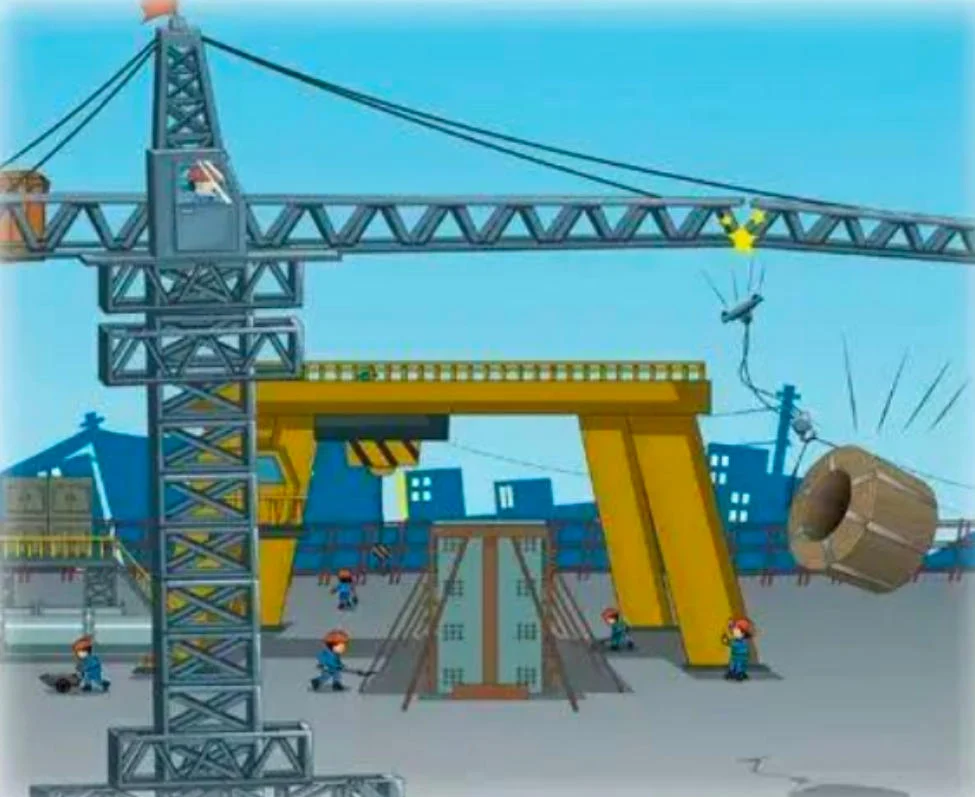
Why Crane Safety Components Matter
Each crane safety component performs a specific protective function. However, they operate as part of an integrated safety system.
Properly installed and maintained safety devices help operators:
- Prevent overload accidents
- Avoid collisions and derailments
- Protect maintenance personnel
- Improve operational reliability
- Comply with international safety standards
Therefore, regular inspection and testing of crane safety systems are essential for safe lifting operations.
Conclusion
Modern cranes rely on multiple crane safety components to ensure safe and reliable lifting operations. From overload limiters and limit switches to wind protection systems and emergency stop devices, each component plays a critical role in preventing accidents.
Understanding the complete crane safety components list helps operators, engineers, and maintenance teams maintain safe working environments and improve crane system reliability.
Recommended Crane Safety Components Supplier
Ensuring crane safety requires reliable and high-quality components. From overload limiters to limit switches and safety monitoring devices, every component plays a critical role in protecting both operators and equipment.
Hanko specializes in manufacturing and supplying a wide range of crane components, including:
Our engineering team provides professional support to help you select the right components for your lifting systems.
👉 Contact Hanko today to get reliable crane parts for your project.
Related Crane Component Guides
- What Is a Crane Drum and How Does It Work
- Wire Rope in Crane Systems
- What Is a Crane Sheave
- Types of Crane Hooks
- Crane Wheel Assembly Guide
FAQ
What are crane safety components?
Crane safety components are protective devices installed on cranes to prevent accidents such as overload, collisions, equipment failure, and operator injury.
What is the most important crane safety device?
The overload limiter is one of the most critical safety devices because it prevents cranes from lifting loads beyond their rated capacity.
Why are limit switches important in cranes?
Limit switches stop crane movement when a mechanism reaches its safe operating limit, preventing structural damage and mechanical failure.
Do outdoor cranes require additional safety devices?
Yes. Outdoor cranes typically require wind protection systems such as rail clamps, anchors, and wind speed alarms.
How often should crane safety systems be inspected?
Crane safety components should be inspected regularly according to operational standards and maintenance schedules to ensure reliable performance.
 English
  Korean
  Russian
  Spanish
  Malay
Malay