Electric Hoist vs Wire Rope Hoist: Complete Industrial Selection Guide
What is the difference between electric hoist and wire rope hoist?
Electric hoist is a general lifting device category, while wire rope hoist is one type using steel wire rope and drum system. Wire rope hoists are better for heavy-duty lifting and long lifting height, while chain hoists offer higher precision and compact structure for limited spaces.
1. Overview: Electric Hoist vs Wire Rope Hoist
In industrial lifting systems, the term electric hoist refers to a general category of powered lifting equipment. It mainly includes:
- Electric chain hoist
- Wire rope electric hoist
Among them, the wire rope hoist is the most widely used heavy-duty configuration.
To clarify:
👉 Electric hoist is the umbrella category
👉 Wire rope hoist is one technical subtype
Understanding this distinction is essential for correct equipment selection, safety, and lifecycle cost control.
2. Core Structural Difference
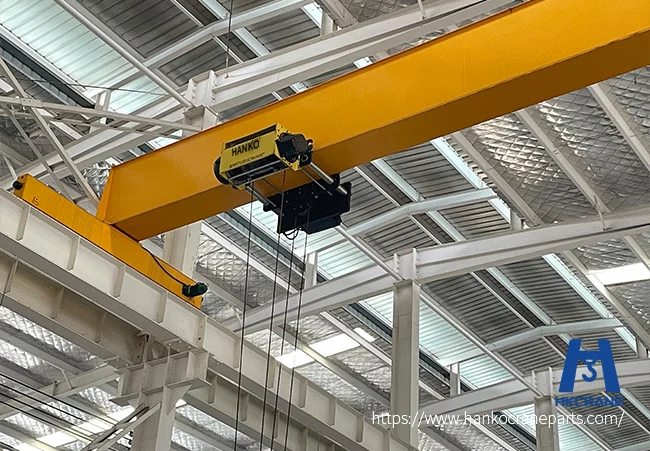
2.1 Wire Rope Hoist Structure
A wire rope hoist uses:
- Steel wire rope as lifting medium
- Motor-driven drum system
- Hook block + pulley assembly
This structure provides:
- High load capacity
- Long lifting height
- Stable performance under heavy-duty cycles
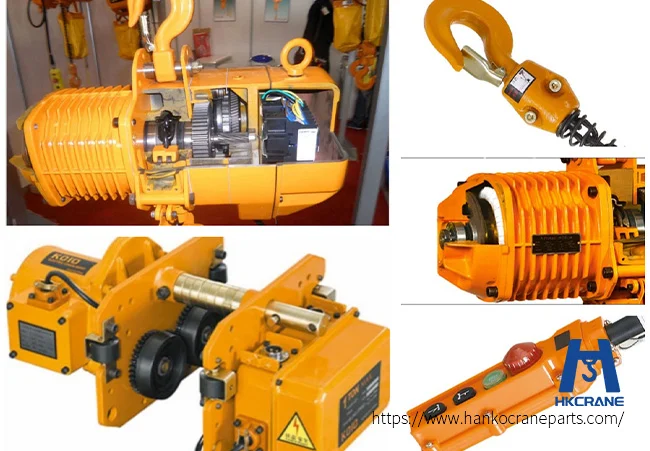
2.2 Electric Chain Hoist Structure
A chain hoist uses:
- Alloy load chain
- Chain wheel drive system
- Compact gear transmission
This results in:
- Smaller footprint
- Lower headroom requirement
- Higher positioning precision
3. Performance Comparison (Engineering View)
3.1 Load Capacity
- Wire rope hoist: 5T – 100T+
- Chain hoist: 5T – 30T (typical industrial use)
👉 Conclusion: Wire rope hoist dominates heavy-duty applications.
3.2 Installation Space
- Chain hoist: compact, low headroom design
- Wire rope hoist: requires larger vertical installation space
👉 In retrofit workshops, chain hoists are often preferred.
3.3 Lifting Height
- Wire rope hoist: up to 30m–100m+
- Chain hoist: typically 3m–12m standard range
👉 For high-rise lifting, wire rope is mandatory.
3.4 Positioning Accuracy
- Chain hoist: high precision (vertical lift, minimal drift)
- Wire rope hoist: slight horizontal drift due to rope winding geometry
3.5 Maintenance Requirements
Wire rope hoist requires:
- Rope lubrication
- Drum alignment inspection
- Anti-rotation monitoring
Chain hoist requires:
- Chain lubrication
- Hook safety latch inspection
4. Application Scenarios
Use Electric Chain Hoist When:
- Assembly line production
- Light fabrication workshops
- Low headroom environments
- Frequent start-stop operations
- Precision positioning required
Use Wire Rope Hoist When:
- Steel mills & metallurgy plants
- Ports & logistics yards
- Heavy machinery manufacturing
- Large-span overhead cranes
- High lifting height operations
5. Engineering Insight
As noted by a senior lifting systems engineer:
“The biggest mistake in hoist selection is treating all electric hoists as interchangeable. In reality, the drum system of wire rope hoists defines their structural limits, while chain hoists are optimized for precision and compact installation.”
This highlights a key principle:
👉 Selection is not based on price, but on load geometry and duty cycle.
6. Selection Framework
Use this simplified logic:
Step 1: Load Capacity
- ≤ 5T → Chain hoist preferred
- ≥ 10T → Wire rope hoist required
Step 2: Installation Height
- Low ceiling → Chain hoist
- Standard/high ceiling → Wire rope hoist
Step 3: Duty Level
- Light/medium duty → Chain hoist
- Heavy/continuous duty → Wire rope hoist
Step 4: Environment
- Clean workshop → Chain hoist
- Harsh/heavy industry → Wire rope hoist
7. Common Mistakes in Hoist Selection
Avoid the following:
- Choosing wire rope hoist for low headroom workshop
- Using chain hoist beyond rated tonnage
- Ignoring duty class (M3–M8 mismatch)
- Neglecting installation clearance for drum length
8. To improve topical authority, link this page with:
- Crane Wheel Selection Guide
- Crane Hook Selection Guide
- Crane Brake Maintenance Guide
- Crane Gearbox Problems & Solutions
- Wire Rope Drum Design for Overhead Cranes
- Crane Coupling Types Explained
9. FAQ Section
Q1: Is electric hoist the same as wire rope hoist?
No. Electric hoist is a category, while wire rope hoist is a subtype using steel wire rope and drum.
Q2: Which is better for heavy lifting?
Wire rope hoists are better for heavy-duty and high lifting height applications.
Q3: Can chain hoist replace wire rope hoist?
Only in light-to-medium duty cases. It cannot replace heavy industrial wire rope hoists.
Q4: Which hoist needs more maintenance?
Wire rope hoists require more mechanical inspection due to drum and rope system complexity.
Q5: What is the safest hoist type?
Both are safe when correctly selected and maintained according to duty class.
10.Need Help Selecting the Right Hoist System?
Incorrect hoist selection can lead to:
- Premature wear
- Safety risks
- Production downtime
- Higher maintenance cost
At Hanko, we provide industrial-grade lifting solutions tailored to your working class, load profile, and installation environment.
What we offer:
- Engineering selection support
- Custom hoist configuration
- OEM/ODM industrial crane components
- Technical compatibility review
👉 Contact Hanko engineering team today for a free hoist selection evaluation and quotation.

 English
  Korean
  Russian
  Spanish
  Malay
Malay  Afrikaans
  Bulgarian
  French
  Bengali
  Italian
  Hungarian
  Vietnamese
  Thai
Thai  Indonesian
  German
  Arabic
  Japanese