
Selecting the right lifting equipment directly affects productivity, safety, and maintenance costs. When choosing a hoist, many buyers compare chain hoist vs wire rope hoist because both systems serve different industrial needs.
Although both are widely used in material handling, they differ significantly in structure, performance, lifting capacity, and application scenarios.
This guide explains the advantages and disadvantages of each type, helping engineers, plant managers, and procurement teams make an informed decision.
Featured Snippet: What Is the Difference Between a Chain Hoist and a Wire Rope Hoist?
The primary difference between a chain hoist and a wire rope hoist lies in the lifting medium. A chain hoist uses a load chain and chain wheel system, making it compact and suitable for precise, light-to-medium lifting applications. A wire rope hoist uses steel wire rope wound on a drum, offering higher lifting speeds, larger capacities, and greater lifting heights for heavy-duty industrial operations.
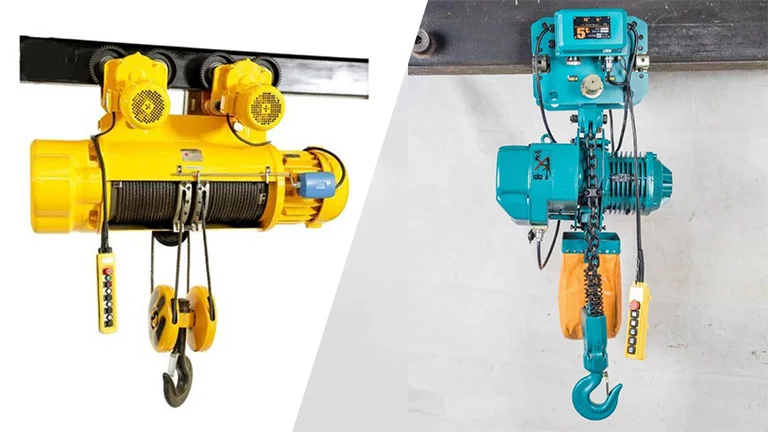
Understanding Chain Hoists and Wire Rope Hoists
What Is a Chain Hoist?
A chain hoist lifts loads using a hardened alloy steel chain driven by a chain wheel mechanism. Chain hoists can be manual or electric and are commonly used in workshops, assembly lines, warehouses, and maintenance operations.
What Is a Wire Rope Hoist?
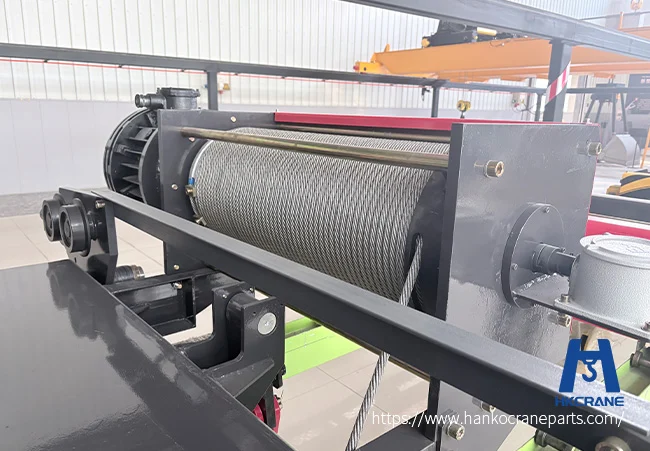
A wire rope hoist lifts loads using steel wire rope wound around a drum. These hoists typically deliver higher lifting capacities and faster lifting speeds, making them ideal for heavy industrial applications.
Chain Hoist vs Wire Rope Hoist: Key Differences
| Feature | Chain Hoist | Wire Rope Hoist |
|---|---|---|
| Lifting Medium | Alloy load chain | Steel wire rope |
| Overall Size | Compact | Larger |
| Weight | Lightweight | Heavier |
| Lifting Capacity | Typically 0.5–10 tons | Typically 0.5–100+ tons |
| Lifting Speed | Slower | Faster |
| Positioning Accuracy | Excellent | Good |
| Maximum Lift Height | Moderate | Very high |
| Resistance to Side Pull | Better | Limited |
| Maintenance Cost | Lower | Higher |
| Suitable Environment | Harsh environments | Heavy-duty applications |
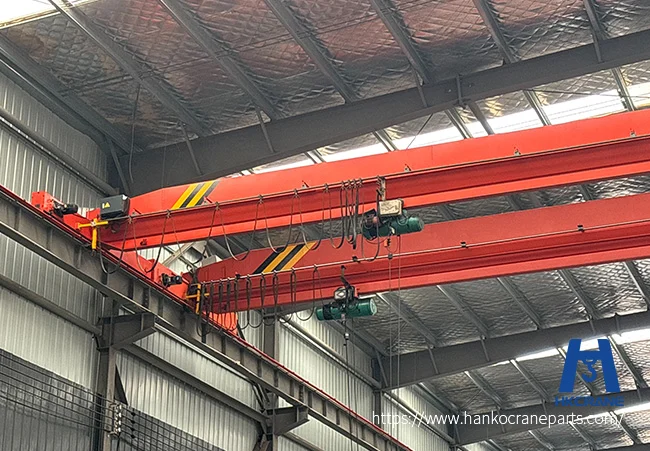
1. Size and Space Requirements
Chain Hoist Advantages
Chain hoists feature a compact design because they use chain wheels instead of drums. Consequently, they require less installation space and lower headroom.
For facilities with limited overhead clearance, chain hoists often provide the best solution.
Wire Rope Hoist Limitations
Wire rope hoists require a drum large enough to accommodate multiple rope layers. As lifting height increases, the drum becomes longer, resulting in a larger overall footprint.
Therefore, wire rope hoists generally require more installation space.
Best for: Low-headroom workshops and confined spaces → Chain Hoist.
2. Lifting Height and Travel Distance
Wire rope hoists can achieve very high lifting heights while maintaining stable operation under heavy loads.
However, increasing lifting height often increases equipment size.
In contrast, chain hoists usually offer greater effective lifting height under the same rail conditions because of their compact construction.
For long travel distances and heavy-duty lifting, wire rope hoists remain the preferred option.
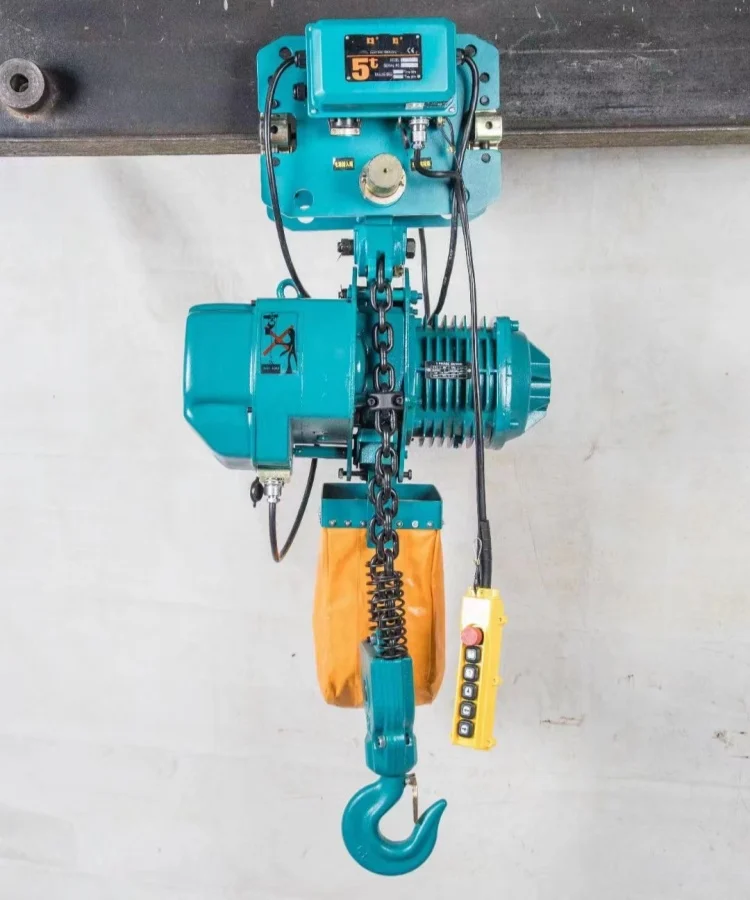
3. Positioning Accuracy
Precise load positioning is essential in industries such as automotive assembly, electronics manufacturing, and precision equipment installation.
Chain Hoist
The hook moves vertically along the chain path with minimal horizontal deviation. As a result, chain hoists deliver excellent positioning accuracy.
Wire Rope Hoist
Because the rope winds across the drum, the hook may experience slight horizontal movement during lifting, especially at greater lifting heights.
Best for precision lifting: Chain Hoist.
According to senior lifting engineer David Morgan, “For assembly operations requiring millimeter-level positioning, electric chain hoists usually provide better load control than traditional wire rope systems.”
4. Resistance to Side Pull
Side pulling is one of the most common causes of hoist damage.
Chain Hoist
Most chain hoists use an articulated suspension design. Therefore, the hoist can swing slightly under side loads, reducing stress on internal components.
Wire Rope Hoist
Wire rope hoists are generally rigidly connected to the trolley. Even slight side pulling can damage the rope guide or cause rope derailment.
Operators should maintain side pulling angles within the manufacturer’s specified limits, typically within ±3.5°.
Better side pull tolerance: Chain Hoist.
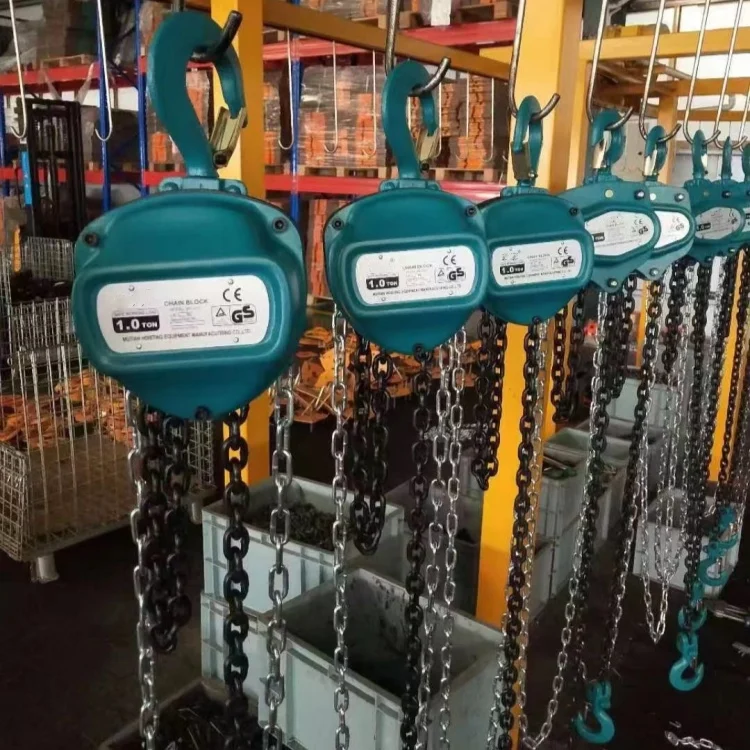
5. Reliability and Service Life
Chain Hoist Advantages
- Lower risk of chain derailment
- No rope bird-nesting issues
- Better resistance to heat, moisture, and corrosive environments
- Lower replacement cost for wear parts
As a result, chain hoists often deliver longer service life in harsh environments.
Wire Rope Hoist Challenges
Wire ropes require regular inspection for:
- Broken wires
- Corrosion
- Wear
- Lubrication condition
Additionally, wire ropes may become tangled or improperly wound under light-load conditions.
6. Lifting Speed and Capacity
Chain Hoist
Typical capacities range from 0.5 to 10 tons. Lifting speeds are relatively low, making them suitable for frequent handling of lighter loads.
Wire Rope Hoist
Wire rope hoists can easily handle 10, 20, 50, or even 100 tons and above while maintaining higher lifting speeds.
Industries requiring heavy-duty, continuous operation usually select wire rope hoists.
Typical applications include:
- Steel mills
- Heavy machinery manufacturing
- Shipyards
- Power plants
- Large fabrication workshops
7. Purchase and Maintenance Costs
Chain Hoist
Pros:
- Lower initial investment
- Lower maintenance cost
- Simple maintenance procedures
Wire Rope Hoist
Pros:
- Better value for heavy-duty operations
- Higher productivity
Cons:
- Higher purchase cost
- More frequent inspections
- Higher spare parts cost
Pros and Cons Summary
Chain Hoist Pros
✔ Compact size
✔ Excellent positioning accuracy
✔ Better resistance to side pull
✔ Lower maintenance costs
✔ Suitable for harsh environments
✔ Longer service life in light-duty applications
Chain Hoist Cons
✘ Lower lifting speed
✘ Limited lifting capacity
✘ Not ideal for very high lifts
Wire Rope Hoist Pros
✔ Higher lifting capacity
✔ Faster lifting speed
✔ Suitable for long lifting heights
✔ Excellent for heavy-duty applications
Wire Rope Hoist Cons
✘ Larger installation space required
✘ More sensitive to side pulling
✘ Higher maintenance costs
✘ Requires regular rope inspection
How to Choose Between a Chain Hoist and a Wire Rope Hoist
Choose a Chain Hoist if you need:
- Limited installation space
- High positioning accuracy
- Frequent lifting cycles
- Light to medium loads
- Lower maintenance costs
Choose a Wire Rope Hoist if you need:
- Heavy lifting capacity
- High lifting speeds
- Long lifting heights
- Continuous industrial operation
- Heavy-duty production environments
At Hanko, our engineering team evaluates your load capacity, lifting height, duty cycle, and installation conditions to recommend the most suitable hoisting solution.
FAQ
Which is better, a chain hoist or a wire rope hoist?
Neither is universally better. Chain hoists excel in compact spaces and precise positioning, while wire rope hoists are better for heavy loads and high lifting heights.
Are chain hoists safer than wire rope hoists?
Both are safe when properly selected, installed, and maintained. The key is matching the hoist type to the application.
What is the maximum capacity of a chain hoist?
Most chain hoists operate between 0.5 and 10 tons, although special models may exceed this range.
Why do wire rope hoists require more maintenance?
Wire ropes need regular inspection, lubrication, and replacement due to wear, broken wires, and possible rope misalignment.
Can a chain hoist be used outdoors?
Yes. Chain hoists generally perform well in outdoor, humid, and corrosive environments when properly protected and maintained.
Related Articles
- Electric Hoist vs Wire Rope Hoist
- How to Choose the Right Crane Hook
- Wire Rope Drum Design for Overhead Cranes
- How to Inspect Crane Wheels Properly
- Crane Gearbox Common Problems and Solutions
- Crane Brake Failure Analysis and Prevention
Need Help Selecting the Right Hoist?
Choosing between a chain hoist and a wire rope hoist depends on many factors, including load capacity, lifting height, duty cycle, available space, and operating environment.
Hanko provides complete lifting solutions, including electric chain hoists, wire rope hoists, crane components, and customized engineering support.
👉 Contact Hanko today to receive professional selection advice, technical consultation, and a competitive quotation for your next lifting project.

 English
  Korean
  Russian
  Spanish
  Malay
Malay  Afrikaans
  Bulgarian
  French
  Bengali
  Italian
  Hungarian
  Vietnamese
  Thai
Thai  Indonesian
  German
  Arabic
  Japanese