
Introduction
Buyers and engineers often confuse a crane sheave with a pulley. Using the wrong one leads to poor performance, rope damage, and safety risks.
Both parts guide a rope and change the direction of force. But they belong to different worlds: a sheave is built for heavy-duty lifting on cranes, hoists, and winches, while a pulley serves light-duty, general-purpose uses.
In this guide, you will see how the two differ in design standards, material strength, structure, and application scope — so you can choose the right part with confidence.
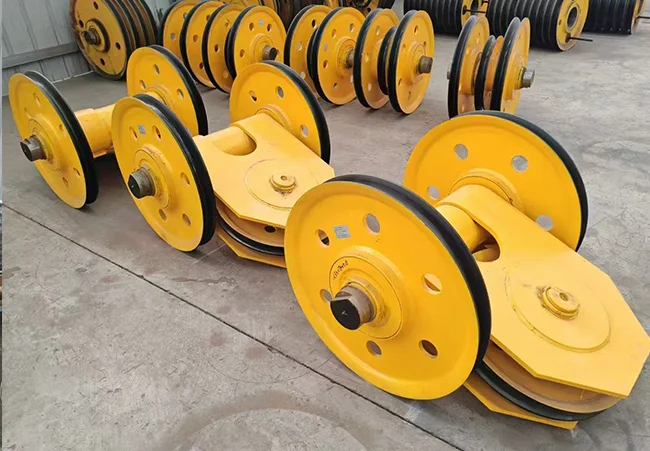
What Is a Crane Sheave?
A crane sheave is a specially designed pulley used in lifting systems such as cranes, hoists, and winches. Unlike a standard pulley, it is built to guide wire rope under load while keeping stress within safe limits. Both are simple machines at heart — a wheel with a groove — but a sheave takes the concept into heavy-duty territory.
Key Functions:
- Guide wire rope movement
- Reduce friction and wear
- Support heavy loads
- Keep lifting smooth and efficient
Related reading:
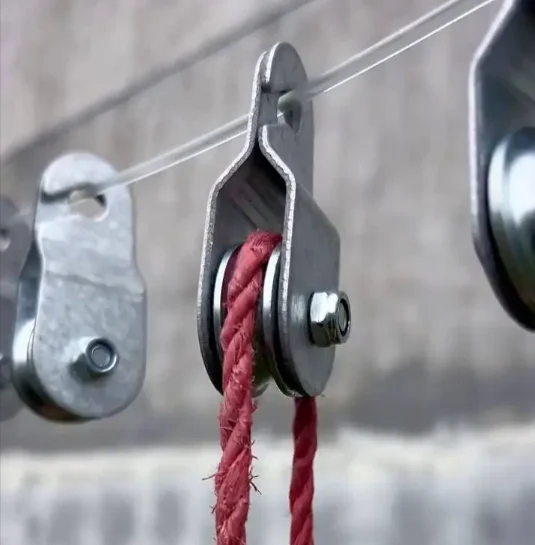
What Is a Pulley?
A pulley is a general mechanical component used to change the direction of force or provide mechanical advantage. It is one of the classic simple machines, rarely held to any lifting-industry standard, and serves a much broader range of everyday uses.
Common Uses:
- Curtain systems
- Garage doors
- Light lifting tools
- Small machinery
Crane Sheave vs Pulley: Key Differences
The table below puts the two components side by side, followed by a closer look at each factor. These five factors separate industrial lifting hardware from general-purpose parts.
| Factor | Crane Sheave | Pulley |
| Load Capacity | High | Low |
| مادة | Alloy / cast steel | Plastic / cast iron |
| Standards | Strict (lifting standards) | Flexible |
| Structure | Complex (with bearings) | Simple |
| Application | Industrial lifting | General use |
1. Design Standards and Safety Requirements
Rope sheaves in lifting duty follow strict standards such as GB/T lifting specifications. They have controlled tolerances and defined safety factors, and they must meet lifting safety regulations.
Pulleys follow no strict universal standard. Design is flexible, and safety requirements are much lower.
Conclusion: Sheaves are safety-critical components.
2. Material and Strength
Sheaves for lifting duty are machined from cast steel, alloy steel, or ductile iron. These materials handle high tensile strength and shock loads.
Pulleys are commonly made from cast iron, plastic, or even wood — lower strength, suitable only for light-duty use.
3. Structure and Engineering Complexity
A lifting sheave is a precision-machined grooved wheel. It carries ball or roller bearings, dust covers, and spacers, and its rope groove is machined to match the wire rope diameter.
A standard pulley keeps a simple structure. It may not include bearings, and its groove (or flat surface) is not engineered for wire rope.
4. Load Capacity and Size
Sheaves deliver high load capacity. Their diameter is typically at least 20 times the wire rope diameter, and they are designed for continuous operation.
Pulleys offer lower load capacity, with no strict diameter ratio, and suit occasional use.
5. Application Scenarios
You will find rope sheaves in overhead cranes, gantry cranes, hoisting systems, and winches — wherever heavy loads move every day.
Pulleys serve household systems, light mechanical transmission, and DIY lifting tools.
How to Choose Between the Two
To select the right component, start from your load and duty. Here is a quick checklist:
Choose a Sheave if:
- You are handling heavy loads
- Safety is critical
- You use wire ropes
- The system runs frequently
Choose a Pulley if:
- Load is light
- Usage is occasional
- Cost is a priority
- Safety risk is minimal
Common Selection Mistakes
Some users install general-purpose pulleys in lifting systems. The results are predictable: rapid rope wear, premature failure, and safety hazards.
Best practice: Always use crane-grade sheaves for lifting equipment.
Conclusion
Both components guide a rope, but they are built for different jobs.
Sheaves are engineered for safety, durability, and heavy loads. Pulleys are designed for simplicity and light-duty tasks.
Choosing the correct part gives you safe operation, longer service life, and efficient lifting.
Related Articles
Get Expert Sheave Selection Support
Looking for high-performance crane sheaves? Hanko supplies single and multi sheave assemblies in a wide range of diameters, in alloy steel and cast steel, with precision machining and heat treatment.
Hanko supports crane operators and maintenance teams worldwide with fast global delivery and responsive engineering support.
Contact Hanko today with your rope diameter and load data for a professional selection solution.
Frequently Asked Questions
Is a sheave the same as a pulley?
No. A sheave is a heavy-duty pulley designed for lifting applications, built to strict safety standards. A standard pulley is a general-purpose part for light-duty uses.
Can I use a pulley instead of a sheave?
No. Using a standard pulley in a lifting system causes rapid rope wear, premature failure, and safety risks. Always use crane-grade rope sheaves for lifting.
Why are rope sheaves larger in diameter?
They must meet rope diameter ratios — typically at least 20× the wire rope diameter. This reduces bending stress, limits wear, and extends rope life.
What materials are used for rope sheaves?
Common materials include cast steel, ductile iron, and alloy steel. These handle high tensile strength and shock loads in heavy-duty lifting.
What is a multi sheave block?
A multi sheave block houses several sheaves in one housing. It spreads the load across multiple grooved wheels, multiplies mechanical advantage, and keeps rope tension low in high-capacity hoisting.
Do rope sheaves require maintenance?
Yes. Inspect grooves, bearings, and alignment regularly. Replace any sheave with a worn or cracked groove before it damages the wire rope.
What is the main advantage over standard pulleys?
High load capacity, durability, and safety for heavy-duty lifting operations — plus a machined groove that protects your wire rope.

 English
  Korean
  Russian
  Spanish
  Malay
Malay  Afrikaans
  Bulgarian
  French
  Bengali
  Italian
  Hungarian
  Vietnamese
  Thai
Thai  Indonesian
  German
  Arabic
  Japanese