In kraanbedrywighede fokus ingenieurs dikwels op motorkrag, hefvermoë en draadtouspesifikasies. Hulle kyk egter dikwels oor 'n deurslaggewende komponent – die kraankatrolblok en sy interne kraanskywe. In werklikheid ondersteun die rasionele ontwerp en stabiele werkverrigting van die kraankatrolstelsel direk veilige, beheerbare en doeltreffende hefwerk onder hoë lastoestande.
Uitgeligte brokkie: Crane sheaves are grooved wheels that guide and support the wire rope. The pulley block distributes load across rope strands, creating mechanical advantage. Groove geometry, material strength, and bearing quality determine sheave performance and rope life.
Vanuit 'n ingenieurspraktykperspektief ontstaan baie betroubaarheidsprobleme in hefstelsels nie van motors of beheerstelsels nie. Inteendeel, dit spruit uit slytasie, onbehoorlike keuse of onvoldoende vervaardigingspresisie van kraankatrolle, veral die kraanskywe.
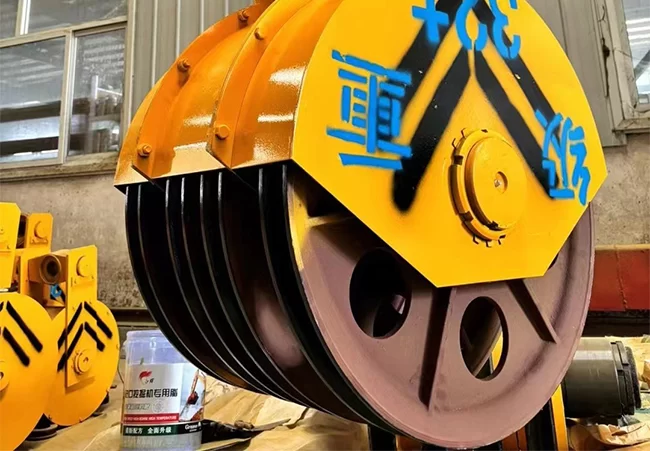
Understanding what a sheave is on a crane matters. Selecting high-quality pulley blocks directly affects operational safety, lifting efficiency, and long-term operating cost.
What Is a Crane Pulley Block?
A kraan katrolblok typically consists of one or more sheaves, bearings, pulley shafts, and supporting structures. Together with steel wire ropes, hooks, and drums, it forms a complete crane pulley system. By changing the direction of force and the load path of the wire rope, the pulley block enables load distribution and mechanical advantage.
For users asking what are sheaves on a crane, the answer is simple. A sheave is a grooved wheel that guides and supports the wire rope while transmitting the load. In crane engineering, a kraankatrol funksioneer as 'n kritieke lasdraende komponent eerder as 'n eenvoudige geleidingselement.
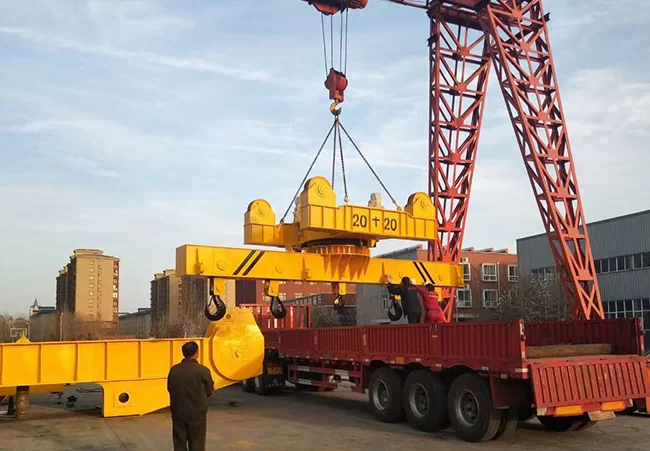
By Hanko Heavy Industry behandel ingenieurs nie kraanskywe as hulponderdele nie. Elke katrol op 'n kraan is ontwerp as 'n sleutelkragdraende eenheid. Ingenieurs pas sistematies die katrolgrootte en -konfigurasie aan op grond van hefkapasiteit, inskoorverhouding en bedryfstoestande. Hierdie geïntegreerde ontwerpbenadering verseker stabiele katrolblokprestasie tydens langtermynwerking.
Hoe bereik 'n katrolblok "kragbesparing en -versterking"?
Die kernfunksie van 'n kraan katrolblok lê in die skep van meganiese voordeel. Deur die las oor verskeie draadtoustringe deur verskeie skywe te versprei, verminder die kraankatrolstelsel die spanning op elke tou. Gevolglik bereik die kraan hoër hefvermoë met beheerde kraginvoer.
In swaardienskrane stel algemene invoerstelsels soos 4×, 6× of 8× hoër werkverrigtingsvereistes aan kraangerwe. Hierdie vereistes behels groefgeometrie, materiaalsterkte en laerprestasie. Gevolglik word vrae soos hoe om die kraankatrolgrootte te bepaal, krities tydens stelselontwerp.
Om aan hierdie eise te voldoen, gebruik Hanko Heavy Industry hoësterkte-legeringstaalkraanskywe en pas presiese bewerkingsprosesse toe. Ingenieurs pas die toudeursnee noukeurig by groefprofiele om plaaslike spanningskonsentrasie te verminder en die algehele lasverspreiding te verbeter.
Die impak van katrolblokke op die veiligheid van hyskrane
Safety remains the highest priority in all lifting operations. High-quality crane pulley blocks distribute loads evenly across multiple sheaves. This balanced load distribution reduces abnormal wire rope wear and lowers the risk of sudden rope failure.
Moreover, the operational stability of the crane pulley significantly influences dynamic load control during lifting and braking. During the design stage, Hanko pulley blocks account for impact loads, braking forces, and rope movement. Optimized groove profiles and appropriate bearing selection reduce load fluctuation. In some configurations, crane equalizer sheaves further enhance overall system safety.
Die impak van katrolblokke op doeltreffendheid en toerusting se lewensduur
Die prestasie van die kraankatrolstelsel beïnvloed nie net veiligheid nie, maar ook operasionele doeltreffendheid. Lae-wrywingslaers en presisie-bewerkte katrolle verminder energieverlies, wat motors en redukseurs toelaat om binne optimale lasreekse te werk.
From a long-term perspective, high-quality crane sheaves significantly extend the service life of wire ropes, drums, and transmission systems. For bridge cranes and port equipment operating at high duty cycles, this translates directly into lower maintenance costs and higher equipment availability.
Gedifferensieerde vereistes vir katrolblokke in verskillende toepassingscenario's
Different lifting applications place different demands on crane pulley blocks. Bridge cranes emphasize durability and low maintenance. Gantry cranes and port cranes require higher load capacity and fatigue resistance. These machines often use crane equalizer sheaves to balance loads across multiple rope lines.
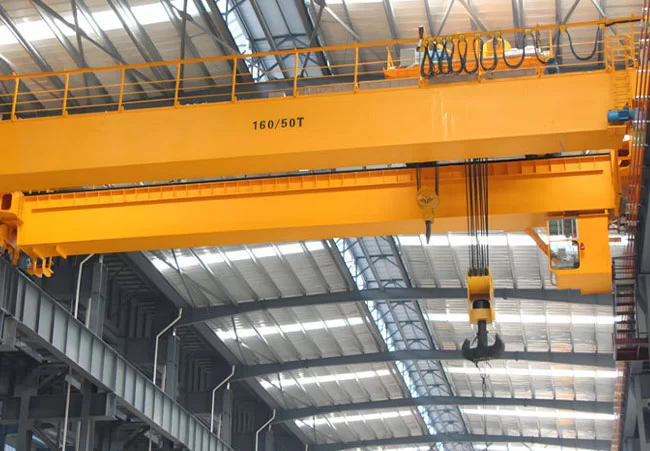
Hanko Heavy Industry provides customized crane pulley and sheave solutions for metallurgical, high-temperature, heavy-load, and continuous-duty conditions. Material options, bearing types, and sealing structures are matched to each application’s requirements.
Belangrike eienskappe van hoëgehalte-katrolblokke
'n Betroubare kraankatrolblok vereis hoësterkte materiale, presies gegrootte tougroewe, stabiele laerstelsels en sterk oppervlakslytasieweerstand. Ingenieurs moet duidelik verstaan hoe om die kraankatrolgrootte te bepaal om voortydige draadtou-slytasie en ongelyke lasverspreiding te voorkom.
Tydens Hanko se vervaardigingsproses inspekteer tegnici elke kraankatrolblok en sy kraanskywe vir dimensionele akkuraatheid, materiaalkwaliteit en operasionele prestasie. Hierdie prosedures verseker langtermyn betroubaarheid en stabiele werking onder werklike werksomstandighede.
Die belangrikheid van vervaardiging en gehaltebeheer
Die werkverrigting van 'n kraankatrol word nie net deur ontwerp beïnvloed nie, maar ook deur vervaardigingspresisie. CNC-bewerkingsakkuraatheid, hittebehandelingskwaliteit en nie-vernietigende toetsstandaarde beïnvloed alles direk die lewensduur van katrolle en katrolblokke.
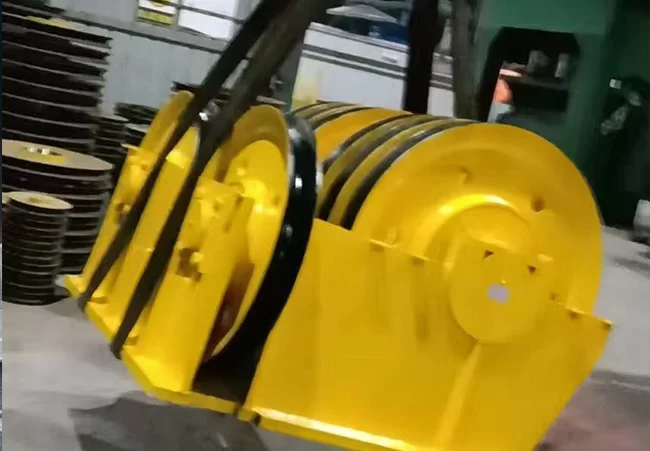
Hanko Heavy Industry strictly follows quality management systems throughout the production of crane pulley blocks. The process runs from raw material inspection to final performance checks. Every product must meet engineering reliability standards.
Algemene probleme en risiko's van verkeerde modelkeuse
Incorrect selection of crane pulley blocks remains one of the most common causes of crane malfunctions. Typical problems include mismatched rope groove dimensions, insufficient bearing capacity, and ignored operating conditions. Each of these errors can significantly increase operational risk.
Professionele tegniese ondersteuning tydens die keuringsfase—veral vir katrolgroottes en katrolkonfigurasie—is noodsaaklik om langtermyn betroubaarheidsprobleme te voorkom.
Gevolgtrekking: Die katrolblok is die fondament van betroubare hysstelsels
The crane pulley block, together with its sheaves, is an irreplaceable core component of any crane hoisting system. It defines not only lifting capacity but also safety, efficiency, and long-term operational reliability.
Through proper design, correct sheave selection, and high-quality manufacturing, a crane pulley system can dramatically enhance equipment performance. Hanko Heavy Industry delivers stable and durable pulley block and sheave solutions for the most demanding working conditions.