
Understanding the Crane Hoist Working Principle
The hoist is the core lifting unit of any crane system. Whether installed on an overhead crane, gantry crane, or jib crane, the hoist performs the vertical lifting and lowering of loads.
To ensure safe and efficient operation, operators and engineers must clearly understand the crane hoist working principle. In this guide, we explain how a crane hoist converts power into controlled vertical motion and how each component contributes to lifting performance.
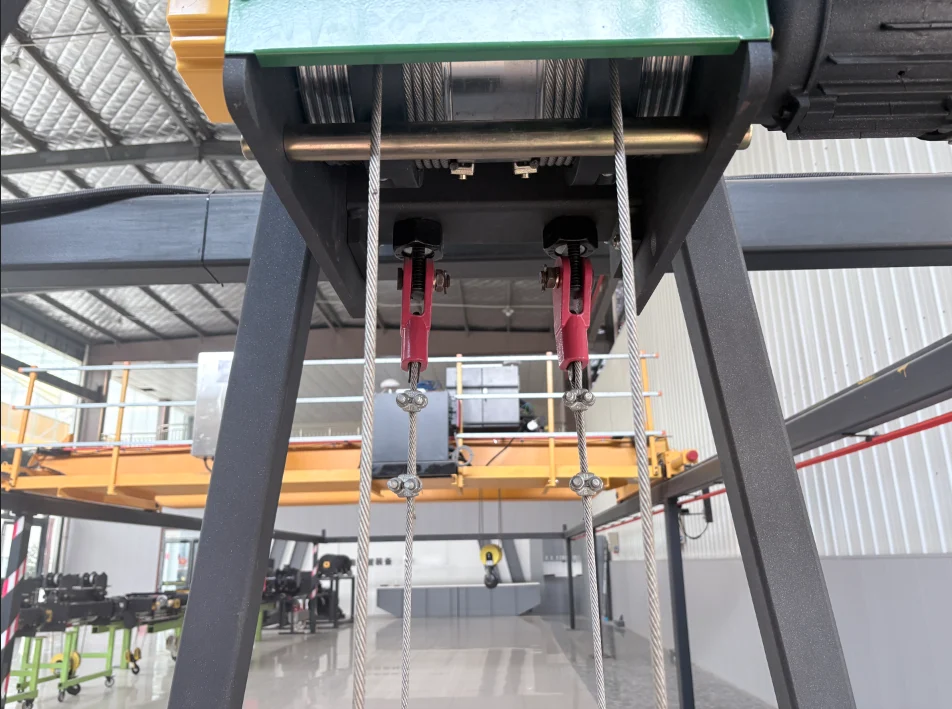
What Is a Crane Hoist?
A crane hoist is the mechanical assembly responsible for lifting and lowering loads. It typically includes:
- Electric motor or hydraulic drive
- Gearbox (reducer)
- Drum or chain wheel
- Wire rope or load chain
- Hook or lifting attachment
- Brake system
- Limit switches
Although the crane structure supports and moves the load horizontally, the hoist directly handles vertical motion. Therefore, it plays the most critical role in load safety.
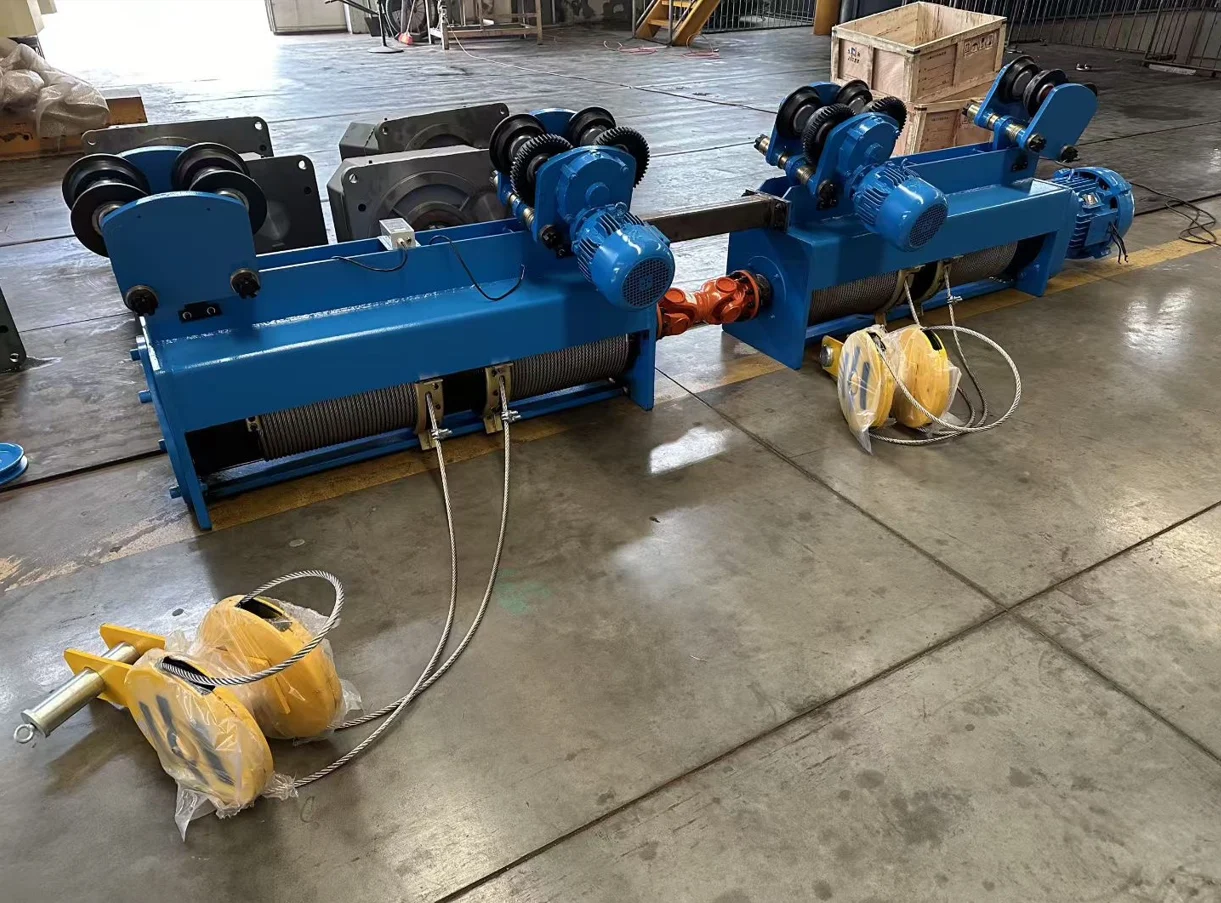
The Crane Hoist Working Principle Explained
The crane hoist working principle is based on power transmission, mechanical conversion, and safety control. The system transforms electrical or hydraulic energy into vertical lifting force through coordinated mechanical components.
Let’s break down the process step by step.
1. Power Generation
First, the hoist receives power from either:
- An electric motor (most common in industrial cranes)
- A hydraulic system (used in certain mobile or heavy-duty cranes)
In electric hoists, the motor converts electrical energy into rotational mechanical energy. In hydraulic hoists, pressurized hydraulic fluid generates linear motion through a hydraulic cylinder.
Because electric power is clean, efficient, and easy to control, most modern overhead cranes use electric hoists.
2. Speed Reduction and Torque Increase
Next, the motor transfers rotational power to a gearbox.
The gearbox reduces high motor speed while increasing torque. This step is essential because lifting heavy loads requires high torque but controlled speed.
Without speed reduction, the motor would rotate too fast and compromise lifting precision and safety.
3. Drum Rotation and Rope Movement
After torque adjustment, the gearbox drives the hoist drum.
The drum rotates and either winds or unwinds the wire rope:
- When the drum rotates forward, the rope winds onto the drum and lifts the load.
- When the drum rotates in reverse, the rope unwinds and lowers the load.
Precision-machined drum grooves guide the wire rope evenly. As a result, they reduce rope wear and improve service life.
In chain hoists, a similar process occurs. However, instead of a drum and wire rope, the system uses a chain wheel and load chain.
4. Load Movement Through the Pulley System
In many hoist systems, engineers integrate a pulley (sheave) block.
The pulley system changes rope direction and increases mechanical advantage. Consequently, the hoist can lift heavier loads with reduced motor effort.
By adjusting the number of rope falls, manufacturers can design hoists for different lifting capacities.
5. Braking and Safety Control
Safety is fundamental in the crane hoist working principle.
When the operator stops the motor, the brake system automatically engages. The brake prevents unintended load descent and holds the load securely in position.
Additionally, hoists include:
- Upper and lower limit switches
- Overload protection devices
- Emergency stop systems
These components prevent over-travel, overloading, and mechanical damage.
Hydraulic Hoist Working Principle (Special Applications)
Although electric hoists dominate industrial cranes, hydraulic hoists operate differently.
In hydraulic systems:
- A hydraulic pump pressurizes hydraulic oil.
- The pressurized fluid enters a hydraulic cylinder.
- The cylinder piston moves upward, lifting the load.
- Controlled oil return lowers the load smoothly.
Hydraulic hoists allow precise speed control and high lifting force, making them suitable for specific heavy-duty applications.
Why Understanding the Crane Hoist Working Principle Matters
Understanding the crane hoist working principle helps operators and maintenance teams:
- Identify abnormal noises or vibration early
- Detect brake or gearbox wear
- Prevent wire rope failures
- Improve inspection efficiency
- Extend equipment lifespan
Moreover, selecting high-quality hoist components significantly reduces downtime and maintenance costs.
Key Components That Affect Hoist Performance
Several hoist components directly influence safety and durability:
- Hoist drum quality and groove precision
- Wire rope strength and fatigue resistance
- Brake reliability
- Gearbox durability
- Sheave alignment
Regular inspection of these parts ensures stable lifting performance.
Conclusion
The crane hoist working principle relies on power generation, torque conversion, drum rotation, mechanical advantage, and safety control.
First, the motor generates rotational power. Next, the gearbox reduces speed and increases torque. Then, the drum winds the wire rope to lift the load. Finally, the braking and safety systems ensure controlled and secure operation.
Because the hoist directly handles the lifting load, it remains the most critical mechanism in any crane system. Therefore, proper design, maintenance, and component selection are essential for long-term operational safety.
FAQ – Crane Hoist Working Principle
1. What is the crane hoist working principle?
The crane hoist working principle is based on power transmission and mechanical conversion. The motor generates rotational energy, the gearbox reduces speed and increases torque, and the drum winds the wire rope to lift or lower the load in a controlled manner.
2. How does a crane hoist lift heavy loads?
A crane hoist lifts heavy loads by increasing torque through a gearbox and using a drum and wire rope system. In addition, pulley blocks multiply mechanical advantage, allowing the hoist to lift greater weight with stable control.
3. What components are essential in a crane hoist system?
Key components include the motor, gearbox, drum, wire rope or chain, hook, brake system, and limit switches. Each part contributes to safe lifting and precise load control.
4. Why is the brake important in the crane hoist working principle?
The brake automatically engages when the motor stops. As a result, it prevents unintended load descent and ensures safe load holding during operation or emergencies.
5. What is the difference between electric and hydraulic hoist working principles?
Electric hoists use a motor and gearbox to drive a drum or chain wheel, while hydraulic hoists rely on pressurized fluid to move a cylinder piston. Although both systems lift vertically, electric hoists are more common in overhead cranes due to efficiency and easier control.

 English
  Korean
  Russian
  Spanish
  Malay
Malay  Afrikaans
  Bulgarian
  French
  Bengali
  Italian
  Hungarian
  Vietnamese
  Thai
Thai  Indonesian
  German
  Arabic
  Japanese