Lifting Gear Inspection and Discard Criteria: Complete Safety Guide for Crane Hooks, Shackles, Chains and Wire Ropes
Lifting operations are critical processes across industries such as construction, heavy manufacturing, offshore engineering, and port logistics. As the direct load-bearing interface between lifting equipment and loads, lifting gear plays a decisive role in operational safety.
From crane hooks and shackles to welded chains, synthetic webbing slings, and steel wire ropes, improper selection, inadequate inspection, or delayed discard may lead to structural failure and serious accidents.
International standards such as ISO lifting regulations and ASME rigging standards, together with Chinese GB standards, clearly define inspection and discard requirements. This guide provides a practical and field-oriented overview of lifting gear inspection, usage precautions, and mandatory discard criteria for industrial applications.
Table of Contents
1.Crane Hook Inspection and Safety Requirements
2.Shackle Selection and Inspection Criteria
3.Welded Chain Sling Wear and Discard Standards
4.Synthetic Webbing Sling Damage Evaluation
5.Steel Wire Rope Inspection and Replacement Rules
6.FAQ – Lifting Gear Inspection and Safety
1.Crane Hook Inspection and Safety Requirements
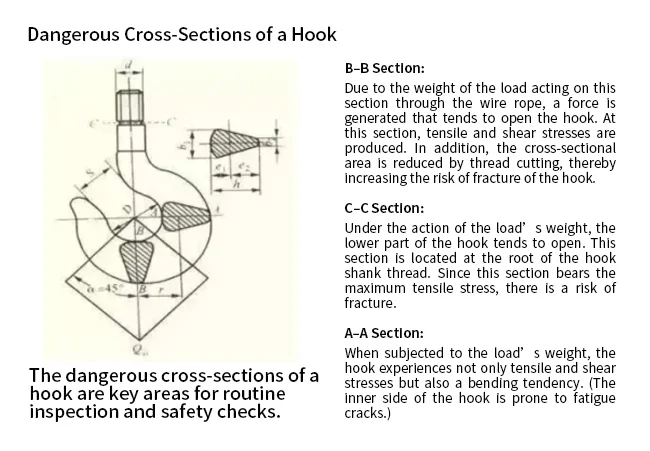
Crane hooks are the most frequently used lifting components, and as such, they directly bear the entire load during hoisting operations. To deliver exceptional performance, manufacturers typically forge them from alloy steel and further heat treat them to achieve high strength and toughness.
Safety Latch Requirement (Mandatory)
For safe operation, users must equip every crane hook used in industrial lifting with an anti-detachment safety latch.
The safety latch prevents sling disengagement caused by:
- Load swing
- Shock loading
- Improper rigging angles
- Vibration during lifting
Operating hooks without safety latches is one of the leading causes of dropped-load incidents.
Surface Inspection Standards
Crane hooks must be inspected regularly for:
- Cracks
- Corrosion pits
- Sharp edges
- Surface deformation
To maintain safe lifting conditions, operators should perform non-destructive testing methods such as magnetic particle testing or dye penetrant testing every 6–12 months.
Crane Hook Discard Criteria
Inspectors must scrap a crane hook immediately if:
- Any crack is detected
- Wear exceeds 10% of original section dimension
- Hook opening increases by 15%
- Twist deformation exceeds 10°
- Permanent plastic deformation occurs
Operators must strictly prohibit any welding repair on crane hooks.
2.Shackle Selection and Inspection Criteria
Shackles are widely used connectors between lifting equipment and loads.
The two common types include:
- D Shackles – suitable for straight-line loading
- Bow Shackles – suitable for multi-leg sling applications
Correct Usage Requirements
All shackles must:
- Display rated load marking
- Include manufacturer identification
- Use proper pin locking methods
Operators must never use improvised replacements such as bolts or steel bars.
Shackle Discard Criteria
Operators must remove shackles from service if:
- Cracks or deformation are present
- Thread wear or stripping occurs
- Wear exceeds 10%
- Identification markings are missing
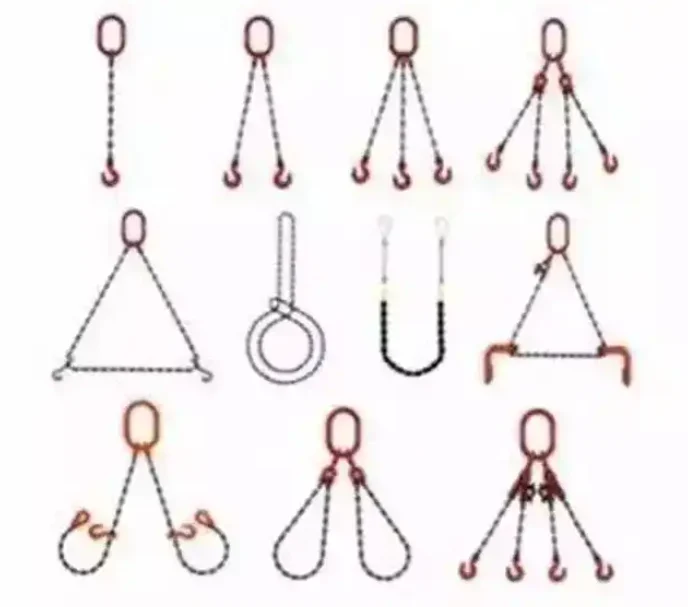
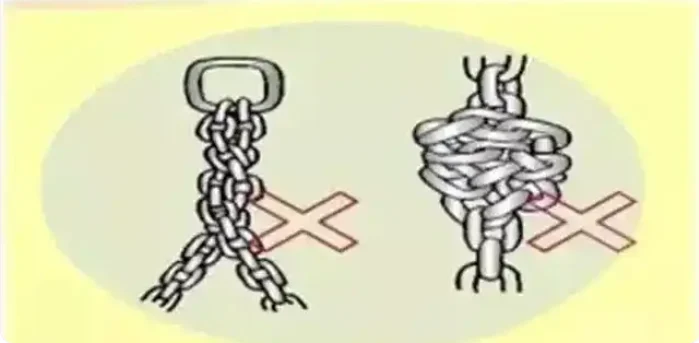
3.Welded Chain Sling Wear and Discard Standards
Operators commonly use welded chain slings in heavy-duty lifting applications, thanks to their flexibility and heat resistance.
However, they are highly sensitive to:
- Impact loading
- Abrasive wear
- Overloading
Key Inspection Points
Operators must regularly measure:
- Chain diameter reduction
- Link elongation
- Surface cracks
Even small diameter reduction significantly decreases load capacity.
Chain Sling Discard Criteria
Discard immediately if:
- Cracks appear
- Elongation exceeds 5%
- Diameter wear reaches 10%
4.Synthetic Webbing Sling Inspection and Damage Evaluation
Workers widely use synthetic slings because they are lightweight and easy to handle. Despite these practical benefits, they are also among the most frequently damaged lifting tools.
Three Critical Usage Rules
- Never use slings without capacity labels
- Never overload
- Avoid sharp edge contact without protection
Damage Classification
| Damage Level |
Action |
| Less than 5% |
Continue use with monitoring |
| 5–10% |
Downgrade to light-duty lifting |
|
Over 10% |
Scrap immediately |
Operators must never repair or re-stitch damaged slings.
Environmental Protection Requirements
Operators must protect synthetic slings from:
- UV exposure
- Chemical corrosion
- High temperatures
5.Steel Wire Rope Inspection and Replacement Rules
Steel wire ropes are the primary load-bearing components in cranes and hoists.
Proper inspection is essential for lifting safety.
Minimum Drum Wrap Requirement
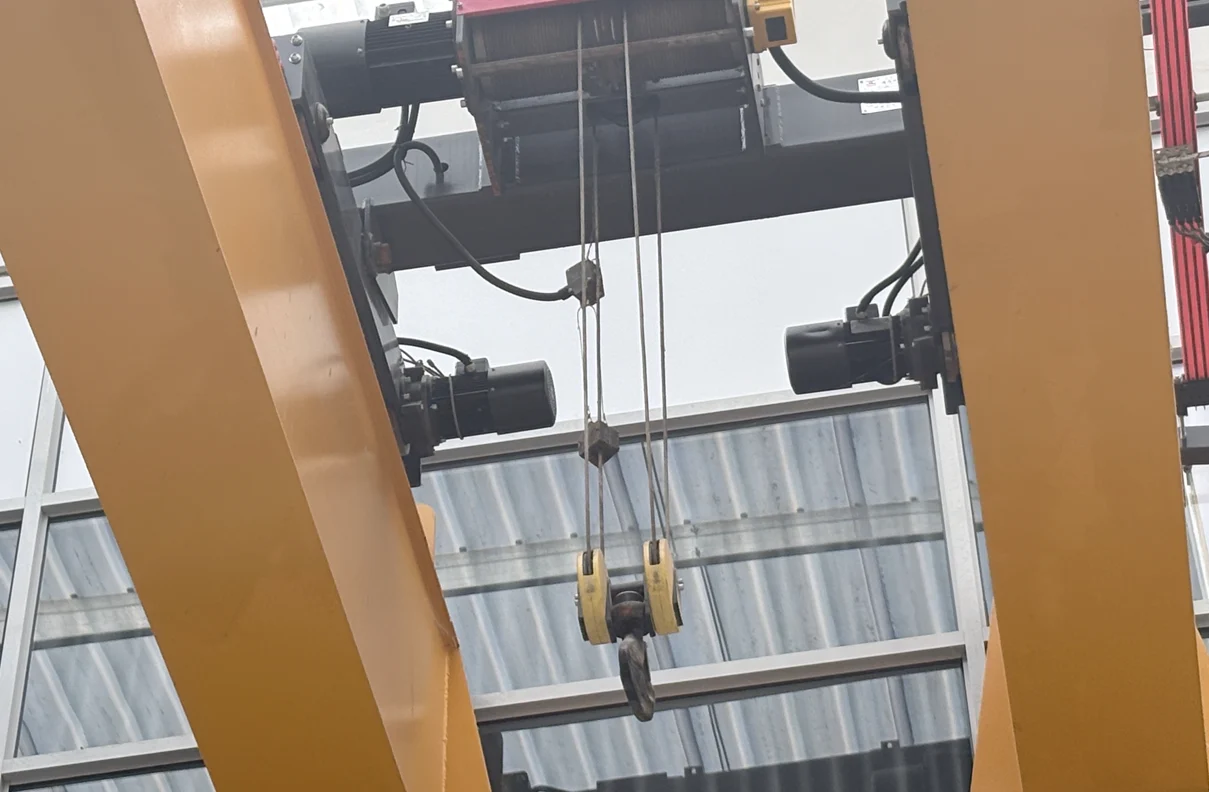
When the hook reaches its lowest position, at least two wraps of wire rope must remain on the drum (excluding tail fixation turns).
This prevents rope slippage and sudden load drop.
Wire Rope Discard Criteria
According to international lifting standards, wire ropes must be replaced if:
- Diameter reduction exceeds 40%
- Broken wires are concentrated within one lay length
- Structural deformation occurs (birdcage, crushing, kinks)
- Heat damage or core deterioration appears
Routine lubrication and daily inspection are strongly recommended.
6.FAQ – Lifting Gear Inspection and Safety
How often should lifting gear be inspected?
Visual inspection should be conducted before each use, while formal inspections should be performed every 3–12 months depending on operating conditions.
What is the most common cause of lifting gear failure?
The most common causes include:
- Overloading
- Wear beyond discard limits
- Improper rigging methods
- Lack of routine inspection
Can damaged lifting slings be repaired?
No. Synthetic slings must be scrapped once structural damage exceeds allowable limits.
Which standards govern lifting gear inspection?
Common international standards include:
- ISO lifting standards
- ASME B30 series
- National rigging safety regulations
Conclusion
Although lifting gear may appear small compared to cranes and hoists, it forms the foundation of lifting safety. Proper inspection, correct usage, and strict adherence to discard criteria are essential for preventing accidents.
Enterprises should implement full lifecycle lifting gear management systems covering procurement, inspection, maintenance, and replacement.
Strict compliance with lifting gear safety standards ensures protection for personnel, equipment, and production continuity.
🔩 Crane Hooks & Hook Blocks – Hanko Crane Hooks
Core load-bearing component in any lifting system.
Available in single hook, double hook, swivel hook, and hook block assemblies.
Custom designs for specific capacity and application conditions.
Engineered for strength, safety, and fatigue resistance.
➡️ Ideal for: overhead cranes, gantry cranes, hoists, structure lifting.

 English
  Korean
  Russian
  Spanish
  Malay
Malay  Afrikaans
  Bulgarian
  French
  Bengali
  Italian
  Hungarian
  Vietnamese
  Thai
Thai  Indonesian
  German
  Arabic
  Japanese